- Members of Parliament are divided over whether corporal punishment should be reintroduced to address rising cases of school unrest.
- Some legislators blame the abolition of caning for declining discipline, while others advocate counselling, mental health support and systemic reforms.
- The debate follows a surge in school fires and growing concern over learner safety across the country.
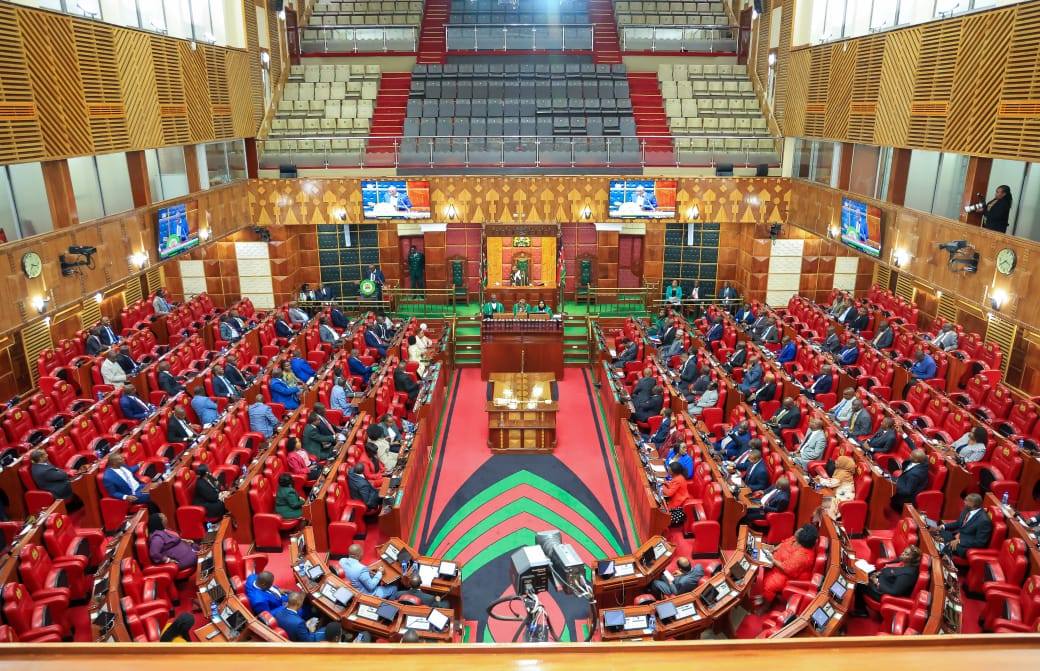
A sharp parliamentary divide has emerged over how to restore discipline in Kenyan schools, with some lawmakers calling for the return of corporal punishment while others insist that rising student unrest and school fires should be addressed through counselling, mental health support and broader education reforms.
The debate unfolded in the National Assembly after West Mugirango MP Stephen Mogaka sought a statement on the increasing number of school fires reported in his constituency and other parts of the country.
He warned that the destruction of school property, disruption of learning and, in some cases, loss of life point to serious shortcomings in school safety and disaster preparedness.
Mogaka urged the National Assembly’s Education Committee to outline measures being taken by the Government to curb the growing crisis.
The discussion quickly broadened into a national debate on discipline in schools, with some legislators arguing that Kenya should reconsider corporal punishment.
Corporal punishment was abolished in Kenyan schools in 2001 through a ministerial directive and was later prohibited under the Children Act, the Constitution of Kenya (2010) and the Basic Education Act, 2013.
The current legal framework promotes guidance and counselling as the preferred approach to learner discipline.
However, Bomet East MP Richard Yegon argued that the abolition of caning contributed to declining discipline in schools.
“From the time we stopped this issue of caning students, this is when we started having this problem. Caning students needs to come up again,” he said.
Yegon maintained that teachers have been left to manage indiscipline without adequate parental support and argued that restoring corporal punishment, alongside stronger parental involvement, could help improve learner discipline.
Other legislators opposed a return to physical punishment, arguing that punitive approaches fail to address the underlying causes of student unrest.
Uasin Gishu Woman Representative Gladys Boss called for comprehensive investigations into learners’ behaviour, including psychological and social factors contributing to violent incidents.
She expressed concern that learners involved in serious offences are often processed through the justice system without adequate assessment of the underlying issues.
“It’s unfortunate that the girls are in the justice system. They should actually be studied, sit with psychiatrists and find out what could possess someone so young to do something so serious,” she said.
Mombasa Woman Representative Zamzam Mohamed also supported evidence-based investigations, arguing that repeated incidents of unrest point to deeper systemic problems rather than isolated acts of indiscipline.
She called for long-term policy interventions grounded in research instead of reactive disciplinary measures.
Funding and infrastructure concerns
Other MPs shifted attention to governance, infrastructure and school financing.
Manyatta MP Gitonga Mukunji linked recurring unrest and school fires to inadequate disaster preparedness, delayed capitation and insufficient staffing.
He observed that many schools lack basic fire safety equipment, qualified electrical technicians and adequate security personnel because of financial constraints.
“Simple things such as electrical installations in schools are a problem. They have not been able to hire people such as watchmen who can monitor learners and prevent such incidents,” he said.
Mukunji urged the Government to settle pending capitation arrears to strengthen school safety and improve operations.
Kitui Central MP Makali Mulu cautioned against rushing into policy reversals, saying discipline requires coordinated efforts involving parents, teachers, school administrators and government agencies.
He also noted that many previous reports on school unrest had not been fully implemented, leaving critical gaps in accountability and enforcement.
A broader national challenge
The parliamentary debate coincided with ongoing court proceedings involving eight minors charged in connection with the Utumishi Girls Academy dormitory fire.
The Kibera High Court directed that the minors remain in custody pending preparation of a pre-bail report, with a ruling expected later.
Justice Diana Kavedza also ordered restrictions on media exposure of the minors to protect them from possible psychological harm during the proceedings.
As Parliament continues deliberating on the issue, there is growing recognition that school unrest reflects multiple underlying challenges, including discipline, mental health, infrastructure, parental involvement and school governance.
While some lawmakers advocate reinstating corporal punishment, others argue that sustainable solutions lie in strengthening counselling services, improving school systems, enhancing learner support and addressing the root causes of indiscipline.
READ ALSO: Moi University in financial crisis as KSh10bn debt mounts, acting VC tells MPs
The debate ultimately raises a fundamental question for Kenya’s education sector: should the country return to traditional disciplinary approaches or strengthen modern systems designed to prevent unrest before it occurs?
By Hillary Muhalya
You can also follow our social media pages on Twitter: Education News KE and Facebook: Education News Newspaper for timely updates.
>>> Click here to stay up-to-date with trending regional stories
>>> Click here to read more informed opinions on the country’s education landscape