- Insights from teaching practice supervision in Uasin Gishu and Kakamega highlight the qualities, skills and professional standards expected of future teachers.
- University lecturers supervising teaching practice have identified both strengths and gaps among trainee teachers.
- Teaching practice remains the bridge between theory and professional classroom experience.
- Teacher trainees are being urged to uphold professionalism, discipline and effective classroom management.
University lecturers conducting teaching practice assessments across schools in Uasin Gishu and Kakamega counties have gained deeper insights into the realities of classroom learning, teacher preparation and the implementation of Kenya’s education reforms.
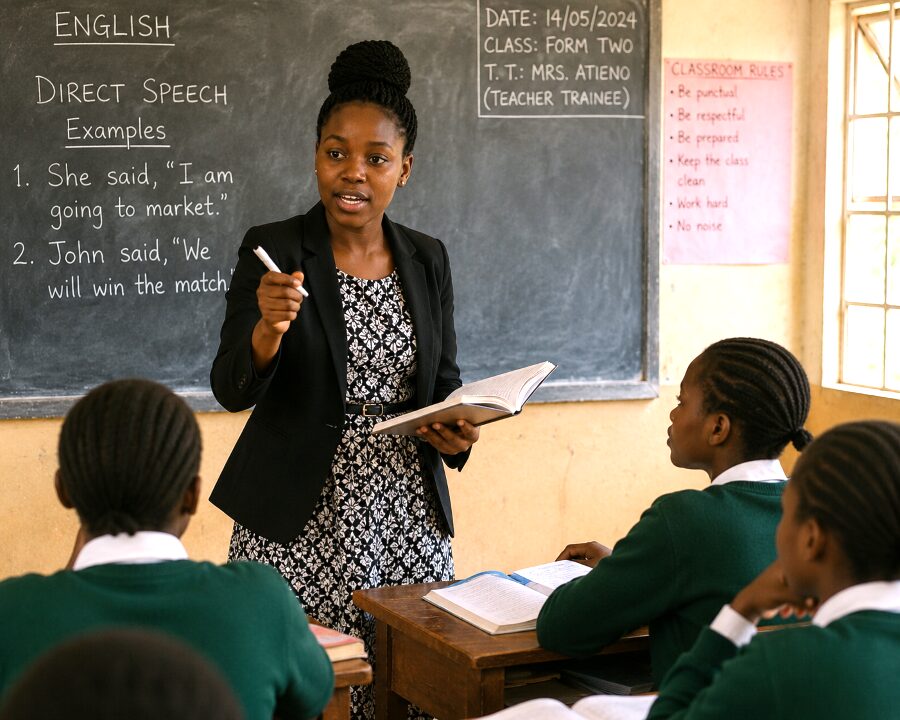
The supervision exercise, carried out in various schools, involved observing student teachers undertaking their mandatory teaching practice as part of teacher education programmes.
Teaching practice remains one of the most decisive stages in the formation of a teacher. It is the point where theory meets reality and where trainee teachers are required to demonstrate not only mastery of content but also the ability to manage learners, deliver structured lessons and uphold the professional standards expected in the teaching profession.
During the assessments, lecturers observed lessons, reviewed teaching and learning materials and engaged with school administrators, mentor teachers and learners.
These interactions revealed both encouraging strengths and critical gaps in teacher preparedness, particularly in classroom management, lesson delivery, consistency and professional conduct.
While many trainees demonstrated strong subject knowledge, enthusiasm and creativity in teaching, others struggled with classroom control and effective lesson delivery in real school environments.
Dear teacher trainee, teaching practice is not a rehearsal or a casual academic requirement. It is your first real professional examination.
ALSO READ:
Kisumu VTCs enrolment surpasses 6,000 trainees as county expands skills training
It is the stage where your future as a teacher begins to take shape and where your competence is tested in a real classroom environment filled with diverse learners, expectations and challenges.
To succeed in this stage and become an effective teacher, there are essential qualities you must possess and professional standards you must uphold.
Subject mastery and preparation
First, you must have strong subject mastery.
A teacher who does not understand a subject in depth cannot explain it clearly, inspire confidence or effectively guide learners.
Knowledge must go beyond textbooks so that you can simplify complex ideas and make learning meaningful.
You must also demonstrate proper planning and organization.
Teaching is not improvisation. It is a structured process that requires schemes of work, lesson plans, clear learning outcomes and appropriate teaching aids.
Every lesson must be carefully prepared and purposefully delivered to ensure learning objectives are achieved within the available time.
Professional ethics and conduct
Professional ethics and discipline are equally important.
Teaching is a respected profession that demands responsibility, honesty, punctuality, respect and integrity.
Your behaviour, both inside and outside the classroom, reflects your readiness to join the profession.
Learners, mentors and school administrators judge your professionalism not only by what you teach but also by how you conduct yourself.
During teaching practice, professional conduct is non-negotiable.
You are expected to dress appropriately at all times while in school, presenting yourself in a manner that reflects the dignity of the teaching profession.
Casual dressing is not acceptable during official duties.
ALSO READ:
President Ruto declares KMTC students eligible for HELB funding
Your appearance communicates seriousness, respect for the profession and readiness to serve as a role model to learners.
You must also maintain respectful interactions with learners, colleagues, mentor teachers and school administrators, using professional language and demonstrating humility and discipline.
Punctuality and reliability are equally important, as arriving late or missing lessons undermines both your credibility and the learning process.
Effective communication is another key requirement.
A good teacher must speak clearly, confidently and in a manner learners can understand.
Communication also involves listening to learners, asking meaningful questions and encouraging participation in the learning process.
Alongside communication is emotional intelligence, which enables you to understand learners’ backgrounds, challenges and differences.
Patience, empathy and understanding are essential qualities that help teachers manage diverse classrooms effectively.
Classroom expectations
In the classroom, you are expected to deliver structured, learner-centred lessons that actively engage learners rather than dominate the teaching process.
Learners should be involved through questioning, discussion and participation.
Classroom management must be firm but fair, ensuring discipline without intimidation.
Authority in the classroom should come from preparation, confidence and consistency rather than fear.
You must also learn to accept supervision positively.
Lecturers and mentor teachers are not there to criticize you but to guide and refine your practice.
Every piece of feedback is an opportunity for improvement, and a good trainee teacher is one who listens, reflects and applies corrections in subsequent lessons.
Beyond these requirements, a good teacher must demonstrate creativity and innovation, especially when resources are limited.
You should be able to improvise teaching aids and make learning engaging even in challenging environments.
Assessment skills are equally important. Teachers must be able to evaluate learners fairly, provide constructive feedback and monitor progress effectively.
ALSO READ:
Trans Nzoia education CECM donates milk to learners during county music festival
Time management is essential in ensuring lessons are well-paced and objectives are achieved within the allocated period.
Adaptability is also critical, as different classrooms require different teaching approaches depending on learner ability, class size and available resources.
Teamwork with colleagues, mentors and school administrators is necessary for professional growth.
Reflective practice ensures continuous improvement by encouraging teachers to evaluate every lesson delivered and identify areas for improvement.
Confidence and classroom presence complete the profile of an effective teacher, as learners respond positively to teachers who are prepared, composed and confident in their delivery.
Areas that need improvement
Recent teaching practice assessments across Uasin Gishu and Kakamega counties have revealed that while many trainee teachers are performing well in subject knowledge and demonstrating enthusiasm, there are still noticeable gaps in classroom management, lesson delivery, consistency and professional discipline.
These gaps should not be viewed as failures but as areas for growth that must be addressed before full entry into the teaching profession.
ALSO READ:
Character Over Grades: Why good upbringing remains education’s greatest success
Teaching practice is therefore not merely a requirement for graduation. It is a gateway into the profession.
It shapes your reputation, builds your competence and determines your readiness to handle learners independently.
Most importantly, it reminds you that every learner entrusted to your care deserves seriousness, preparation and respect.
Becoming a good teacher is not achieved through theory alone but through discipline, preparation, practice, reflection and continuous improvement.
Teaching practice is your foundation, and how you approach it will largely determine the teacher you become in the future.
Casualness in dressing, preparation, conduct or attitude has no place at this stage of professional development.
The classroom is your first professional stage, and it must be approached with the dignity, seriousness and commitment it deserves.
By Hillary Muhalya
You can also follow our social media pages on Twitter: Education News KE and Facebook: Education News Newspaper for timely updates.
>>> Click here to stay up-to-date with trending regional stories
>>> Click here to read more informed opinions on the country’s education landscape