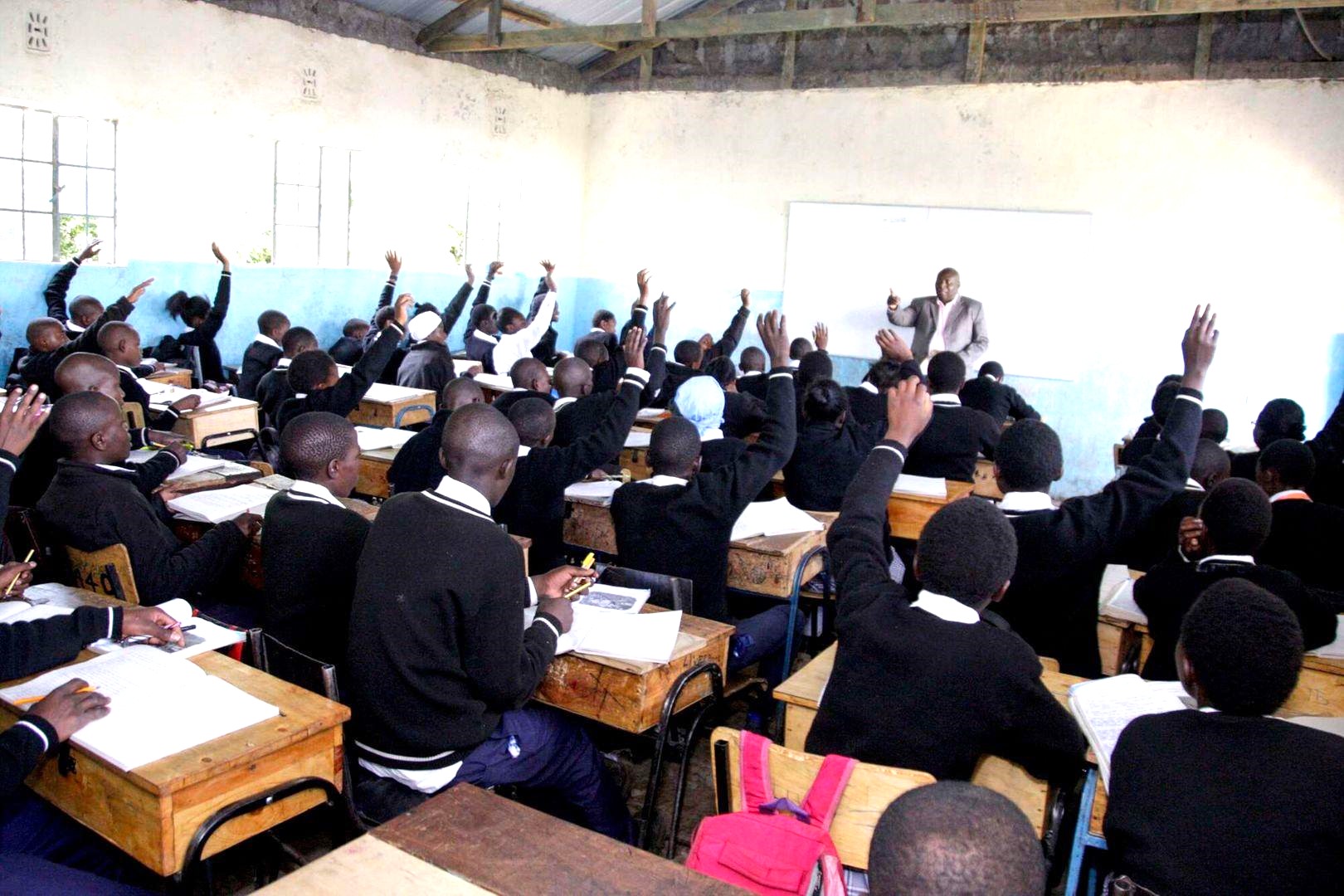
- Secondary school heads have proposed alternative measures to address school unrest instead of abolishing boarding schools.
- KESSHA wants learners unable to cope with boarding school life identified early and enrolled in day schools.
- The proposals will form part of discussions at the 49th KESSHA annual conference in Mombasa.
Secondary school heads in the country have proposed alternative measures to address school unrest instead of doing away with boarding schools.
Speaking during a press briefing at Sheikh Zayed Hall ahead of the 49th Kenya Secondary School Heads Association (KESSHA) Annual National Conference in Mombasa, school heads said the solution could lie in separating learners according to their ability to cope with boarding school life.
“The learners who are not able to cope with boarding school regulations should become day scholars,” KESSHA National Chairman Willie Mwangi said.
He noted that learners have different personalities and not all are comfortable living in boarding schools.
Mwangi suggested that those who struggle to adapt to boarding school life should be identified early and transferred to day schools.
“Maybe for those learners, they should find their way to day schools where they can be under the close monitoring of their parents,” he said.
WATCH:
Rethinking KCSE registration
The KESSHA chairman observed that school unrest, which is not a new phenomenon in Kenya, frequently occurs during the second term.
He suggested that by the second term, many KCSE candidates already feel secure because they expect to sit the national examination regardless of their conduct.
Mwangi proposed changes in the way the Kenya National Examinations Council (KNEC) handles candidate registration.
He suggested that KNEC should consider deregistering candidates found culpable in serious cases of school unrest and allow them to sit the examination the following year.
He also proposed that KCSE registration be moved to the third term instead of the current arrangement.
According to him, such a move would discourage learners from feeling entitled to sit the examination before demonstrating discipline and responsibility.
Conference agenda
The issue of school unrest is expected to feature prominently during this year’s KESSHA conference, which begins on Monday and ends on Friday.
The conference is expected to attract more than 8,000 school heads, Ministry of Education officials and other education stakeholders.
This year’s theme is “Strong Schools and Collaborative Leadership for Promoting Competency-Based Education.”
Mwangi said the theme reflects KESSHA’s commitment to strengthening school leadership as Competency-Based Education (CBE) continues to be implemented at the secondary school level.
Tuesday’s discussions will focus on school leadership and CBE transformation in a changing education landscape.
Wednesday’s sessions will address accountability, institutional resilience and strengthening education reforms.
The day will also mark the official opening of the conference, with Head of Public Service and Chief of Staff Felix Koskei expected to be the chief guest.
Thursday’s programme will focus on education financing and human resource management, including discussions on sustainable education financing and teacher management.
Friday, the final day of the conference, will focus on future skills, employment and global opportunities.
“We will have our closing ceremony on Friday. The focus of the day will be about education, employment and global opportunities,” Mwangi said.
The chairman reiterated KESSHA’s commitment to supporting quality, inclusive and transformative education.
“This conference will generate valuable insights and practical recommendations that will strengthen the delivery of CBE and enhance learning outcomes across the country,” he said.
KCB support for schools
KCB Coast Regional Business Manager Yasir Ashur said the bank, as the main sponsor of the conference, remains committed to supporting schools through financing, sustainability solutions and strategic partnerships.
“Through initiatives in clean energy, scholarships and school financing, we continue to strengthen learning environments and contribute to better educational outcomes,” Ashur said.
KCB has been supporting schools to transition from firewood to clean energy solutions such as solar-powered cooking systems, Liquefied Petroleum Gas (LPG) and hybrid technologies.
According to Ashur, the pilot programme conducted in 2025 involved 266 schools and achieved energy cost savings of up to 90 per cent.
He said the bank plans to expand the programme to approximately 3,000 schools by the end of 2026.
Schools in Kenya consume more than 1.3 million tonnes of biomass annually, equivalent to about 10 million trees.
“Through this programme, KCB is lowering costs to schools while contributing to climate action and sustainable education,” he said.
Through the KCB Foundation’s Scholars Programme, the bank is investing about KSh600 million to support approximately 1,000 academically gifted but financially vulnerable learners.
The programme covers school fees, uniforms, stipends, mentorship and talent development through to university.
“We also provide financing to help schools meet immediate operational needs without disrupting learning,” Ashur said.
READ ALSO: CEMASTEA rolls out outreach programme to increase STEM uptake in Nyamira
The bank also supports schools through financing for the construction and modernization of classrooms, dormitories, laboratories and other educational infrastructure.
By Morris Ochieng’
You can also follow our social media pages on Twitter: Education News KE and Facebook: Education News Newspaper for timely updates.
>>> Click here to stay up-to-date with trending regional stories
>>> Click here to read more informed opinions on the country’s education landscape