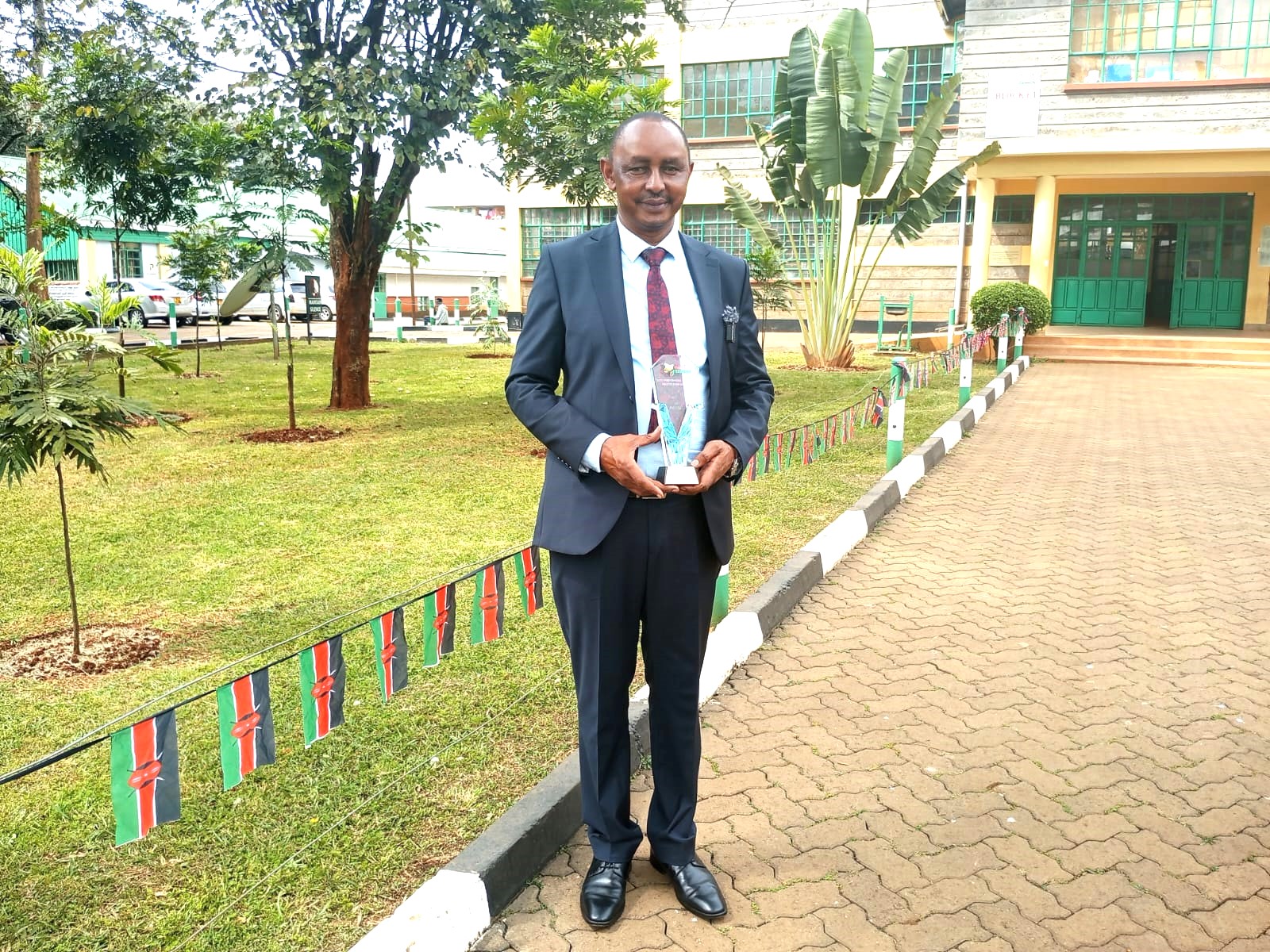
- Kabete National Polytechnic has emerged first runners-up in the 2024/2025 National Productivity Performance Awards.
- The institution also successfully hosted the Fourth International Research Conference, Skills Competition, Innovation, Career Guidance and Expo.
- Leaders say the achievements reinforce Kabete’s growing reputation as a centre of excellence in technical training, research and innovation.
Kabete National Polytechnic has strengthened its position as one of Kenya’s leading Technical and Vocational Education and Training (TVET) institutions after emerging first runners-up in the 2024/2025 National Productivity Performance Awards while successfully hosting the Fourth International Research Conference, Skills Competition, Innovation, Career Guidance and Expo.
The national recognition, presented during the National Productivity and Competitiveness Conference attended by President William Ruto, marked a significant milestone for the institution and highlighted its commitment to excellence, efficiency, innovation and quality service delivery.
Speaking during the closing ceremony of the three-day international conference, Principal Patrick Muchemi described the award as a major achievement and a reflection of the collective efforts of staff, students, development partners and stakeholders.
“We are proud that Kabete National Polytechnic emerged as the first runners-up in the 2024/2025 National Productivity Performance Awards. This recognition is a measure of efficiency in our services and demonstrates our dedication to excellence and continuous improvement,” said Muchemi.
He noted that productivity remains a critical indicator of institutional performance, measuring how effectively organisations utilise resources to deliver quality services and achieve desired outcomes.
Centre of Innovation and Skills Development
Muchemi said the recognition comes at a time when the institution is strengthening its reputation as a centre of excellence in skills development, research, innovation and industry-driven training.
The award coincided with the successful conclusion of the institution’s Fourth International Research Conference, which brought together policymakers, researchers, industry leaders, educators, students, innovators and development partners to discuss the future of technical education and workforce development.
“I want to sincerely thank all the stakeholders who participated in our three-day Fourth International Research Conference. Special appreciation goes to the organising committee, students, researchers, presenters, evaluators, moderators, keynote speakers and all our partners whose contributions made this event successful,” he said.
Strengthening Industry Linkages
The conference featured discussions on research, innovation, productivity, entrepreneurship, skills development and industry-academia partnerships.
Participants emphasised the importance of aligning training programmes with emerging labour market demands.
Muchemi noted that stronger partnerships between learning institutions and industry are essential in ensuring graduates possess practical and market-relevant skills.
“The conference enabled academia and industry stakeholders to come together and exchange ideas. Academic institutions gained insights into current industry expectations, while industry players shared the competencies they require from graduates,” he said.
He added that students benefited significantly from interactions with professionals, innovators and employers, helping them make informed career choices and prepare for future employment opportunities.
A major highlight of the conference was the participation of senior government officials, including Education Cabinet Secretary Julius Ogamba, TVET Principal Secretary Dr Esther Thaara Muoria and Housing Principal Secretary Charles Hinga.
Muchemi said their presence demonstrated the government’s growing commitment to strengthening the TVET sector and supporting innovation-led economic development.
“It is rare to have Cabinet Secretaries and Principal Secretaries attending the same event, and we are grateful that they joined us and enriched our discussions. Their support is a strong indication of the government’s confidence in TVET institutions,” he said.
Promoting Excellence Through Competition
The event also featured skills competitions involving students from various TVET institutions across the country.
The competitions provided participants with opportunities to benchmark their competencies, showcase talents and learn from peers while promoting excellence in technical training.
Muchemi congratulated all participating institutions and praised the winning teams for their outstanding performances.
Education stakeholders attending the conference praised Kabete National Polytechnic’s productivity award, noting that it reflects the increasingly important role TVET institutions are playing in Kenya’s economic transformation agenda.

Kabete National Polytechnic Principal Patrick Muchemi and a Governing Council member display the institution’s National Productivity Performance Award.
They observed that institutions that prioritise innovation, efficiency, quality training and industry partnerships are better positioned to produce a skilled workforce capable of driving national development.
As the conference concluded, participants reaffirmed the need for sustained collaboration between government, industry, researchers and educational institutions to foster innovation, enhance productivity, improve employability and accelerate socio-economic growth.
READ ALSO: Elizabeth Strout’s ‘The Things We Never Say’ is a powerful reflection on communication and human connection
With a national productivity award and another successful international conference to its name, Kabete National Polytechnic continues to set benchmarks in technical education, research, innovation and workforce development.
By Felix Wanderi
You can also follow our social media pages on Twitter: Education News KE and Facebook: Education News Newspaper for timely updates.
>>> Click here to stay up-to-date with trending regional stories
>>> Click here to read more informed opinions on the country’s education landscape