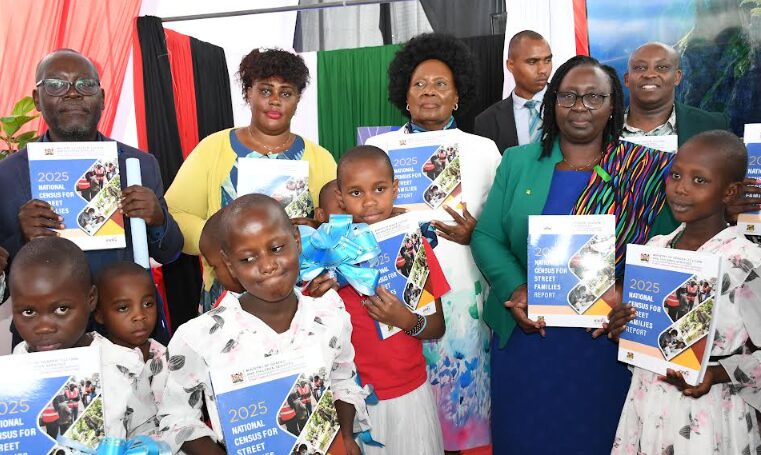
Poverty, family instability and substance abuse continue to drive thousands of Kenyans into street life despite significant progress in reducing the country’s street families population, a new government report has revealed.
The 2025 National Census for Street Families report shows that while the number of street-connected persons has dropped from over 46,000 in 2018 to 18,049 in 2025, deep-rooted social and economic challenges continue to push vulnerable individuals onto the streets.
Speaking in Naivasha, Gender, Culture and Children Services Cabinet Secretary Hanna Wendot said the findings underscored the need for stronger family support systems and social protection programmes.
“The census confirms that poverty, family instability, lack of economic opportunities, substance abuse and social exclusion contribute significantly to street migration,” she said.
ALSO READ:
The report further revealed that increased poverty levels, corporal punishment, denial of food and alcohol-dependent parents were among the leading causes of family separation, particularly among children.
Wendot noted that many street-connected persons were willing to abandon street life if given access to education, rehabilitation and economic opportunities.
“Most of those enumerated indicated a willingness to leave the streets if alternative measures and viable solutions were provided,” she said.
The CS said the government was working closely with county governments, development partners and community organisations to strengthen child protection systems and support vulnerable families.
She added that the state had allocated Ksh40 million this financial year towards rehabilitation initiatives and vocational skills development programmes.
The report also highlighted the vulnerability of women and girls living on the streets, noting that many had experienced sexual, physical and emotional abuse.
Additionally, 71 per cent of street-connected persons reported using at least one substance, with glue, cannabis and alcohol emerging as the most commonly abused drugs.
Wendot said addressing the problem required a comprehensive approach that tackled both the immediate needs of street families and the underlying social and economic challenges driving migration to the streets.
By Kimutai Langat
You can also follow our social media pages on Twitter: Education News KE and Facebook: Education News Newspaper for timely updates.
>>> Click here to stay up-to-date with trending regional stories
>>> Click here to read more informed opinions on the country’s education landscape