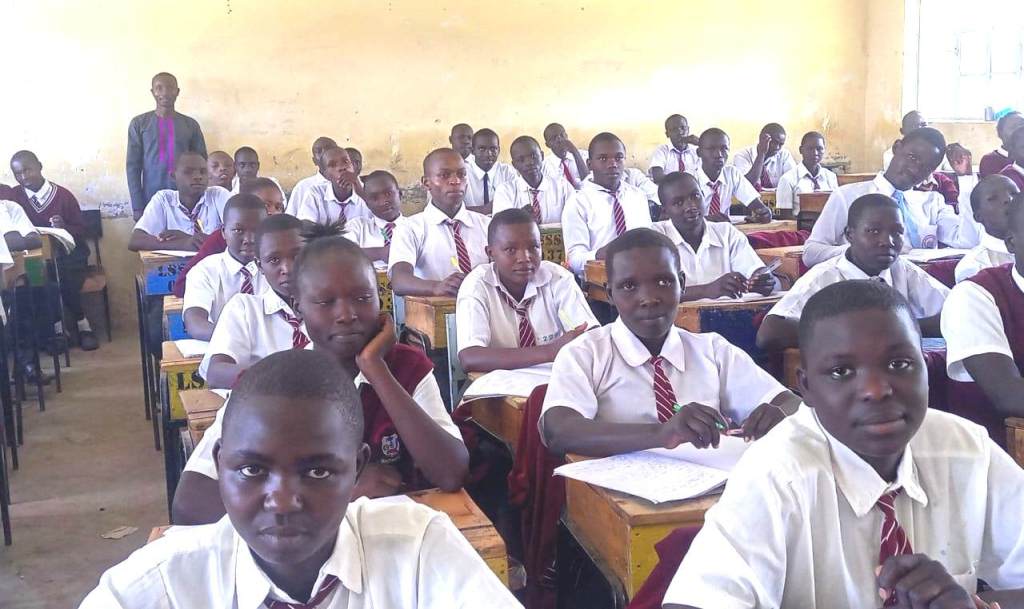
A growing concern is emerging across secondary schools, particularly at the senior secondary level, where a section of Form Three learners is struggling to cope with academic demands. Educators increasingly link this challenge to foundational learning gaps arising from irregular progression in earlier years of schooling.
These gaps are becoming more visible as learners face complex content, faster instructional pacing, and competency-based expectations that require strong literacy, numeracy, comprehension, and critical thinking skills.
Teachers report that some learners struggle to adapt to learner-centred methodologies, continuous assessment systems, and task-based learning approaches that define the current curriculum framework.
In this model, learners are expected not only to recall information but also to apply knowledge, interpret concepts, analyse situations, and solve problems independently. However, for a section of learners, these expectations expose gaps that appear to originate from incomplete mastery at earlier stages of learning.
Sincerely speaking, educators note that some Form Three learners are currently operating below the expected competency level for their grade. In practical terms, their foundational mastery appears closer to lower secondary benchmarks, meaning they require structured bridging support rather than accelerated delivery of new content. This reflects accumulated learning gaps that have gradually carried forward through earlier stages of schooling.
Education stakeholders further point to reported cases where some parents may have influenced irregular academic progression during primary school, with learners said to have skipped up to two classes or experienced inconsistent transitions between the Competency-Based Education (CBE) pathway and the 8-4-4 system.
In addition, early perceptions during CBE rollout were marked by uncertainty among some parents regarding assessment methods, progression pathways, and long-term academic outcomes. This uncertainty, combined with uneven implementation in some settings, contributed to hesitation and, in certain cases, preference for more familiar academic structures. The result, in some learner trajectories, has been a fragmented experience between systems, leaving gaps in continuity of learning.
ALSO READ:
PS Ageng’o calls for internal dialogue mechanisms in schools to address student concerns
In this context, education observers note that some learners appear to have been caught between two education systems—8-4-4 and CBE—without fully benefiting from the stability of either framework. This has contributed to academic disorientation in specific cases, now reflected in classroom performance, confidence levels, and learner engagement.
What many educators are now describing as the “ghosts of class skipping” appears to have resurrected in senior secondary classrooms, where earlier progression decisions are resurfacing as visible learning deficits. These gaps are now evident in subjects that demand sequential understanding, exposing weaknesses that were previously hidden in lower levels of schooling.
In some institutions, what teachers describe as “clearing and forwarding” practices have also been referenced—informal progression where learners advance without fully demonstrating mastery of required competencies.
While progression policies are designed to ensure continuity, concerns are emerging that in certain contexts, advancement may not consistently align with demonstrated learning mastery, resulting in learners reaching senior secondary level without sufficient foundational readiness for sequential academic demands.
The situation is further compounded by intensified remedial programmes introduced in some schools to address identified gaps. While remedial teaching is a legitimate educational intervention, its implementation in certain contexts has raised concerns about balance and learner welfare.
Reports indicate heavy academic workloads, extended instructional schedules, and reduced rest periods, with some schools limiting lunch breaks to approximately ten minutes. Learners are also assigned substantial volumes of work, which many struggle to complete within available time, contributing to fatigue, pressure, and reduced engagement. In some cases, remedial lessons involve additional costs, raising concerns around equity, access, and fairness.
Education experts caution that for learners with disrupted or irregular foundational progression, the current academic environment can feel overwhelming, with some describing it as an “overload” of content delivered at a stage where readiness does not fully match instructional demands. This creates a structural mismatch between curriculum expectations and learner capacity.
ALSO READ:
PS Ageng’o calls for internal dialogue mechanisms in schools to address student concerns
Teachers, meanwhile, are operating under significant pressure as they balance syllabus coverage, remedial instruction, academic recovery demands, and administrative expectations linked to programme implementation. Many also report limited access to structured diagnostic tools, making it difficult to precisely identify individual learning gaps and apply targeted interventions at scale.
More concerning, sampled learners in some schools have exhibited increased restlessness in classrooms, reduced concentration spans, and difficulty sustaining attention during lessons. These patterns are interpreted by educators as indicators of academic strain, cognitive overload, and fatigue linked to sustained difficulty in coping with instructional demands rather than disciplinary breakdown alone.
In addition, emerging learner feedback indicates declining motivation towards learning. Some learners report feeling overwhelmed by continuous assessments, heavy workloads, and limited recovery time between academic tasks. While experiences vary, these patterns collectively signal growing concerns around learner well-being, emotional fatigue, and academic sustainability.
Amid these developments, there is a strong and consistent call for real honesty in how the situation is approached. Stakeholders caution against denial, fragmentation of facts, or overly simplified explanations. Without a comprehensive and evidence-based understanding of learner preparedness, parental decision-making patterns, school-level implementation realities, and systemic transition gaps, interventions risk remaining reactive rather than corrective.
This report is based on information shared by both teachers and learners under conditions of anonymity, reflecting sensitivity around institutional dynamics, learner experiences, and internal school-level pressures.
This call for honesty extends across the entire education ecosystem. Parents are encouraged to reflect on how progression decisions and system transitions may have affected learning continuity.
Schools are urged to critically review remedial structures to ensure they are supportive, proportionate, and learner-centred. Education authorities are expected to strengthen monitoring and diagnostic systems capable of identifying learning gaps early and responding with precision rather than broad interventions.
ALSO READ:
Why Ololtuaa’s appointment could redefine education leadership in Kenya
There is also growing consensus that remedial interventions must be redesigned into structured, balanced, and competency-focused recovery programmes. Rather than relying heavily on extended instructional hours and increased workload, stakeholders advocate for diagnostic assessment, targeted remediation, differentiated instruction, and gradual rebuilding of foundational competencies. Psychosocial support is increasingly recognised as essential in addressing emotional strain and learner disengagement.
Teacher support remains central to system effectiveness. Educators require clearer remedial frameworks, structured instructional resources, and sustained professional development focused on mixed-ability teaching and learning recovery strategies. Without this, system reform risks placing disproportionate responsibility on individual teachers.
Ultimately, the situation calls for a coordinated, realistic, and evidence-driven response involving the Ministry of Education, school leadership, teachers, parents, and learners. The focus must extend beyond academic outcomes to include learner well-being, instructional balance, and long-term system sustainability. Addressing these challenges requires structural honesty, policy coherence, and shared accountability across all levels of the education system.
By Hillary Muhalya
You can also follow our social media pages on Twitter: Education News KE and Facebook: Education News Newspaper for timely updates.
>>> Click here to stay up-to-date with trending regional stories
>>> Click here to read more informed opinions on the country’s education landscape