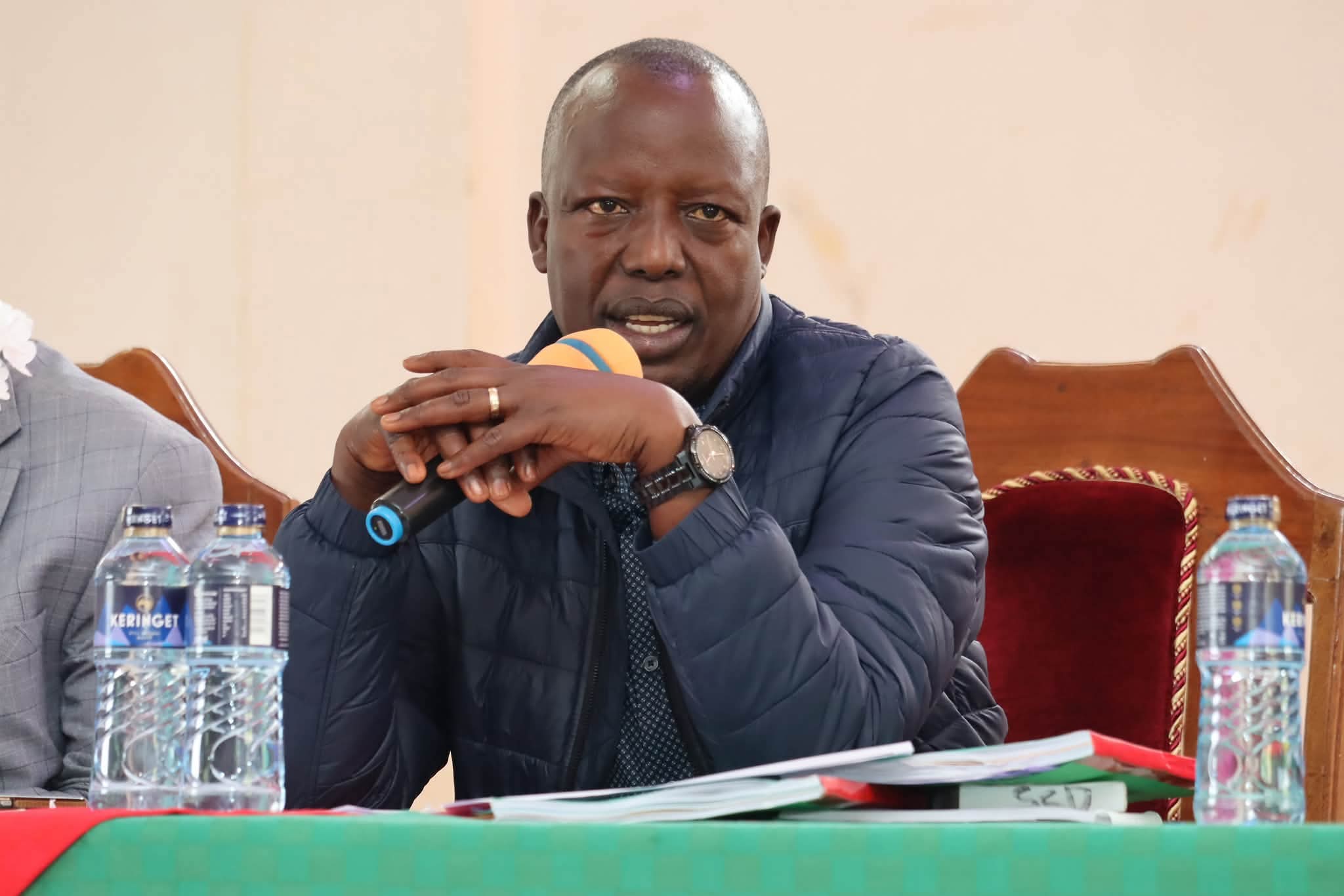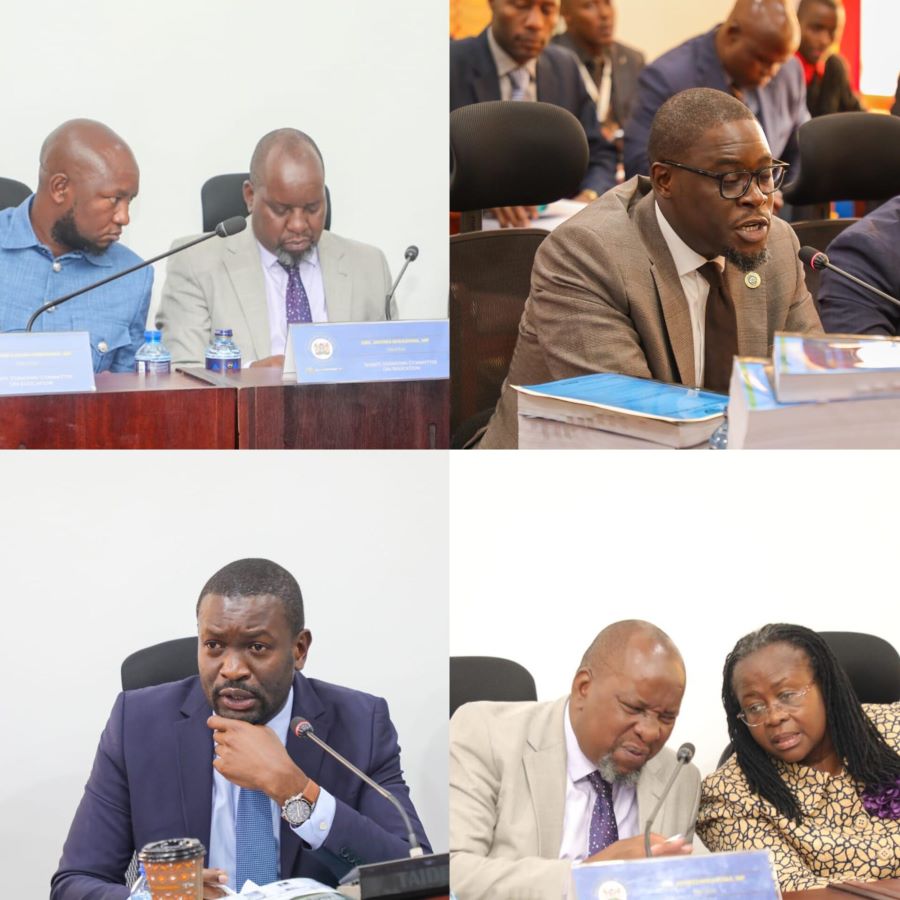
Across Kenya, Early Childhood Development Education (ECDE) has become one of the most explosive battlegrounds of devolution, drawing county governments and parliamentary oversight committees into a continuous storm of disagreement, scrutiny, and institutional tension.
What was envisioned as a simple, community-driven devolved function under the Constitution has instead evolved into a high-stakes governance contest over power, funding, staffing, and control of the very foundation of education.
At the centre of it all lies a simple but unresolved question that refuses to go away: where does county autonomy end and national oversight begin when it comes to shaping the earliest stage of learning?
Counties and Parliament clash over ECDE oversight
Counties argue that ECDE is fully devolved and therefore belongs entirely within their administrative, financial, and policy space.
Parliamentary committees, particularly the Senate Education Committee, counter that early childhood education is too critical to be left to uneven county systems without strong oversight to guarantee equity, quality, and national standards.
Between these two positions lies a widening governance gap that has defined ECDE discussions across the country.
Nairobi County and the pressure of urban inequality
Nowhere is this tension more visible than in Nairobi City County, where ECDE is shaped by the harsh realities of rapid urbanisation and deep inequality.
Parliamentary committees have repeatedly raised concerns that while some parts of the city enjoy relatively stable ECDE facilities, informal settlements tell a completely different story.
Overcrowded classrooms, shortages of teachers, and strained learning materials dominate oversight reports.
Senators often question why staffing remains uneven despite Nairobi’s resource base.
County officials respond with a familiar argument: population pressure is overwhelming, demand is unpredictable, and budget allocations are never enough to match the scale of need.
The result is a persistent cycle of criticism and defence, with no lasting resolution.
Nakuru and infrastructure concerns
In Nakuru County, the conflict takes on a different tone, one anchored in infrastructure and project delivery.
Parliamentary committees have toured ECDE centres and pointed to classrooms that remain incomplete, poorly equipped, or in need of urgent repair despite budget approvals.
Questions are repeatedly raised about implementation delays and whether ECDE truly receives priority in county planning.
The county government, however, insists that ECDE competes with equally pressing needs such as health services, water provision, and road infrastructure.
In their defence, officials argue that development must be balanced, even when expectations from oversight bodies remain high and uncompromising.
Kiambu and teacher employment disparities
Kiambu County presents yet another layer of the national ECDE debate, one heavily focused on human resource management.
Parliamentary committees have expressed concern over inconsistent employment terms for ECDE teachers, with some serving on contracts while others remain in more stable arrangements.
Salary disparities between sub-counties have also drawn attention.
Oversight bodies argue that such inconsistencies undermine professionalism and morale within the ECDE workforce.
County leadership, however, maintains that decentralised staffing decisions allow flexibility in managing wage bills and adapting to local financial realities.
This clash between standardisation and flexibility remains unresolved.
Mombasa struggles with overcrowding
Along the coast in Mombasa County, ECDE challenges are shaped by density, informality, and rapid urban expansion.
Parliamentary committees have consistently highlighted overcrowded classrooms in informal settlements where children learn in constrained and overstretched environments.
Learning materials are often insufficient, and infrastructure struggles to keep up with population growth.
Senators question whether planning is aligned with demographic realities.
County officials respond by pointing to land scarcity, competing tourism-driven development priorities, and financial constraints that slow down expansion of ECDE facilities.
The tension here is not just administrative — it is structural, rooted in the very geography of the city.
Kisumu and accountability concerns
In Kisumu County, ECDE oversight discussions frequently shift toward programme effectiveness and financial accountability.
Parliamentary committees have raised concerns about feeding programmes, teacher shortages in rural zones, and how efficiently ECDE budgets are utilised.
Questions are often directed at whether funds truly reach the intended centres or get absorbed into administrative structures.
The county government, on the other hand, maintains that national transfers are insufficient to meet the rising demand for early learning services, especially in economically challenged lakeside communities.
The debate becomes less about intention and more about capacity — what can realistically be delivered under constrained funding.
Uasin Gishu and unequal development
Uasin Gishu County brings into focus the issue of equity in development.
Parliamentary committees have questioned why some ECDE centres appear well-developed while others remain under-resourced, even within the same county.
There is concern that high-visibility projects sometimes take precedence over foundational education infrastructure.
County officials defend their approach by arguing that development is being rolled out in phases and that ECDE improvements are part of a broader county transformation agenda.
Still, oversight bodies continue to push for more balanced and uniform development.
Bomet and rural infrastructure gaps
In Bomet County, the conversation often turns to classrooms, roofs, floors, and sanitation systems.
Parliamentary committees have expressed concern over the condition of ECDE facilities, particularly in rural areas where infrastructure degradation is more visible.
During oversight visits, committee members often highlight the urgent need for repairs, expansion, and better learning environments.
The county acknowledges these challenges but insists that progress is ongoing and constrained by limited financial resources.
Renovation programmes are frequently cited as evidence of commitment, even as gaps remain visible on the ground.
Siaya and implementation delays
Siaya County reflects a different dimension of the ECDE struggle: implementation delays and logistical barriers.
Parliamentary committees have pointed out that ECDE projects often progress slowly, especially in remote areas where access is difficult and resources stretched thin.
Teacher shortages compound the challenge, leaving some centres understaffed and struggling to maintain consistent learning delivery.
County officials attribute these issues to delayed funding flows and the difficulty of reaching dispersed populations.
The result is a system that moves unevenly, shaped as much by geography as by policy.
Vihiga and policy coordination
In Vihiga County, oversight discussions tend to revolve around coordination and policy execution.
Parliamentary committees have questioned delays in implementing ECDE frameworks and the consistency of standards across learning centres.
Concerns are also raised about whether different county departments are effectively aligned in delivering ECDE services.
The county government acknowledges coordination gaps and has promised reforms, but progress is often described as gradual and uneven, reflecting broader administrative challenges within devolved systems.
Kericho County adds another layer, focusing heavily on supervision, training, and quality assurance.
Parliamentary committees have raised concerns about whether ECDE teachers receive adequate professional development and whether monitoring systems are strong enough to ensure consistent learning standards.
Infrastructure quality is also frequently questioned.
County officials respond by pointing to ongoing reforms aimed at strengthening supervision structures and improving training programmes, though the impact of these reforms is still unfolding.
Teacher management
Despite the different county experiences, the same core tensions echo across the national landscape.
The first and most persistent is ECDE teacher management.
Counties argue that staffing is a devolved responsibility and should reflect local realities.
Parliamentary committees insist that without national standards, disparities will continue to widen, creating unequal learning foundations for children depending on where they live.
The result is a fragmented system where teacher conditions vary significantly across counties.
Infrastructure and funding
Infrastructure forms the second major fault line.
Across Kenya, ECDE centres range from relatively modern facilities to severely under-resourced classrooms.
Parliamentary committees repeatedly highlight these disparities as unacceptable in a system meant to guarantee equal access to basic education.
Counties respond that infrastructure development depends entirely on available budgets and competing priorities, making uniform standards difficult to achieve in practice.
Funding and accountability form the third layer of tension.
Parliamentary committees routinely question how ECDE funds are allocated, spent, and tracked.
Counties, in turn, point to delayed disbursements from the national level and argue that resources are simply not sufficient to meet growing demands.
This creates a cycle of blame where neither side fully accepts responsibility, and ECDE centres continue to operate under financial strain.
Governance and devolution
The fourth issue is governance and oversight itself.
Parliamentary committees see their role as constitutionally mandated oversight aimed at ensuring transparency and equity.
Counties sometimes perceive this as interference in devolved functions, especially when oversight becomes highly directive.
This tension becomes most visible during field visits and committee hearings, where questions about implementation often turn intense and politically charged.
Finally, there is the broader policy-versus-devolution conflict.
While ECDE is legally devolved, the push for national standardisation in teacher training, curriculum delivery, and monitoring continues to grow.
Counties resist these moves, viewing them as attempts to recentralise power.
The result is a continuous negotiation over the meaning of devolution in practice, not just in law.
Test of devolution
What emerges from this landscape is not simply administrative disagreement but a deeper structural struggle over how Kenya defines equality in education.
ECDE sits at the foundation of the entire learning system.
Any imbalance at this level carries consequences that extend into primary, secondary, and even higher education outcomes.
Parliamentary committees continue to push for stronger accountability systems, harmonised teacher management, and more equitable infrastructure development.
Counties continue to defend their autonomy, pointing to financial limitations, diverse local needs, and constitutional protections.
Neither side is willing to concede ground easily, and ECDE remains caught in the middle.
Ultimately, the ECDE sector in Kenya has become both a symbol of devolution’s promise and a test of its limits.
READ ALSO: Meru Woman Rep sponsors needy Grade 10 girl who missed school for months
The disagreements seen in Nairobi, Nakuru, Kiambu, Mombasa, Kisumu, Uasin Gishu, Bomet, Siaya, Vihiga, and Kericho are not isolated incidents but reflections of a national system still negotiating its identity.
Until a clearer balance is struck between national oversight and county autonomy, ECDE will continue to be a space of tension, debate, and unfinished reform — an education foundation still under construction in both policy and practice.
By Hillary Muhalya
You can also follow our social media pages on Twitter: Education News KE and Facebook: Education News Newspaper for timely updates.
>>> Click here to stay up-to-date with trending regional stories
>>> Click here to read more informed opinions on the country’s education landscape