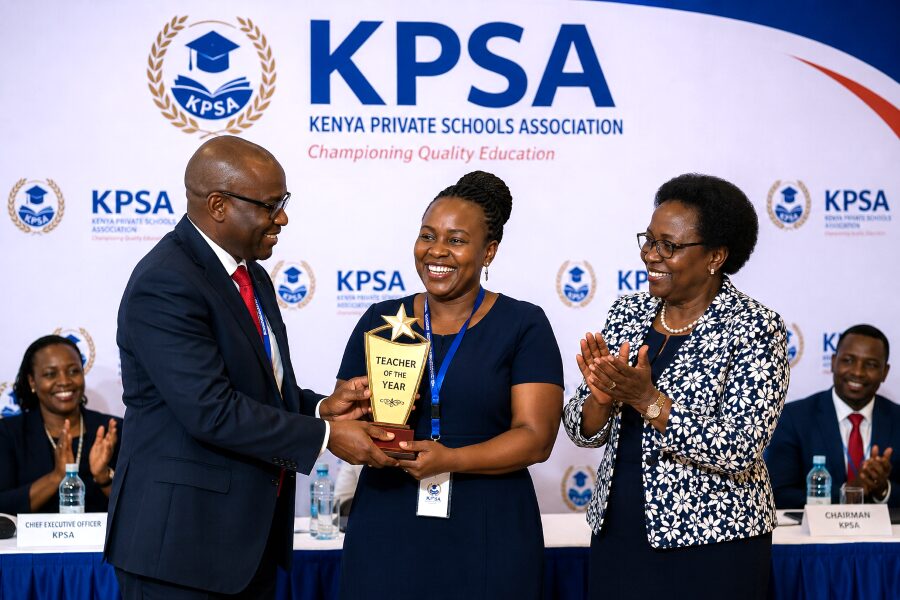
Education is not transformed by buildings, policies, examinations, or technology alone. At the heart of every successful school stands a teacher whose commitment, sacrifice, creativity, and consistency shape the lives of learners daily. Teachers do more than deliver lessons. They inspire dreams, nurture talents, build confidence, guide character development, and open pathways toward future possibilities.
Across Kenya, thousands of teachers working in private schools quietly perform extraordinary work every day. They arrive early, leave late, support struggling learners, innovate classroom practice, mentor students emotionally, organize co-curricular activities, communicate with parents, and continuously adapt to changing educational demands. Yet despite their enormous contribution to national development, many private school teachers remain largely invisible outside their institutions.
The Kenya Private Schools Association (KPSA) has a powerful opportunity to change this reality by introducing the KPSA Teacher of the Year Awards (KTOYA) — a national recognition platform celebrating teachers within private schools who have made exceptional contributions toward improving learner outcomes and transforming educational experiences.
Recognition matters. Human beings thrive when excellence is acknowledged. In education, recognizing outstanding teachers does more than reward individual achievement. It strengthens professional pride, inspires innovation, motivates educators, and elevates teaching standards across institutions.
Teaching remains one of the few professions where exceptional impact often happens quietly and invisibly. Outstanding teachers may spend years transforming lives without receiving formal recognition beyond examination results. Yet educational impact cannot always be measured purely through grades.
Some teachers transform learners by rebuilding confidence in struggling students. Others discover hidden talents in sports, arts, music, debate, public speaking, or leadership. Some create inclusive classrooms that support children with diverse learning needs. Others pioneer creative instructional methods that improve learner engagement and understanding.
Many educators become life mentors whose influence extends far beyond school gates.
Private schools across Kenya are full of such teachers.
A Grade Three teacher who patiently helps learners overcome reading difficulties contributes enormously to educational development. A science teacher who inspires curiosity and critical thinking strengthens future innovators. A language teacher who builds communication confidence shapes future leaders. A teacher who mentors vulnerable learners through difficult circumstances impacts lives in ways examination statistics may never fully capture.
The proposed KPSA Teacher of the Year Awards would provide an important platform for identifying and celebrating these educational champions.
Such awards should move beyond narrow academic performance measures alone. While examination outcomes matter, educational excellence is broader and deeper. Recognition criteria could include instructional innovation, learner growth, mentorship impact, inclusive teaching practices, talent development, leadership contribution, community engagement, digital integration, classroom creativity, and commitment to professional development.
Teachers who consistently demonstrate exceptional dedication to learners deserve visibility.
Private schools operate within highly competitive educational environments. Institutions invest significantly in infrastructure, technology, branding, and academic programmes to strengthen quality. However, educational excellence ultimately depends heavily on teachers. Recognizing outstanding educators reinforces the understanding that teachers remain central to institutional success.
Recognition systems also strengthen teacher motivation.
Private school teachers often work under demanding conditions. They manage large workloads, multiple responsibilities, curriculum changes, parental expectations, and institutional performance pressures. Despite these realities, many continue demonstrating remarkable commitment toward learners.
Recognition validates these efforts.
When teachers feel valued professionally, motivation improves, morale strengthens, and institutional loyalty increases. Educators become more invested in professional growth because excellence receives acknowledgment rather than being taken for granted.
Teacher recognition additionally creates positive competition among institutions.
Schools begin investing more intentionally in teacher development because instructional excellence becomes visible and publicly celebrated. Institutions strengthen mentorship programmes, encourage innovation, and create professional support systems that nurture teacher growth.
The ripple effects extend directly to learners.
A motivated teacher often creates more engaging classrooms. Professional pride influences instructional quality. Recognition strengthens confidence, confidence improves performance, and improved teaching strengthens learner outcomes.
Educational quality rises collectively.
The awards could further create opportunities for sharing best practices across private schools nationally. Outstanding teachers often develop highly effective approaches that remain isolated within individual institutions. Recognition platforms create opportunities for wider professional learning.
Award recipients could facilitate workshops, mentorship sessions, professional forums, and instructional-sharing platforms where successful practices benefit broader educational communities.
Professional excellence multiplies when educators learn from one another.
The awards would also strengthen the image of private education nationally. Private schools contribute enormously to Kenya’s educational ecosystem by expanding access, creating employment opportunities, introducing innovation, and supporting national educational goals.
Yet discussions around private education often focus heavily on fees, examinations, competition, or institutional branding.
Teacher recognition shifts attention toward what matters most — learning.
Celebrating educators publicly reinforces the message that private schools prioritize instructional quality and learner transformation rather than performance metrics alone.
The awards structure itself could accommodate different categories reflecting educational diversity. Recognition might include lower primary teachers, upper primary teachers, junior school educators, STEM education champions, language teachers, inclusive education practitioners, instructional innovators, talent development mentors, emerging teachers, and lifetime contribution awards.
Schools themselves could participate actively in nomination processes by documenting evidence demonstrating teacher impact.
Learner voices and parent perspectives could also enrich evaluation systems because educational influence often extends beyond measurable academic indicators.
Transparency and credibility would remain essential.
Award processes should emphasize fairness, evidence-based assessment, regional balance, and professional integrity to ensure recognition genuinely reflects educational impact rather than popularity or institutional influence.
The long-term value of such awards extends beyond annual ceremonies. Recognition creates culture, and cultures influence behaviour.
When educational systems celebrate commitment, innovation, mentorship, learner-centred practice, and professional excellence, institutions naturally strengthen these qualities internally.
The teaching profession deserves celebration.
Private school teachers across Kenya continue carrying enormous responsibilities quietly and faithfully. Some change individual learners. Others transform entire school cultures. Some influence communities. Many shape futures they may never fully witness.
Their work matters. Their sacrifices matter. Their impact matters.
READ ALSO: Deputy Commissioner urges dialogue over Kisii’s Nyamemiso school booster dispute
The Kenya Private Schools Association has an opportunity to create something transformational — a platform that clearly tells private school educators across Kenya that their work is seen, their contribution matters, and excellence deserves recognition.
Because when teachers thrive, learners thrive. And when learners thrive, nations grow stronger.
By Ashford Kimani
Ashford teaches English and Literature in Gatundu North Sub-county and serves as Dean of Studies.
You can also follow our social media pages on Twitter: Education News KE and Facebook: Education News Newspaper for timely updates.
>>> Click here to stay up-to-date with trending regional stories
>>> Click here to read more informed opinions on the country’s education landscape