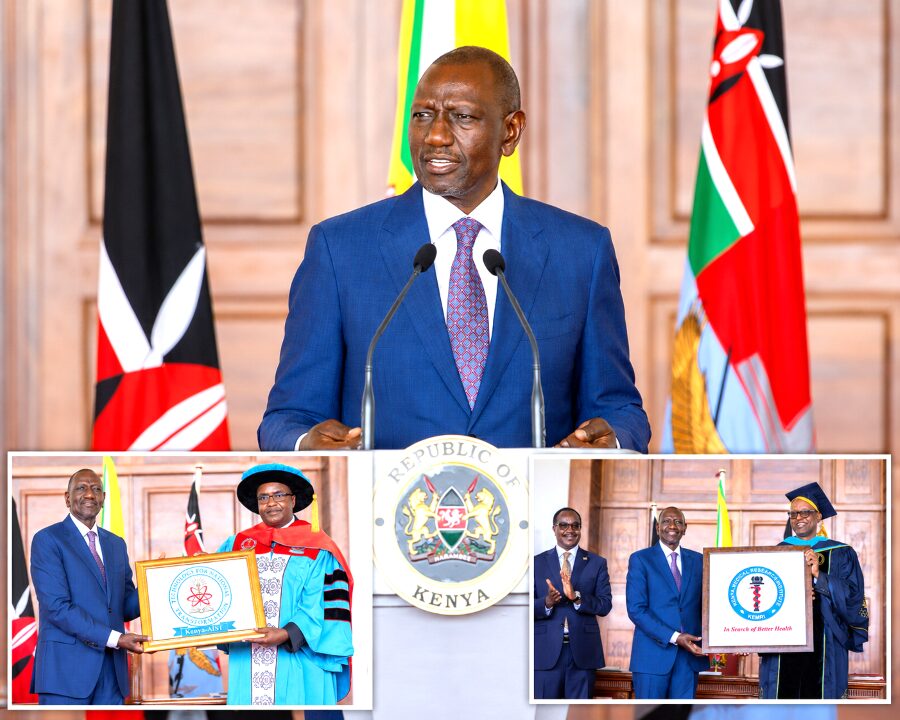
President William Ruto has awarded charters to the Kenya Advanced Institute of Science and Technology (Kenya-AIST) and the Kenya Medical Research Institute (KEMRI), elevating the two institutions into specialised degree-awarding centres in what the government described as a major step toward transforming Kenya into a science and innovation-driven economy.
Speaking during the award ceremony at State House, Nairobi, on Thursday, May 14, 2026, President Ruto said the move was aimed at positioning Kenya as a global competitor in research, technology, innovation, and industrial development.
“No nation has ever become prosperous, industrialised or globally competitive without investing deliberately in science, research, technology, innovation, and the human capital of its people,” said Ruto.
The President noted that developed countries achieved economic transformation through strategic investments in research institutions and advanced scientific training.
“The United States did not become a technological superpower by chance. It invested purposefully in great research universities such as the Massachusetts Institute of Technology, Stanford, Johns Hopkins, and Berkeley,” he said.
Ruto also cited South Korea’s rapid industrial transformation as an example Kenya intends to emulate through science and engineering investments.
“It is the reason former South Korean President Park Chung-hee once said: ‘Science and technology are the engines of national development.’ He was absolutely right,” the President stated.
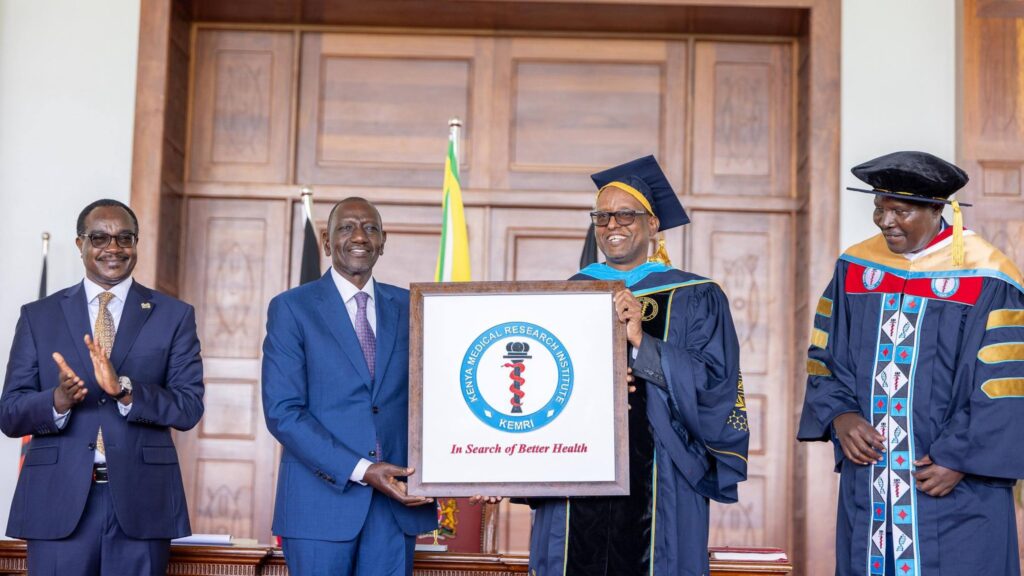
According to the Head of State, the establishment of Kenya-AIST and the elevation of KEMRI into a degree-awarding institution represent strategic pillars for Kenya’s future prosperity and resilience.
“Our gathering here is about far more than the awarding of charters to two institutions. We are laying two strategic pillars upon which Kenya’s future prosperity, resilience, and global competitiveness will stand,” he said.
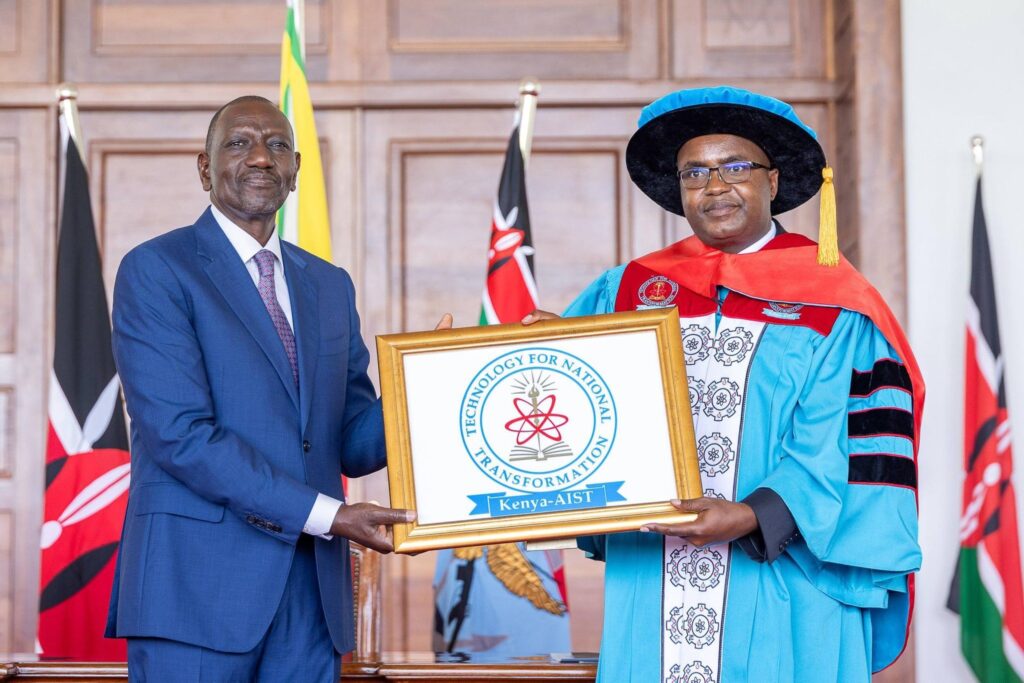
Ruto explained that Kenya-AIST will focus on emerging fields such as artificial intelligence, robotics, digital technologies, renewable energy, biotechnology, climate innovation, semiconductor physics, and advanced engineering.
“The Kenya Advanced Institute of Science and Technology will focus on artificial intelligence, robotics, digital technologies, smart manufacturing, renewable energy, biotechnology, climate innovation, semiconductor physics, and advanced engineering,” he said.
The President further praised KEMRI for its contribution to disease surveillance, diagnostics, vaccine development, and public health response systems, especially during the COVID-19 pandemic.
“Health security is national security. Countries with strong scientific institutions responded faster, adapted faster, and recovered faster,” he noted.
Ruto said the government intends to strengthen the country’s biomedical and scientific capacity by training world-class researchers and innovators capable of responding to future health challenges.
“We are building the capacity to train world-class biomedical scientists, epidemiologists, genomic researchers, public health experts, and innovators,” he said.
The President also announced that the government was committed to increasing funding for research and innovation, including operationalising the target of allocating at least two percent of the country’s GDP to research and development.
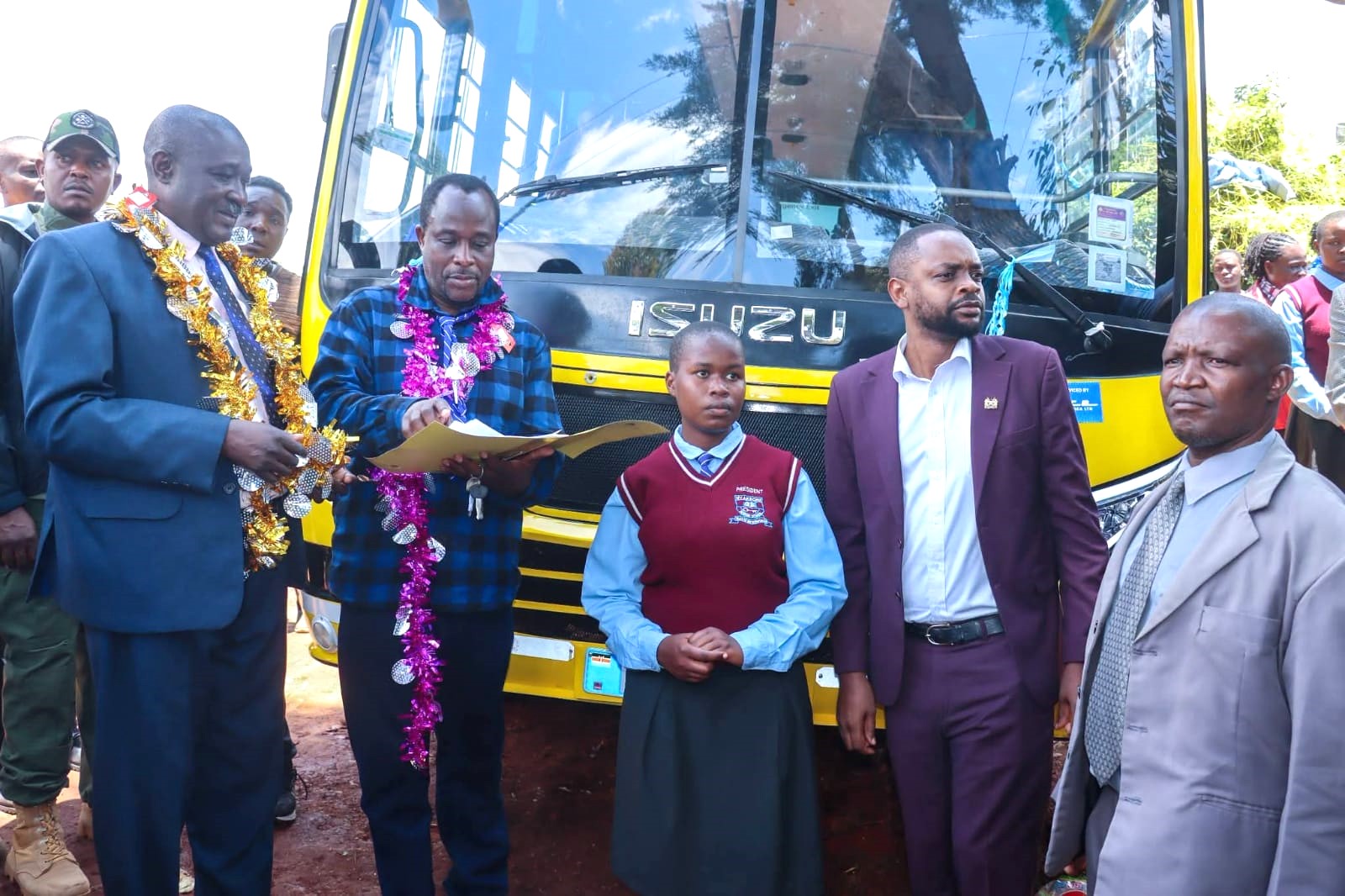
READ ALSO: Migori County school receives bus promised by President Ruto
“We are determined to fully operationalise the national target of allocating at least 2% of GDP to research and development. This will unlock billions annually for research, innovation, and scientific advancement,” he stated.
The ceremony marked a significant milestone in Kenya’s higher education and research sector as the government seeks to strengthen science, technology, engineering, and innovation as key drivers of economic transformation.
By Joseph Mambili
You can also follow our social media pages on Twitter: Education News KE and Facebook: Education News Newspaper for timely updates.
>>> Click here to stay up-to-date with trending regional stories
>>> Click here to read more informed opinions on the country’s education landscape