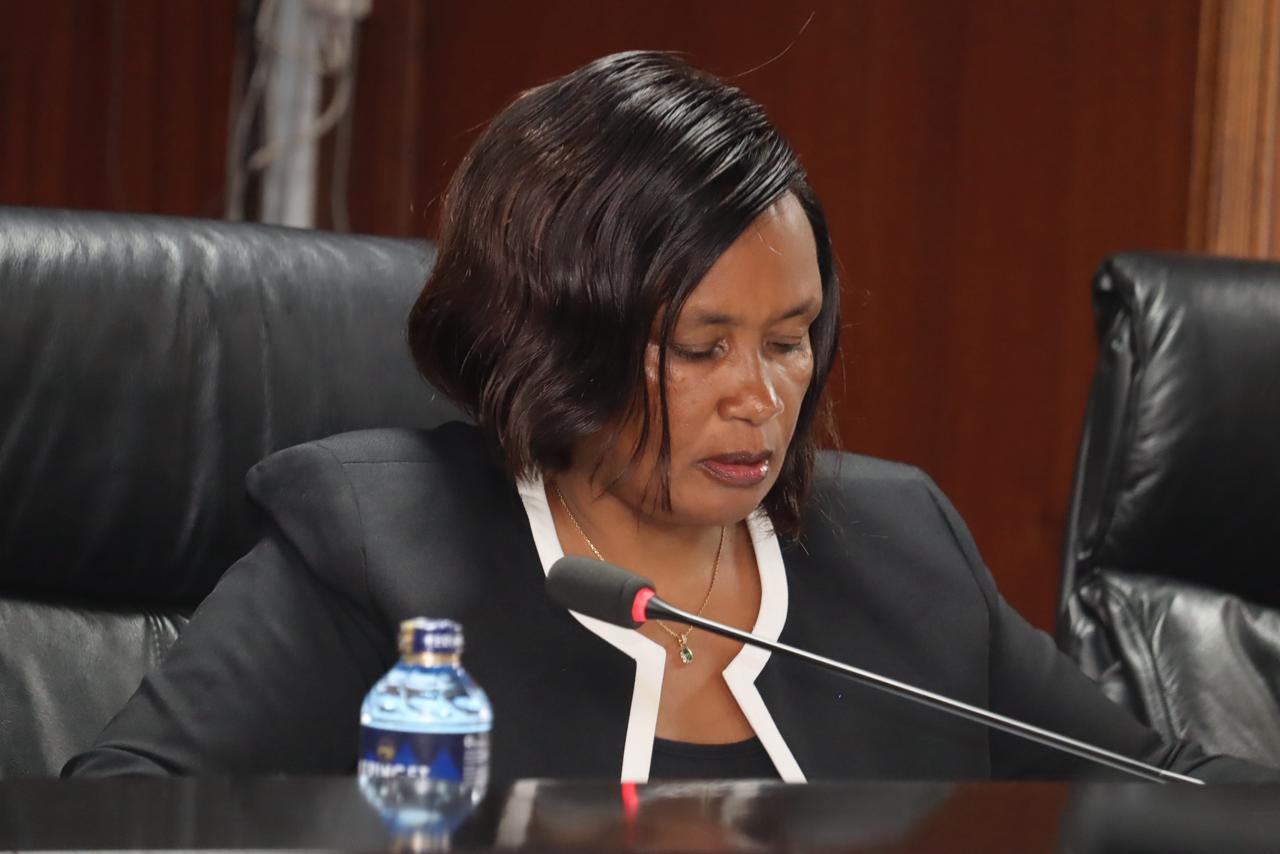
The long-standing concerns within Kenya’s education sector over teacher promotions, intern confirmation, and welfare issues once again took centre stage at Bunge Towers on Wednesday, May 13, 2026, when the National Assembly Departmental Committee on Education engaged the Teachers Service Commission (TSC) in a tense and revealing session.
What began as a routine budget review quickly transformed into a deep interrogation of the state of teacher management in the country, exposing both progress made and persistent structural gaps that continue to frustrate educators.
For years, teachers have voiced growing dissatisfaction over delayed promotions, uncertainty surrounding internship conversion, and perceived inequalities in career advancement. These issues, often raised in union forums and public discourse, reflect a profession that carries the heavy responsibility of shaping national development while continuing to grapple with administrative bottlenecks. The parliamentary session sought to confront these realities head-on.
The meeting, chaired by Hon. Julius Melly and attended by senior officials from TSC led by Acting Chief Executive Officer Ms Eveleen Mitei, was convened to deliberate on the 2026/27 Annual Estimates of Expenditure. However, the discussion quickly expanded beyond budget figures into a broader assessment of teacher welfare, recruitment policy, and promotion frameworks.
One of the most significant revelations from the session was TSC’s disclosure that out of 44,000 intern teachers currently serving across the country, only 20,000 are expected to be confirmed to Permanent and Pensionable terms in the 2026/27 financial year. According to the Commission, the affected interns are expected to complete their mandatory two-year internship period by January 2027, after which the confirmation process will be undertaken.
ALSO READ:
PS Bitok confronts Parliament over pending dues for teachers who oversaw 2025 KNEC exams
While this announcement offers relief to a section of intern teachers awaiting job security, it also highlights a widening gap in expectations. More than half of the current intern cohort will remain uncertain beyond the confirmation cycle, raising questions about equity, long-term planning, and the sustainability of relying heavily on internship-based recruitment as a transition mechanism into the profession.
The Commission further revealed a key policy constraint that immediately drew the attention of legislators: it cannot proceed with fresh recruitment on Permanent and Pensionable terms while intern teachers are still awaiting confirmation. This position effectively creates a staffing challenge, limiting flexibility in addressing shortages while maintaining commitments to existing interns.
Members of the Committee expressed concern over the implications of this approach, particularly in relation to teacher shortages in various parts of the country. Schools in marginalised and high-demand regions continue to experience staffing gaps, and MPs questioned whether the current framework adequately balances fairness to interns with urgent classroom needs.
Promotions formed another major area of concern. Legislators raised questions about regional disparities and inconsistencies in how teachers are advanced through the career ladder. Many teachers, they noted, remain stuck in the same job groups for extended periods despite acquiring additional qualifications and taking on expanded responsibilities under the Competency-Based Education system.
TSC informed the Committee that approximately 30,000 teachers are targeted for promotion in the current financial year, depending on staff exits through retirement and attrition. While this figure appears substantial, MPs emphasised that what matters most is not the number of promotions planned, but the transparency, fairness, and speed with which the process is executed.
The Committee also highlighted that KES 2 billion has been allocated for teacher promotions, urging the Commission to expedite implementation. Delays in promotions, legislators warned, risk deepening dissatisfaction within the profession and undermining morale at a time when teachers are expected to deliver increasingly complex learning outcomes under curriculum reforms.
In addition to promotions and recruitment, concerns were raised about alleged cases where some school principals are reportedly withholding teachers’ academic and professional certificates. MPs described the practice as unacceptable and called for urgent intervention to protect teachers from administrative overreach and abuse of authority.
The issue of welfare and compensation also featured prominently in the discussions. TSC acknowledged that although funds had been requested under the Work Injury Benefit Act (WIBA) for employee compensation, the allocation was not funded in the budget. This admission raised concern among legislators about the adequacy of existing protection mechanisms for teachers who suffer injuries in the line of duty.
Despite these challenges, TSC noted that the country has witnessed significant progress in teacher recruitment over the past three years, with more than 100,000 teachers hired following increased government support. However, MPs stressed that recruitment numbers alone are insufficient if promotion systems remain slow and welfare concerns unresolved.
The Committee emphasised that the success of ongoing education reforms, particularly Competency-Based Education, is heavily dependent on the motivation, stability, and professional growth of teachers. Without a satisfied and well-supported teaching workforce, they warned, implementation risks would be undermined at the classroom level.
In his closing remarks, the Chairperson urged TSC to fast-track promotions and ensure that allocated funds are utilised efficiently and transparently. He further directed the Commission to submit the Teachers’ Progression Guidelines for parliamentary review, a move aimed at strengthening oversight and addressing long-standing concerns over fairness and consistency in career advancement.
READ ALSO: TSC will confirm 20,000 intern teachers to permanent terms in 2026/27, Mitei tells MPs
The meeting ultimately reflected a profession at a critical crossroads. While progress has been made in recruitment and planned confirmations, deep-rooted issues surrounding promotions, welfare, and policy implementation remain unresolved. Teachers continue to carry the burden of national education delivery while navigating a system still struggling to align policy ambition with operational reality.
As the country moves forward with education reforms, the coming financial year will be decisive in determining whether these commitments translate into meaningful improvement for teachers or whether long-standing frustrations will persist within the sector.
By Hillary Muhalya
You can also follow our social media pages on Twitter: Education News KE and Facebook: Education News Newspaper for timely updates.
>>> Click here to stay up-to-date with trending regional stories
>>> Click here to read more informed opinions on the country’s education landscape