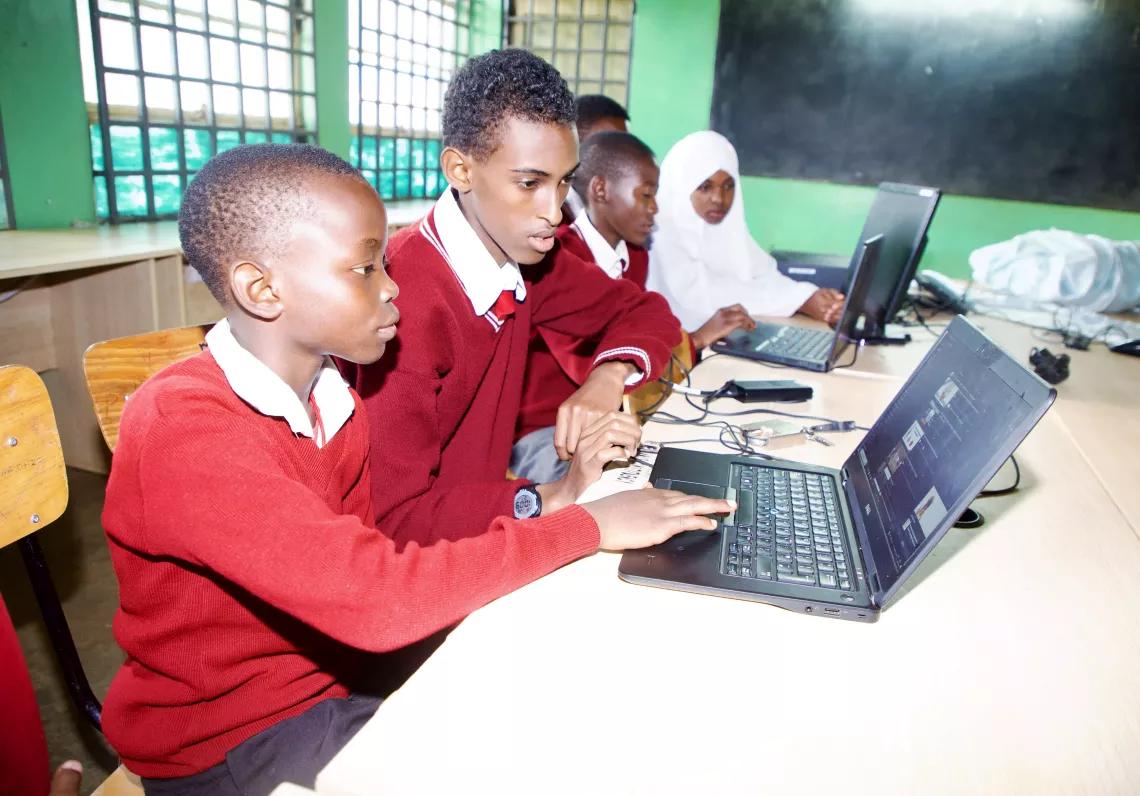
As the Competency-Based Education (CBE) system continues to take shape in Kenya, many parents, teachers, and learners are still struggling to fully understand what truly matters in the Kenya Junior School Education Assessment (KJSEA).
Is success measured by getting EE1 in all learning areas, or is it about performing well in the specific learning areas aligned with a learner’s pathway and career interests? This is a question Kenya must urgently address as the country transitions from the old examination-oriented system to a competency-based model of education.
Junior School is the third level of basic education in Kenya and serves as an important transition stage to Senior School. At this level, learners are expected to acquire competencies, values, skills, attitudes, and knowledge that prepare them for pathway selection at Senior School. Unlike the former 8-4-4 system, where placement was heavily dependent on overall examination performance and national ranking, placement under CBE is designed to consider learner interests, abilities, potential, and competencies.
Under the old system, learners who scored 400 marks and above in KCPE were automatically considered the brightest and had the highest chances of joining National Schools. Success was therefore largely determined by overall marks regardless of individual strengths and career interests. However, CBE introduces a completely different approach. Learners are now expected to select pathways and tracks aligned with their talents, aspirations, and competencies.
The three Senior School pathways include STEM (Science, Technology, Engineering and Mathematics), Social Sciences, and Arts and Sports Science. Within these pathways, learners further select tracks and subject combinations identified through specific codes. For example, under STEM there are tracks such as Pure Sciences, Applied Sciences, and Technical Studies. Under Social Sciences there are Language and Literature tracks as well as Humanities and Business Studies tracks. Arts and Sports Science also contains tracks focusing on creative arts and sports development.
These pathway and track codes are directly tied to subjects offered at Senior School and their correspondence with learning areas undertaken at Junior School. This means that a learner aspiring to pursue Pure Sciences at Senior School is expected to demonstrate strong performance in STEM-related learning areas during KJSEA. Similarly, a learner interested in Humanities, Languages, Arts, or Sports Science should perform strongly in the learning areas connected to those pathways.
This now brings us back to the main question: What matters most in KJSEA? Is it getting EE1 in all subjects or performing well in the specific learning areas related to the learner’s pathway?
To me, as a strong champion of Competency-Based Education, teachers, parents, and learners must first understand and internalize the mission and vision of CBE. The mission of CBC is “Nurturing Every Learner’s Potential.” This means every learner is unique and should therefore be guided according to individual strengths, interests, and capabilities. The purpose of KJSEA is not merely to rank learners but to help identify competencies and support appropriate placement into pathways where learners are likely to thrive.
What learners need to understand is that excelling in the learning areas connected to their intended pathway is extremely important. A learner who wants to pursue STEM pathways must perform strongly in Mathematics, Integrated Science, Pre-Technical Studies, and other related learning areas. Likewise, a learner interested in Languages or Humanities should focus on excelling in those respective areas. The goal is not simply collecting EE1 grades across all subjects but demonstrating competency and excellence in the pathway that aligns with the learner’s aspirations.
In fact, many people still misunderstand the meaning of EE1 in KJSEA. Getting EE1 in all nine learning areas does not automatically mean that a learner is exceptionally bright or more competent than others. One important reality is that nobody outside the Kenya National Examinations Council (KNEC) knows the exact score ranges used to determine achievement levels such as EE1. The grading thresholds are determined internally, meaning an EE1 may not necessarily reflect extremely high marks such as 80 or 90 percent.
What surprised me most last year was the case of one of my learners who attained EE1 in all learning areas but failed to attain a 75 percent cluster weight in all three pathways. In fact, the learner scored approximately 68 percent cluster weight across the pathways. This clearly demonstrated that although the learner attained EE1 grades, the actual marks were still relatively low in terms of pathway competitiveness. This simply means that the EE1 grades attained were far from the high percentages many people assumed.
Therefore, learners, parents, and teachers must stop overemphasising achievement levels alone and instead focus on actual competency development and strong performance in pathway-related learning areas. CBE is highly competitive because placement into pathways and schools depends on learner strengths, pathway demand, and performance within relevant learning areas.
A learner who has already identified a pathway should therefore work towards exemplary performance in subjects connected to that pathway. Success under CBE is no longer about becoming generally good at everything for the purposes of ranking. It is about understanding one’s abilities, nurturing talents, building competencies, and excelling in areas that align with future aspirations and career development.
READ ALSO: TSC advertises five senior career opportunities, applications close May 25
Kenya must now move away from the mentality that educational success is only measured through overall grades and ranking. CBE seeks to redefine success by recognising that learners possess different forms of intelligence and should therefore be allowed to grow according to their potential. The earlier parents, teachers, and learners understand this philosophy, the easier it will become to appreciate the true purpose of KJSEA and competency-based learning.
By Polycap Ateto
Polycap is a CBE trainer and career coach for Grade 9 learners.
You can also follow our social media pages on Twitter: Education News KE and Facebook: Education News Newspaper for timely updates.
>>> Click here to stay up-to-date with trending regional stories
>>> Click here to read more informed opinions on the country’s education landscape