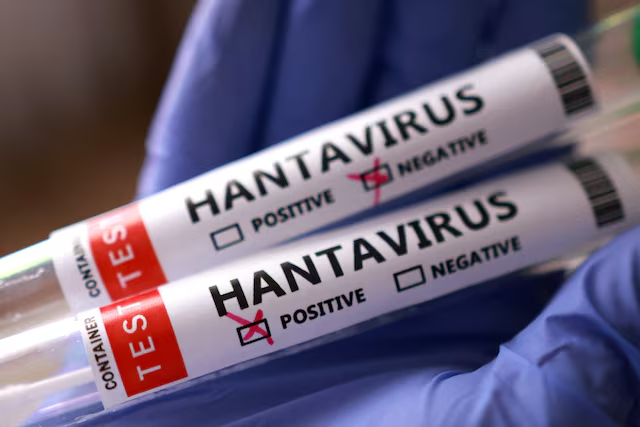
The recent Hantavirus outbreak aboard the expedition cruise ship MV Hondius has once again exposed the fragile nature of global health systems in an interconnected world. What started as a mysterious illness among a few passengers in the South Atlantic quickly transformed into an international public health concern involving multiple countries, emergency evacuations, contact tracing operations, and worldwide surveillance efforts.
For Kenya, the outbreak should not merely be viewed as distant foreign news unfolding somewhere between South America and Europe. It should instead be treated as a serious case study carrying urgent lessons for our healthcare system, public health planning, disease surveillance structures, and national preparedness.
Modern diseases no longer respect borders, geography, immigration checkpoints, or economic class. Air travel, tourism, trade routes, migration, and international business have effectively turned the world into one connected epidemiological space. An infection emerging on a ship thousands of kilometers away can find its way into African cities within hours through normal travel networks.
The COVID-19 pandemic already demonstrated this reality painfully. Yet as global attention shifted away from pandemics after restrictions were lifted, many countries gradually returned to dangerous complacency. The hantavirus incident now reminds the world that infectious disease threats remain active and unpredictable.
Kenya must pay close attention.
One of the first lessons from the outbreak is the importance of early detection systems. Reports indicate that several passengers aboard the ship initially developed symptoms resembling ordinary flu. Fever, fatigue, headaches, and breathing difficulties did not immediately trigger alarm because such symptoms are common in many illnesses. By the time the disease was identified as a potential hantavirus outbreak, passengers had already disembarked and traveled across different countries.
This delay significantly complicated containment efforts.
ALSO READ:
Parents raise concerns over remedial fee at Ng’araria girls’ school in Murang’a
Kenya faces similar vulnerabilities every day. Many infectious diseases begin with symptoms that mimic malaria, pneumonia, influenza, tuberculosis, or common viral infections. In overcrowded hospitals and under-resourced clinics, early warning signs are easily missed. Diagnostic delays remain common, especially in rural counties where laboratory infrastructure is limited.
The lesson here is simple but critical: Kenya must strengthen diagnostic capacity beyond major referral hospitals. County hospitals require better-equipped laboratories, faster testing systems, and continuous training for frontline healthcare workers to recognize emerging diseases before they spread widely.
Another major lesson involves disease surveillance and data integration. During the hantavirus crisis, international health agencies immediately launched contact tracing operations across multiple countries. This rapid coordination relied heavily on digital travel records, communication systems, laboratory networks, and real-time information sharing between governments.
Kenya has made progress in digital health reporting, but major gaps remain. Disease surveillance in some counties still relies on delayed paperwork, fragmented reporting systems, and weak coordination between national and local health offices. In remote regions, outbreaks may spread for days before reaching national attention.
A modern healthcare system cannot depend solely on reacting to disease after hospitals become overwhelmed. It must predict, monitor, and detect threats early.
Investment in real-time disease intelligence systems is therefore no longer optional. Kenya needs stronger integration between hospitals, laboratories, immigration systems, veterinary services, and public health agencies. Emerging infections often originate at the intersection between human health, animal health, and environmental changes.
ALSO READ:
This is particularly important because hantavirus itself is a zoonotic disease, meaning it spreads from animals to humans. Rodents are the primary carriers. Kenya already faces multiple zoonotic disease risks including Rift Valley Fever, anthrax, rabies, brucellosis and occasional avian influenza threats.
Rapid urbanization is increasing these dangers. Informal settlements around Nairobi, Mombasa, Kisumu, and other urban centers often struggle with poor waste management, overcrowding, blocked drainage systems, and rodent infestations. Climate change and flooding worsen the situation further by disrupting ecosystems and increasing human-animal contact.
Public health cannot therefore be separated from urban planning, sanitation, housing policy, and environmental management.
The hantavirus outbreak also highlights the importance of public communication during health emergencies. During outbreaks, fear spreads quickly, especially on social media where misinformation often circulates faster than verified medical information. Confusion, rumors, and conspiracy theories can easily undermine public trust.
Kenya experienced this challenge during COVID-19. Conflicting information about vaccines, treatments, and government directives created confusion among citizens. Some people avoided hospitals altogether due to fear or misinformation.
A strong healthcare system requires not only doctors and hospitals but also credible communication. The Ministry of Health must continuously build public trust through transparent, timely, and science-based communication strategies. Citizens are more likely to cooperate during health emergencies when they trust official information.
The outbreak further exposes the importance of emergency preparedness infrastructure. Countries responding to the MV Hondius crisis mobilized specialized isolation facilities, emergency medical evacuation procedures, laboratory testing systems and coordinated international response teams.
ALSO READ:
Trans Nzoia’s Janerose Mutama ranked best performing education CEC in Western region
Kenya still faces major gaps in emergency preparedness. Intensive care units remain inadequate in many counties. Oxygen shortages occasionally emerge during surges in respiratory illnesses. Some health facilities still lack isolation wards capable of managing highly infectious diseases safely.
The COVID-19 experience revealed how quickly healthcare systems can become overwhelmed when patient numbers rise suddenly. Kenya must therefore continue investing in resilient healthcare infrastructure rather than waiting for the next emergency.
Equally important is healthcare workforce development. Emerging infectious diseases require highly trained epidemiologists, laboratory scientists, infectious disease specialists, public health officers, emergency response teams, and research experts. Kenya has talented medical professionals, but staffing shortages, burnout, migration of healthcare workers abroad, and inadequate funding continue weakening the system.
No healthcare system can function effectively without motivated and adequately supported personnel.
Perhaps the most important lesson from the hantavirus outbreak is that healthcare is now a national security issue. Disease outbreaks affect economies, education, tourism, transportation, trade, and political stability. Public health emergencies are no longer isolated medical events. They have become national development challenges.
A country with weak healthcare systems becomes vulnerable not only medically but also economically and socially.
Kenya therefore needs a long-term healthcare vision that prioritizes preparedness rather than crisis management. Investment in research institutions, local pharmaceutical production, laboratory capacity, disease surveillance, digital health systems, and preventive healthcare must become national priorities.
The world after COVID-19 should have learned that prevention is far cheaper than emergency response. The hantavirus outbreak aboard a distant cruise ship now reinforces that lesson once again.
Diseases travel quickly. Preparedness cannot wait.
By Ashford Kimani
Ashford teaches English and Literature in Gatundu North Sub-county and serves as Dean of Studies.
You can also follow our social media pages on Twitter: Education News KE and Facebook: Education News Newspaper for timely updates.
>>> Click here to stay up-to-date with trending regional stories
>>> Click here to read more informed opinions on the country’s education landscape