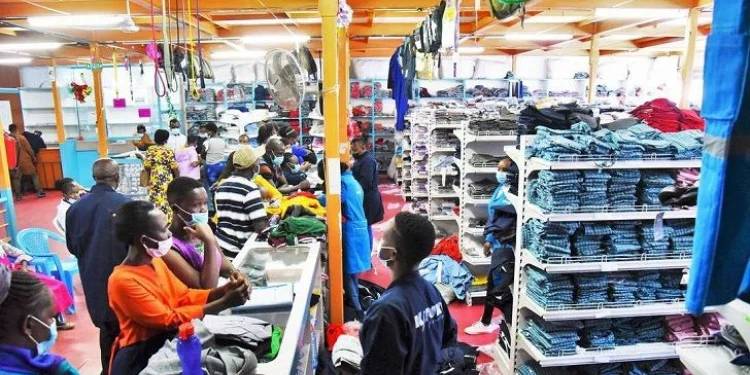
Corruption in the sale of school uniforms in Kenya has evolved into a deeply entrenched practice that reflects broader governance challenges within the education sector. While often dismissed as a minor administrative issue, the reality is far more consequential. The uniform, ostensibly a symbol of equality and identity within schools, has been transformed into a vehicle for exploitation, rent-seeking, and institutional opacity. What should be a simple requirement has instead become a burden disproportionately borne by parents, particularly those from low-income households striving to secure educational opportunities for their children.
At the center of this problem lies the deliberate restriction of supply channels. Many schools, especially high-performing national and extra-county institutions, insist that uniforms be purchased exclusively from designated vendors. These vendors are presented as “approved suppliers,” a term that suggests quality assurance but often conceals a lack of competitive procurement processes. In practice, this arrangement eliminates market competition and grants the supplier monopoly power. Prices are consequently inflated well beyond prevailing market rates, leaving parents with no viable alternatives. The uniform thus becomes a compulsory purchase under conditions that mirror coercive market control rather than fair exchange.
This monopolistic structure is frequently underpinned by informal financial arrangements between suppliers and school officials. Although difficult to document formally, anecdotal evidence and recurring patterns strongly suggest the existence of kickbacks or commission-based agreements. Suppliers, guaranteed a captive market, can afford to share a portion of their profits with insiders while still maintaining high retail prices. This dynamic transforms the school into a site of commercial extraction, where administrative authority is leveraged not for educational outcomes but for private gain. The ethical implications are profound, as institutions entrusted with shaping young minds become complicit in practices that undermine integrity and fairness.
Compounding the issue is the strategic manipulation of uniform specifications. Rather than adopting generic, easily replicable designs, some schools prescribe highly specific fabrics, colors, and patterns that are difficult to source in the open market. Unique stripes, custom embroidery, and exclusive badges are introduced not merely for aesthetic distinction but as mechanisms of control. By making the uniform difficult to reproduce, schools effectively lock parents into a single supply chain. Even where policy allows for open-market purchase, these restrictive specifications act as a barrier, ensuring that the status quo remains intact under the guise of maintaining standards.
ALSO READ:
Junior School rollout strained an already broken system, new infrastructure rules reveal
The practice of bundling further exacerbates the financial strain on parents. Instead of allowing families to purchase uniform items progressively based on need, schools often require the acquisition of complete sets at the point of admission. These bundles may include games kits, multiple pairs of uniforms, sweaters, laboratory coats, and other branded items. While some of these components are justifiable within the educational context, their compulsory and simultaneous purchase inflates the initial cost of schooling to prohibitive levels. For many families, this represents a significant financial shock, forcing them to incur debt or divert resources from other essential needs.
From a policy perspective, the persistence of these practices points to a failure of enforcement rather than a lack of regulation. The Ministry of Education has, for years, maintained that parents should be free to purchase uniforms from vendors of their choice, provided that the items meet prescribed standards. However, the absence of robust monitoring mechanisms has allowed schools to circumvent these guidelines with relative impunity. Boards of Management, which are tasked with oversight, are often either unaware of the extent of the problem or unwilling to challenge entrenched interests. In some cases, they may even benefit indirectly from the existing arrangements, further weakening accountability structures.
The consequences of this form of corruption extend beyond immediate financial burdens. There is a subtle but powerful pedagogical impact. Schools function not only as centers of academic instruction but also as environments where values are modelled and internalized. When students observe systems that prioritize profit over fairness, they absorb implicit lessons about the acceptability of such behaviour. The normalization of exploitative practices within educational institutions risks perpetuating a culture in which corruption is seen as routine rather than aberrational.
Recent policy directives advocating for the liberalization of uniform procurement represent an important step toward addressing this issue. By allowing parents to source uniforms from the open market, the government aims to introduce competition, reduce prices, and dismantle entrenched monopolies. However, the effectiveness of this reform will depend largely on its implementation. Without clear and enforceable guidelines on uniform specifications, schools may resort to indirect methods of resistance, such as rejecting externally sourced uniforms on technical grounds or subtly pressuring parents to conform to traditional purchasing channels.
To ensure meaningful change, transparency must be institutionalized. Schools should be required to publish detailed but generic uniform specifications that do not favor any particular supplier. Any deviations from these standards should be justified and subject to scrutiny by education authorities. Additionally, accessible grievance redress mechanisms must be established to empower parents to report coercive practices without fear of retaliation against their children. County and sub-county education offices have a critical role to play in this regard, serving as impartial arbiters in disputes between parents and school administrations.
ALSO READ:
The power behind the principal: Inside the engine room of deputy principals driving school success
There is also potential for collective action at the community level. Parents’ associations can leverage their numbers to negotiate fair prices with independent suppliers or organize cooperative procurement systems that prioritize affordability and quality. Such initiatives not only reduce costs but also restore a measure of agency to parents, countering the power imbalance that has long characterized uniform transactions.
Ultimately, addressing corruption in the sale of school uniforms requires a broader commitment to institutional integrity within the education sector. It demands that schools reaffirm their primary mandate as centers of learning and character formation, rather than as avenues for informal revenue generation. The uniform, in its ideal form, should symbolize equality, discipline, and shared identity. Reclaiming that symbolism necessitates confronting and dismantling the systems of exploitation that have distorted its purpose. Only then can the education system align its practices with the values it seeks to impart, ensuring that the lessons taught within classrooms are not contradicted by the realities experienced outside them.
By Ashford Kimani
You can also follow our social media pages on Twitter: Education News KE and Facebook: Education News Newspaper for timely updates.
>>> Click here to stay up-to-date with trending regional stories
>>> Click here to read more informed opinions on the country’s education landscape
>>> Click here to stay ahead with the latest national news.