The allure of STEM—Science, Technology, Engineering, and Mathematics—has been sold with irresistible force in Kenya. For years, parents were told that choosing STEM would secure their children a prosperous future. High-paying jobs, scholarships, and global opportunities were promised.
But barely three months into Grade 10, is the reality starkly different. For many learners, STEM has become less a pathway to success and more a burden too heavy to carry.
Across the nation, parents are raising urgent concerns. They allege that the Kenya National Examinations Council (KNEC) effectively pushed students into the STEM pathway without adequately considering their abilities, interests, or academic readiness. Learners who had struggled with mathematics, physics, or biology in earlier years suddenly found themselves immersed in subjects that require advanced reasoning and consistent practice. The result has been frustration, anxiety, and in many cases, a noticeable decline in academic confidence.
The complaints are strikingly consistent. Many students report that they received virtually no guidance when pathways were being assigned. Most parents say that the only advice given was that STEM “makes it easier to get a job after school.”
There was little discussion about whether their child’s natural talents, personal interests, or long-term goals aligned with this demanding choice. Meanwhile, social sciences such as Religious Education, History, and Geography were subtly devalued, cast as options for students who might not succeed academically or secure high-paying jobs. The message was clear: STEM is serious; everything else is secondary.
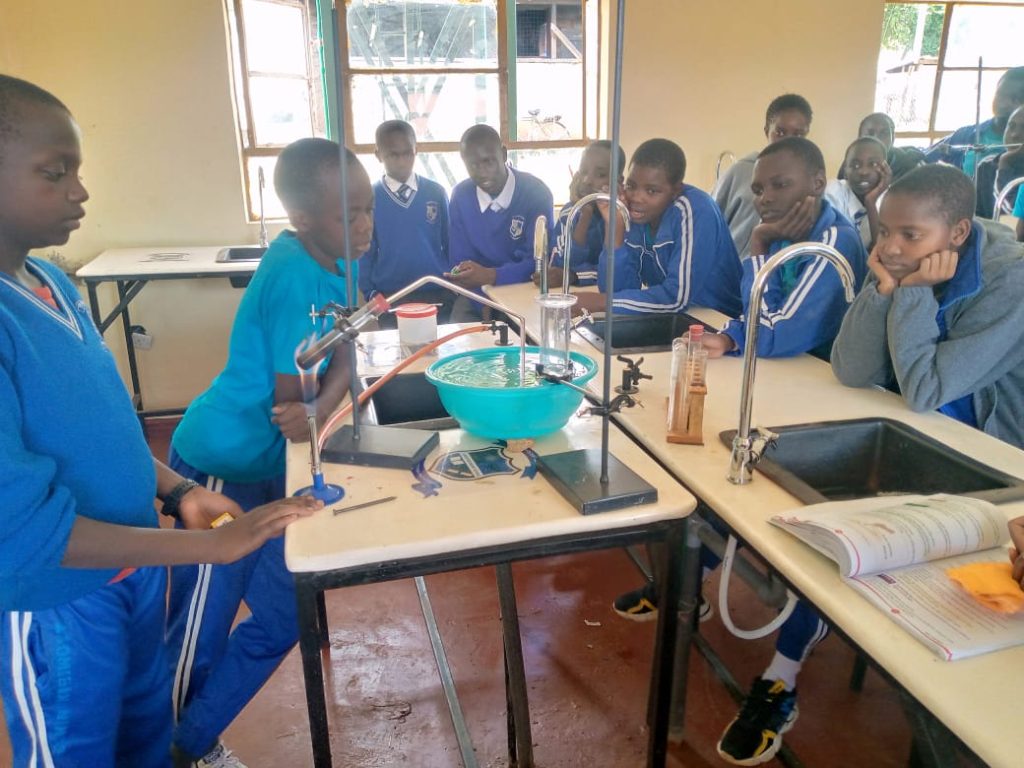
Now, that narrative is collapsing under the weight of reality. In classrooms across the country, students are struggling to keep pace with the curriculum. Complex equations, laboratory experiments, and abstract scientific concepts are overwhelming learners who may have performed well in less technical subjects. Classrooms that should be hubs of curiosity and discovery have become arenas of stress, fatigue, and self-doubt. Students who once loved learning are now disengaged, anxious, or demoralized.
ALSO READ:
Bomet’s Olbutyo Girls to host thrilling soccer and volleyball tournament in May
This is not a reflection of laziness or lack of intelligence. It is the result of systemic misplacement—forcing learners into tracks that do not match their abilities. Around the world, research consistently shows that students placed in academic pathways misaligned with their skills or interests are more likely to underperform, disengage from learning, and lose confidence. The cost is not just temporary: it can shape their entire academic trajectory and long-term potential.
Consider a student who excelled in History or Literature but struggled with mathematics and sciences. Suddenly, that student is expected to master abstract scientific theories and complex formulas. Motivation diminishes. Curiosity wanes. Parents watch helplessly as their children’s confidence crumbles under the weight of expectations they are unprepared to meet.
At the same time, the assumption that STEM guarantees better job prospects is dangerously simplistic. While STEM careers are undeniably vital, they are not the only engines of growth or influence. Social sciences, humanities, creative industries, and sports science play equally important roles in shaping governance, cultural preservation, leadership, communication, and social cohesion. By devaluing these pathways, we risk narrowing Kenya’s talent pool, producing technically skilled graduates who may lack the social, analytical, or ethical grounding to navigate the challenges of society effectively.
Faced with these realities, parents are becoming vocal advocates for change. Many are urging the Ministry of Education (MoE) to allow students greater flexibility—to permit them to switch pathways if the initial placement is unsuitable. This is not a call for rebellion; it is a plea for reason, for a system that recognizes that a learner’s abilities and interests are dynamic, not fixed.
Flexibility is not a sign of weakness—it is a mark of a mature education system. Growth is not linear. Interests evolve. Exposure reveals new talents. A 15- or 16-year-old may discover a newfound passion for creative arts, sports science, or social sciences after the first term of senior secondary school. Locking learners into rigid pathways without any opportunity to adjust is punitive; it punishes curiosity, experimentation, and exploration—the very qualities that education should nurture.
The Ministry must urgently introduce structured, guided windows for pathway transfers. These adjustments should not be haphazard, but carefully managed to ensure learners can transition without falling behind. Bridging programs, remedial support, and academic counseling must accompany any pathway change, ensuring that students who opt out of STEM are not penalized academically.
ALSO READ:
HELB faces KSh89.7 billion loan defaults as Auditor General warns of sustainability risks
Schools must also strengthen career guidance systems, equipping both learners and parents with comprehensive information about the demands, opportunities, and long-term realities of each pathway. Slogans and marketing pitches are not enough; families need clarity and transparency to make informed decisions.
Equally vital is the need to restore dignity to all subjects. No field of study should be portrayed as inferior. Every academic discipline—whether STEM, humanities, social sciences, or creative arts—contributes meaningfully to nation-building. Society requires engineers, doctors, and IT experts, but it also requires historians, economists, teachers, counselors, and leaders who understand human behavior, ethics, and societal dynamics. Marginalizing certain pathways diminishes not only learners’ potential but the very diversity of skills and perspectives that the nation needs to thrive.
Meanwhile, assessment bodies like KNEC must align placement decisions with real-world evidence of student performance and aptitude. Assumptions, generalized policy pressures, and one-size-fits-all directives cannot replace individualized assessment. Transparency, accountability, and data-driven decision-making are essential to prevent further misplacements that could compromise learners’ development and morale.
The stakes are high, and the consequences are already visible. A student placed in an unsuitable pathway is more likely to underperform academically, disengage from learning, and experience a prolonged loss of confidence. Multiply this across thousands of learners, and the result is a generation whose potential has been constrained by rigid policies rather than nurtured by adaptive, supportive education practices.
The message from classrooms across Kenya is unmistakable: alignment matters more than ambition. A learner forced into a pathway they are unprepared for is not being “prepared for the future”—they are being set up for struggle, frustration, and potentially lasting academic scars.
ALSO READ:
When schools fail to protect: Hard lessons from the Ruthimitu Secondary incident
This is also a clarion call to parents. In the absence of robust systemic guidance, parents must step in as advocates. They must seek advice, question placement decisions, and push for adjustments where necessary. Active parental involvement can mitigate the negative impacts of misaligned pathways and help students regain both confidence and enthusiasm for learning.
The STEM trap is a cautionary tale for the nation. Even well-intentioned reforms can fail if they do not place the learner at the center. Education is not about molding children into what the system perceives as ideal; it is about enabling them to discover what they are capable of and then creating an environment that allows them to flourish.
Ambition without alignment is dangerous. A curriculum, no matter how visionary, cannot succeed if it ignores the learner. STEM should be an opportunity, not a burden; a doorway, not a cage. Flexibility, guidance, and respect for individual strengths are not optional—they are essential.
As the first term of Grade 10 unfolds, parents, educators, and policymakers are witnessing the consequences of rushed and misaligned pathway assignments. Learners’ mental wellbeing, confidence, and academic growth are all at stake. If corrective measures are not implemented urgently, the nation risks a generation of young people whose potential may be diminished before it even has a chance to flourish.
Our education system must listen, adapt, and respond. The future of Kenya’s youth—and the nation’s intellectual, cultural, and social capital—depends on it.
“Children deserve guidance, not pressure; opportunity, not a trap. The system must see them, support them, and allow them to thrive.”
By Hillary Muhalya
You can also follow our social media pages on Twitter: Education News KE and Facebook: Education News Newspaper for timely updates.
>>> Click here to stay up-to-date with trending regional stories
>>> Click here to read more informed opinions on the country’s education landscape