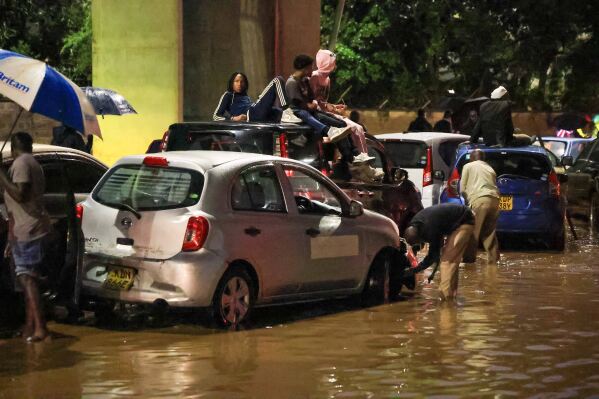
The extended rainfall period that began recently has demonstrated how insecure Nairobi and other counties remain against flooding, while its destruction patterns lead to numerous interruptions and fatalities. The rains have caused roads to flood and homes to sink under water, making movement impossible.
The National Police Service reports that at least 23 people died because of the devastating floods that struck Nairobi on Friday. The fatalities have been attributed to drowning, electrocution and incidents where individuals were swept away by fast-moving water. Despite efforts to evacuate trapped individuals and support affected families, this recent disaster shows that many regions lack proper systems to manage heavy rainfall events.
The floods have caused economic disruptions which have affected many business industries. The transport system has suffered major damage because essential routes have become unusable. The rising water levels in Migori County have caused bridge collapses, which have prevented communities from accessing essential services.
People who live in affected regions need to travel through unsafe paths, which take more time to reach their destinations. The destruction of infrastructure has created transportation problems, which prevent goods and agricultural products from reaching their destinations, thus endangering both local economies and regional commercial activities.
ALSO READ:
Western Kenya schools shine at 2026 term one county games ahead of regional championship
The economy of Kenya depends on agriculture as its main economic pillar, which has been harmed by continuous rains and flooding. Excessive rainfall leads to uncontrolled flooding, which destroys entire farms by sweeping away young crops and fertile soil. Farmers in multiple regions face significant financial losses because their fields remain flooded, while their upcoming harvests are destroyed.
The education sector has not been spared either. Schools in multiple areas have become inaccessible for students because flooding has closed roads and destroyed bridges. Parents must keep their children at home for safety while teachers face difficulties reaching their educational institutions. The education access problems in the country create social unrest because they disrupt educational activities in schools, which operate as centres for learning. Improper waste management methods create blockages which stop rainwater from flowing through water channels. The unregulated construction activities which take place along riverbanks and riparian land areas have resulted in increased flood risks for residential neighborhoods which now endanger thousands of residents.
RELATED:
Amid raging floods, learner safety must be Nairobi’s top priority
The government needs to spend money on new drainage systems that can manage heavy rainfall, while they must keep their current systems in good condition. Urban planning policies must be enforced strictly to prevent construction in flood-prone zones and to protect vital waterways that help regulate water flow within the city.
In conclusion, community members must adopt responsible waste disposal practices and avoid dumping garbage into drainage systems and rivers. The public should learn about environmental damage and shared responsibility through public awareness campaigns, which need improvement. Residents can develop emergency response capabilities through flood preparedness training and community-based response programs, which enable them to handle emergencies with speed and security.
By Tonny Kyule Nyamai
Tonny Nyamai is a media and communication student at Rongo University, Migori.
You can also follow our social media pages on Twitter: Education News KE and Facebook: Education News Newspaper for timely updates.
>>> Click here to stay up-to-date with trending regional stories
>>> Click here to read more informed opinions on the country’s education landscape