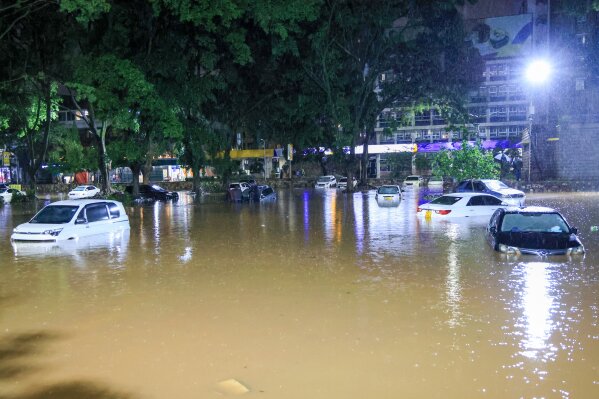
Every rainy season exposes the cracks in Nairobi’s urban landscape. What should be a routine seasonal event often turns into a humanitarian crisis, streets submerged, vehicles stranded, homes flooded, and tragically, lives lost.
Recent heavy rains claimed over twenty-five lives, according to official reports. Among them were pedestrians swept away by strong currents, motorists trapped in flooded roads, and children walking to school. Families were devastated, dreams were cut short, and communities were thrown into grief.
These losses are more than statistics, but reminders that the era of assumptions is over. Nairobi can no longer rely on aging drainage systems to cope with rapid urban growth and increasingly intense rainfall. Most importantly, child safety must be the topmost priority, because when learners are safe, everyone else is safe.
ALSO READ:
CS Ogamba raises alarm over 1,000 secondary schools without Grade 10 Learners
A City Outgrowing Its Foundations
Nairobi’s drainage infrastructure was built decades ago when the population was smaller and large areas of land allowed rainwater to absorb naturally. Today, the city has expanded into a dense metropolis dominated by concrete estates, commercial complexes, asphalt roads, and parking areas. Rainwater, instead of seeping into the soil, rushes across hardened surfaces into drains that cannot handle the volume. The result: streets turning into rivers, homes submerged, and lives at risk.
Heavy rains now overwhelm drainage systems almost immediately. Every downpour carries the same potential for disaster unless decisive action is taken.
Rivers Under Siege
The Nairobi River, Mathare River, and Ngong River once drained stormwater safely. Today, these rivers are heavily encroached upon, polluted, and narrowed. Informal settlements line the banks, riparian land has been converted into housing and commercial spaces, and wetlands that acted as natural buffers have been destroyed.
During heavy rainfall, these rivers swell and overflow, especially in low-lying communities. Many flood-related deaths have occurred in areas adjacent to these rivers, with open water channels sweeping away pedestrians, motorists, and children alike.
ALSO READ:
Andersen lauded for establishing schools and vocational training in Trans-Nzoia County
The Hidden Danger of Blocked Drains
Blocked drainage channels exacerbate flooding. Plastic waste, bottles, construction debris, and household garbage often clog drains. When rain falls, blocked drains force water onto streets and residential areas. Floodwaters conceal open drains and broken manholes, creating hidden hazards. Many fatalities during the recent rains involved individuals swept away by fast currents in open drainage channels.
The Human Cost: Children Among the Most Vulnerable
Over twenty-five lives were lost in Nairobi’s latest floods. The victims ranged from adult men and women to school-going children. Rescue agencies reported that four children were among the fatalities, while adults made up the majority. Children are physically smaller, less strong, and less able to resist swift currents.
Thousands of learners walk to school daily, often through flood-prone routes. Open drainage channels, narrow bridges, and muddy paths turn ordinary journeys into deadly challenges during heavy rainfall. Communities along the Nairobi, Mathare, and Ngong Rivers have repeatedly witnessed tragic deaths of children walking to or from school. Each young life lost represents a future cut short.
School Safety Must Go Beyond the Gate
The government has emphasized school safety, and schools have taken steps to strengthen security, fencing, fire safety, and emergency preparedness. These are commendable measures.
However, safety cannot end at the school gate. The journey to and from school is often the most dangerous part of a learner’s day. Flooded roads, open drainage systems, and unsafe walkways expose children to serious risk. A school’s safety policy is incomplete if learners cannot reach it safely. Child safety outside school gates is non-negotiable.
ALSO READ:
Government sets uniform annual fee for TVET programmes at KSh67,189 starting May 2026
When Learners Are Safe, Everyone Is Safe
Protecting children has a ripple effect. Infrastructure designed for learners—covered drains, pedestrian bridges, safe walkways, and efficient stormwater management—benefits adults, motorists, and the elderly. A city safe for children is safe for everyone.
Focusing on learners’ safety is more than an educational issue; it is an urban planning and public safety imperative. Every effort to protect children strengthens the safety net for all residents.
Quantifying the Loss: Deaths by Age and Gender
Official reports from the National Police Service and emergency responders indicate that 25 people died during the recent flooding. The majority were adult men, with four children among the fatalities. Two of the children were male learners from Nairobi, highlighting the heightened vulnerability of school-going children during floods. Rescues saved 29 people from floodwaters, underscoring how many narrowly escaped death.
The age and gender patterns reveal that children are disproportionately affected in urban floods due to their size, inexperience, and reliance on walking as a primary mode of transport. Protecting them is both a moral and practical necessity.
The Era of Assumptions Is Over
For decades, Nairobi relied on the assumption that its drainage systems would cope with growing populations and seasonal rains. Recent flood deaths make it clear that assumptions are no longer acceptable. Reactive measures, such as clearing blocked drains after floods occur, are insufficient. The city must now implement proactive, preventive solutions to avoid further tragedies.
Building a Safer Nairobi
Addressing the drainage crisis requires decisive action:
Modernize and expand drainage channels to handle higher volumes of water.
Cover open drains near schools and residential areas to prevent accidental falls.
Construct pedestrian bridges in high-risk areas frequently crossed by children.
Protect riparian land and restore wetlands to act as natural buffers.
Strengthen waste management to prevent drains from being blocked by garbage.
These interventions demand political will, investment, and coordination between government agencies, schools, and communities. Every measure saves lives—especially those of learners.
ALSO READ:
TSC announces virtual meeting for school leaders with Head of Public Service
A Moral Responsibility
Parents trust that sending children to school will not put them in harm’s way. Society has a moral duty to ensure learners can travel safely and return home. Every preventable death is a failure of collective responsibility. By protecting children, society safeguards the future.
The True Measure of a City
Cities are often judged by skyscrapers, economic growth, and infrastructure. But the true measure lies in how well they protect the most vulnerable. Nairobi must embrace a simple, powerful principle: When learners are safe, everyone else is safe. Protecting children is not just an educational imperative—it is a societal obligation.
The recent floods, overflowing rivers, blocked drains, and the loss of over twenty-five lives serve as a stark reminder: the era of assumptions is over. The city’s future must now be built on planning, foresight, and an unwavering commitment to human life, with learner safety as the top priority.
By Hillary Muhalya
You can also follow our social media pages on Twitter: Education News KE and Facebook: Education News Newspaper for timely updates.
>>> Click here to stay up-to-date with trending regional stories
>>> Click here to read more informed opinions on the country’s education landscape