- Enock Okong’o argues that Kenya must shift from reacting to school fires to preventing them through innovative safety reforms.
- He proposes practical measures including smaller dormitories, regular safety drills, student-led fire clubs and stronger mental health support.
- He says the MoE should prioritise prevention over rebuilding after every tragedy.
Kenya has for many years responded to school fires using what strategists call a “Red Ocean” approach. This means reacting after the damage has already happened, blaming students or staff, rebuilding dormitories and then waiting for the next fire to occur.
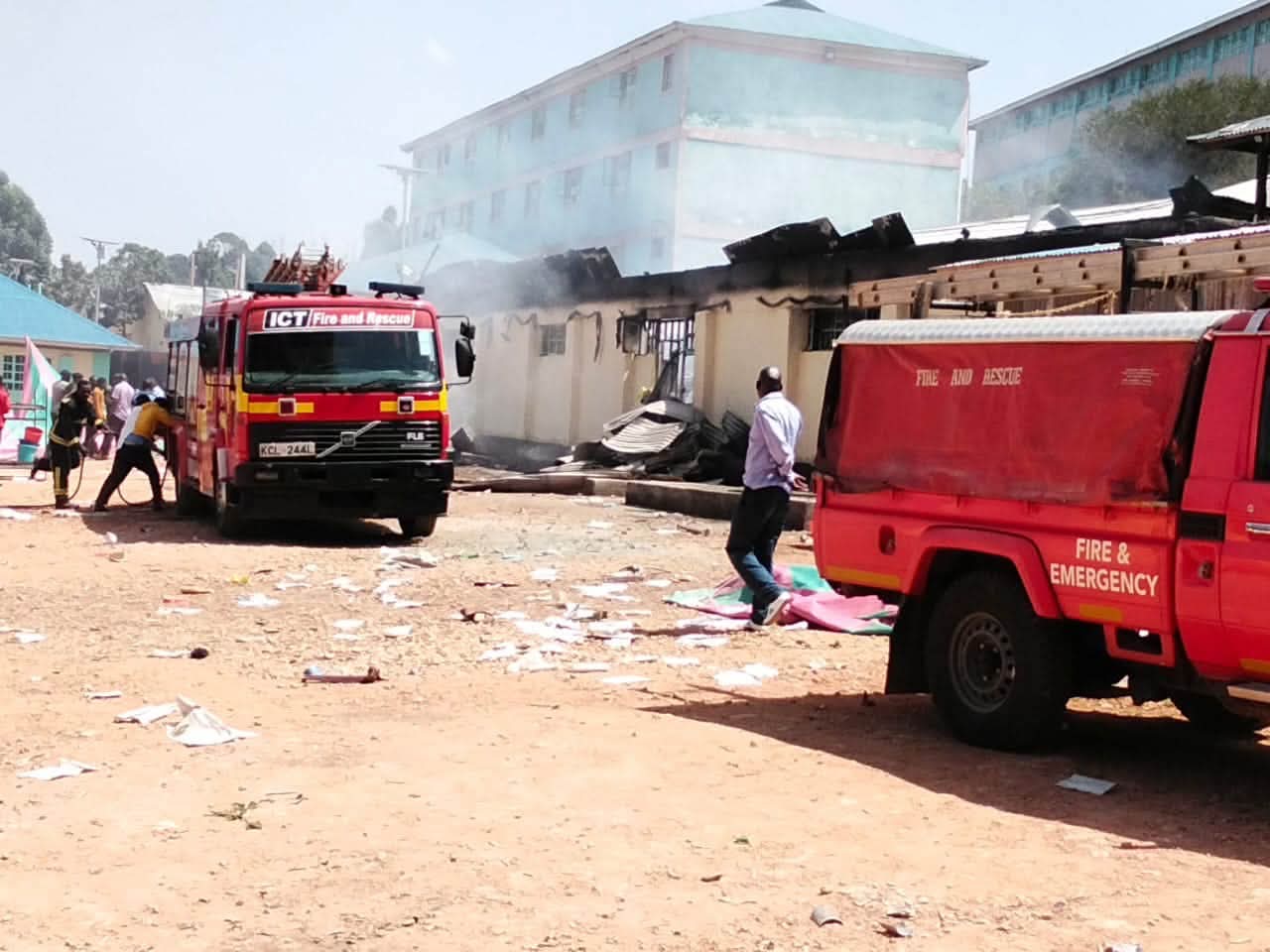
The recent fire at Nyamache Boys High School in Bobasi, the one at Nduru Boys High School in South Mugirango a day earlier that left two students hospitalised after inhaling smoke, the deadly Utumishi Academy fire that claimed 12 girls and left the whole country mourning, and many other school arson incidents across the country are clear signs that this cycle is not working.
Instead of continuing to fight fires in the same way, the Ministry of Education should adopt a Blue Ocean Strategy. Coined by professors W. Chan Kim and Renée Mauborgne, a Blue Ocean approach is about creating new, uncontested space by making competition irrelevant. In school safety, this means shifting focus from responding to fires to designing systems that prevent them from happening in the first place.
To do this, the Ministry should begin by eliminating practices that have become normal but are no longer effective.
The Ministry should phase out mass dormitories that house 80 or more students because such large numbers create panic during emergencies and allow fire to spread rapidly. Schools should instead be supported to partition dormitories into smaller “family units” accommodating 12 to 16 students, separated by fire-rated doors. Funds often spent rebuilding burnt dormitories could instead finance these preventive improvements.
The Ministry should also eliminate the practice of conducting only one fire drill each year. Instead, schools should hold brief 90-second safety micro-drills every Monday during assembly, where learners identify the nearest emergency exits. This would keep safety awareness fresh and instinctive.
Equally important is eliminating the blame-first culture that often follows school fires. The first 48 hours after an incident should focus on auditing systems and identifying safety gaps rather than immediately suspending students. When learners are not automatically treated as suspects, they are more likely to report faulty wiring, hidden stoves and other hazards before they lead to disasters.
Reduce fire risks
The Ministry should also reduce several major fire risks currently present in schools.
One is the number of ignition sources inside dormitories. Blanket bans on electronic devices have simply driven charging activities underground. Every boarding school should therefore establish a supervised charging hub—a fire-rated room fitted with surge protectors where students can safely charge their devices during designated hours.
Academic pressure should also be addressed. Many school fires occur shortly before examinations or after the release of poor results. Weekly mental health sessions and peer counselling should therefore become standard practice in boarding schools, recognising that stress contributes to both carelessness and deliberate acts of arson.
Emergency response times also need improvement. Every dormitory should be equipped with heat sensors linked to the principal’s phone, a 20-litre water backpack extinguisher and two trained student “Fire Captains” capable of responding immediately before small incidents escalate.
Raise safety standards
The Ministry should raise student ownership of safety by requiring every school to establish a “Blue Flame Club” comprising learners trained by county fire officers. These clubs would conduct monthly safety inspections and report hazards for immediate action.
Parental involvement should also be strengthened. Instead of only being called after disasters occur, parents, Boards of Management and students could participate in “Safety Sundays” once every term to inspect school facilities together and sign a safety scorecard.
Schools should also publish monthly fire safety scores on noticeboards and school communication platforms. Institutions maintaining perfect safety records for a full year could receive national recognition through a Ministry of Education safety award.
The Ministry should introduce innovations that embed fire safety into everyday learning.
Fire safety concepts can be integrated across subjects. Physics lessons can cover electrical overloads, Chemistry can explore combustion, Business Studies can teach risk management, while Art and Design can involve learners in producing evacuation maps and safety posters.
Schools should also establish “Alumni Fire Guardians” programmes through which former students help fund smoke detectors, conduct periodic safety audits and mentor current learners on safety culture.
In addition, a “No-Fire Bonus” could be incorporated into the performance contracts of principals and Boards of Management. Schools that complete an entire year without a fire incident could receive modest staff incentives and additional professional development opportunities.
Prevention is the best investment
If the Ministry implements these measures, success will no longer be measured by how quickly firefighters respond but by how rarely fires occur.
A smoke detector costs only a fraction of the millions of shillings required to rebuild a burnt dormitory. The economic and human case for prevention is overwhelming.
The Ministry of Education should therefore move Kenya from the Red Ocean of reaction to the Blue Ocean of prevention. That is the surest way to ensure tragedies such as those witnessed at Nyamache Boys, Nduru Boys, Utumishi Academy and many other schools become rare exceptions rather than recurring national headlines.
By Enock Okong’o
You can also follow our social media pages on Twitter: Education News KE and Facebook: Education News Newspaper for timely updates.
>>> Click here to stay up-to-date with trending regional stories
>>> Click here to read more informed opinions on the country’s education landscape