



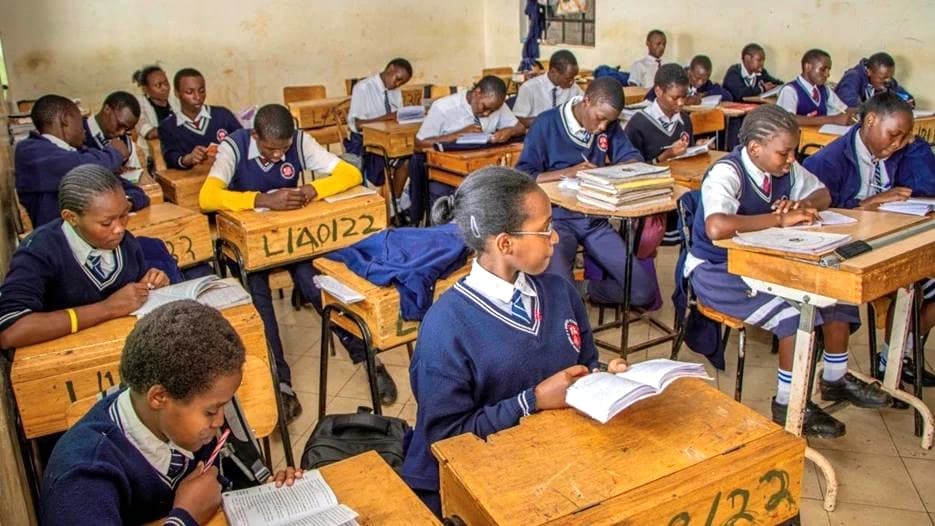


In the grand architecture of education, Junior School (Grades 7–9) is not a mere extension of primary school. It is a bridge, a foundation and the first real taste of specialized, career-oriented learning under Kenya’s Competency Based Education (CBE). Yet, in many policy discussions and school debates, it is still treated as ‘primary with extra subjects’, and this misunderstanding is at the heart of a growing crisis in our education system.
Junior School is neither primary nor senior. It is a distinct academic stage with its own identity, rhythm and demands. Learners are adolescents; navigating a fragile balance between childhood and early adulthood, between foundational literacy and complex critical thinking, between curiosity and self-discipline. Expecting them to thrive under the same structures, expectations and teachers as upper primary learners is like asking a Form three learner to write KCPE-style essays and call it preparation for high school. It simply does not work.
Separating JS from primary is not a bureaucratic whim; it is a necessity grounded in the learners, the curriculum and the outcomes we demand. Junior School introduces subject specialization: English, Kiswahili, Mathematics, Sciences, Social Studies, Technical Subjects and Creative Arts. Each learning area requires more than surface-level instruction; it demands depth, clarity and pedagogy suited to adolescents. If JS continues under primary structures, classrooms are overcrowded, administrative oversight is diluted, and the learning environment remains oriented toward young children, not the young thinkers who will one day populate universities, laboratories and innovation hubs. Treating JS as a separate entity allows for specialized administration, focused infrastructure like science labs, ICT centers and workshops and curriculum integrity where subjects can be sequenced and assessed properly without being squeezed into a timetable that was never designed for them. A separate JS entity is not elitism; it is logic. It signals to learners, teachers and parents that this phase matters and treats adolescence as a developmental stage worthy of respect and resources.
ALSO READ:
https://educationnews.co.ke/from-honour-to-hazard-why-teachers-are-reluctant-to-administer-knec-exams/
Equally critical is the staffing of Junior School. The era of generalist P1 teachers handling Grades 7–9 must end. Diploma and degree-trained teachers bring subject mastery, pedagogy for adolescents and assessment competence that is non-negotiable in a system that aspires to produce globally competitive learners. P1 teachers are heroes in their own right, equipped to handle foundational literacy and numeracy in lower primary. But JS is different. It is subject-based, analytical and pathway-oriented. A learner in form one or two grapples with algebraic expressions, chemical reactions, essay writing, research skills and digital literacy; all of which demand guidance beyond what generalist primary training provides. Expecting P1 teachers to fill this gap is like asking a carpenter to perform open-heart surgery: dedication alone cannot substitute for specialized skill.
Diploma and degree teachers bring multiple advantages. They understand the depth of subject matter, not just the surface level ‘how to teach basics.’ They can design, administer and interpret evaluations that truly reflect learner understanding. They are trained to manage the emotional, social and intellectual needs of early teenagers. They ensure learners are ready for Senior School, reducing the risk of half-baked knowledge cascading upward. Moreover, promoting qualified JS teachers to leadership roles, including principals and department heads, ensures that administration is informed, decisions are pedagogically sound, and the academic environment supports growth rather than improvisation. A P1 teacher, however experienced, simply cannot provide this leadership.
ALSO READ:
https://educationnews.co.ke/kewota-holds-historic-stakeholders-meeting-in-kericho-county/
If we persist with the ‘primary extended’ model for JS, learners arrive in Senior School underprepared, overwhelmed and demotivated. Teachers burn out trying to teach subjects they are not qualified to handle. Curriculum integrity suffers; practical, hands-on learning is reduced to theory. Equity gaps widen, as better-resourced schools can improvise while others lag behind. This is not a hypothetical scenario. It is already visible in classrooms across Kenya where JS is treated as ‘just the next class after primary.’ Learners memorize facts without understanding concepts, teachers improvise labs with chalk diagrams and leadership decisions are made without comprehension of adolescent learning.
Junior School is a critical hinge in Kenya’s education system. It cannot survive as a shadow of primary school, nor can it thrive under generalist teachers. Its learners deserve specialized instruction, its subjects demand subject matter experts, and its administration requires leaders who understand adolescent pedagogy and curriculum demands. Diploma and degree teachers are not a luxury; they are the minimum standard. JS must be recognized as a separate entity, with resources, leadership and staffing that reflect its unique role. Anything less is a compromise; a compromise that weakens Senior School, undermines the CBE vision and ultimately cheats Kenya’s learners out of the education they deserve.
Junior School is not a transitional stage. It is the foundation of the future. Treat it as such.
By Angel Raphael
Angel Raphael is a teacher and education commentator on Kenya’s Competency-Based Education reforms.
You can also follow our social media pages on Twitter: Education News KE and Facebook: Education News Newspaper for timely updates.
>>> Click here to stay up-to-date with trending regional stories
>>> Click here to read more informed opinions on the country’s education landscape



Reader Discussion (0)
Sign in to comment