- Hillary Muhalya says proposed education reforms must clearly define who manages institutions and resources.
- He notes that stakeholders are demanding predictable funding, stronger teacher development and greater accountability.
- The reforms will ultimately be tested by whether they improve learning in classrooms.
Kenya’s proposed education reforms are facing a critical test over who will run the new system, how schools will be financed and whether teachers and education institutions will receive the support needed to make the changes work.
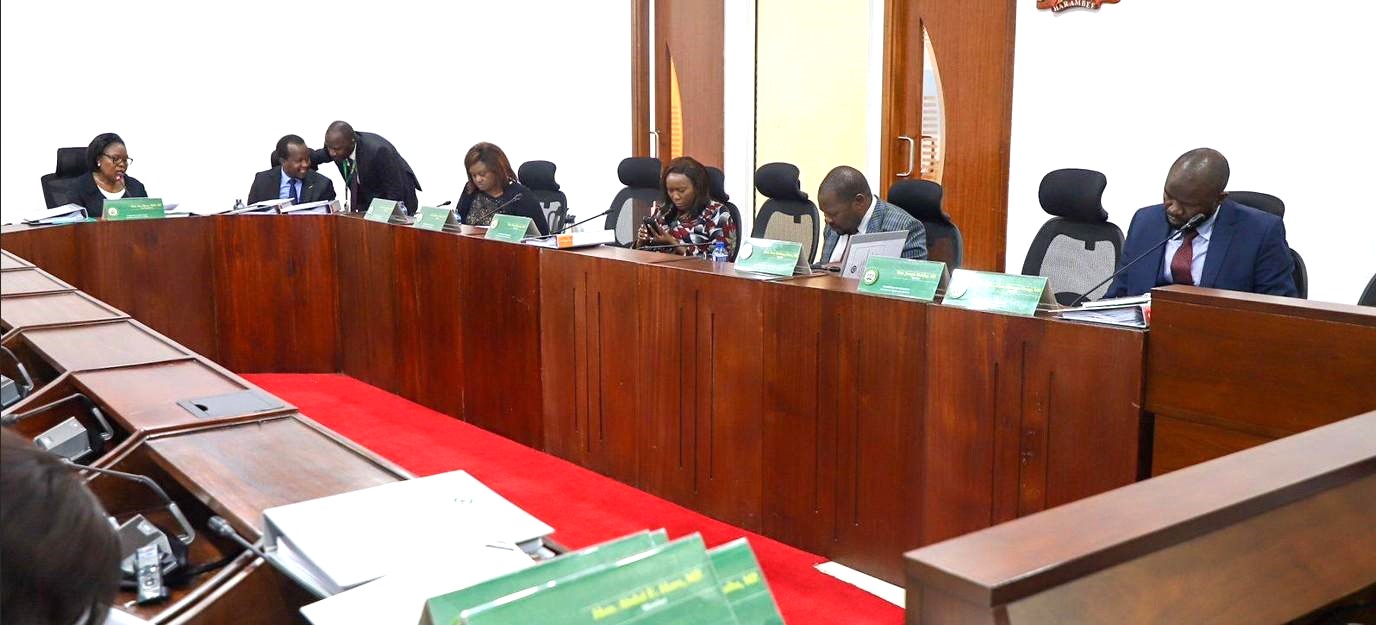
As the National Assembly Departmental Committee on Education continued public participation on the proposed Education Reform Bills in Kisumu and Homa Bay, education stakeholders pressed for clearer management structures, sustainable funding, stronger teacher development and greater protection of access to education.
The submissions came as the committee, chaired by Kibra MP Peter Orero, gathered views on reforms arising from the Report of the Presidential Working Party on Education Reform. Public hearings in Kisumu were held at Kisumu National Polytechnic, where stakeholders submitted proposals on six education reform Bills.
A major issue running through the submissions was the proposed governance structure for basic education.
In Kisumu, the Kenya Union of Post Primary Education Teachers (KUPPET) called for Junior Secondary Schools to be given autonomous administrative structures, arguing for greater clarity in the management of JSS.
The Kenya National Union of Teachers (KNUT) also proposed changes to County Education Boards, including replacing the County Commissioner as chair with a local educationist.
The demand for clearer governance was echoed in Homa Bay, where stakeholders sought more precise definition of the roles of institutions and officials under the proposed framework.
The debate points to a fundamental question facing the reforms: creating new structures will not be enough unless responsibilities, authority and accountability are clearly assigned at every level of the education system.
Funding emerged as another major fault line.
The National Parents Association called for parents’ associations to be firmly anchored in the Basic Education Bill and supported through a dedicated fund, while stakeholders demanded stronger parental participation in school management and education policy.
School heads and teachers also called for a financing system that reflects the actual cost of delivering education.
KNUT demanded increased capitation and timely release of funds to schools, while the Kenya Secondary School Heads Association (KESHA) called for school funding to cover more than tuition and for capitation to be reviewed regularly in line with prevailing costs.
In Homa Bay, the Elimu Yetu Coalition warned that aspects of the proposed funding framework could introduce cost-sharing and called for amendments to protect access to free education.
These concerns deserve close attention because reforms cannot be sustained if schools are given additional responsibilities without corresponding resources.
A governance structure may look sound on paper, but its success ultimately depends on whether schools receive predictable funding to provide learning materials, maintain facilities, support learners and run programmes effectively.
Teacher development must not be overlooked
Stakeholders also placed teacher development at the centre of the proposed reforms.
There were calls for the Centre for Mathematics, Science and Technology Education in Africa (CEMASTEA) to be anchored in law as the national institution responsible for in-service teacher training.
The Kenya Education Management Institute (KEMI), meanwhile, proposed its transformation into the Kenya School of Education rather than being treated merely as a branch under another institution. Stakeholders also proposed a structured transition towards the new arrangement.
Teacher trainers from Asumbi Teachers Training College separately called for Teacher Training College trainees to be incorporated into the student funding model.
The submissions underline the need for reform legislation to look beyond curriculum changes and address institutions that prepare, retrain and support teachers throughout their careers.
The TVET sector also sought stronger representation of technical education stakeholders in proposed governance structures, while the Directorate of Schools Audit urged the committee to retain a distinction between qualifications and quality assurance functions and financial audit responsibilities to protect accountability and institutional independence.
Stakeholders in Kisumu further raised concerns about school feeding, quality control of learning materials and the level of capitation, while some called for a review of Competency-Based Education implementation to give learners greater opportunities to pursue areas aligned with their interests and abilities.
In Homa Bay, KUPPET repeated its call for autonomous JSS structures and urged Parliament to protect teachers while strengthening provisions safeguarding learners.
KNUT called for fair remuneration and job security for teachers alongside improved school financing.
KEPSHA also called for a local educationist to chair County Education Boards and urged that both KEPSHA and KESHA retain representation on the Kenya Institute of Curriculum Development Board.
Reforms must work in classrooms
The wide range of submissions suggests that the public participation exercise is no longer simply about whether education reforms should proceed.
It is increasingly about whether the proposed legal framework is sufficiently precise to prevent confusion, duplication and unfunded responsibilities once the reforms take effect.
Parliament therefore faces the task of translating these competing submissions into legislation that clearly defines institutional mandates, protects access to education, provides sustainable financing and strengthens teacher development.
The proposed reforms should ultimately be judged not only by the structures they create but by whether those structures improve what happens inside classrooms.
A clear management chain, predictable school funding, properly supported teachers, effective quality assurance and meaningful parental participation should therefore be treated as core pillars of the reform legislation rather than secondary administrative details.
The Education Committee has said the concerns and recommendations gathered during the public hearings will be captured in its report to the National Assembly before the Bills proceed for further consideration.
READ ALSO: Why teachers must identify hidden learning gaps before examinations
The next test will be whether the final legislation responds to the practical concerns emerging from schools, teachers, parents, education managers and training institutions across the country.
By Hillary Muhalya
Get more stories from our website: Education News
To write to us or offer feedback, you can reach us at: editor@educationnews.co.ke
You can also follow our social media pages on Twitter: Education News KE and Facebook: Education News Newspaper for timely updates.
>> Click here to stay up-to-date with trending regional stories