


Kenya’s education system is facing a silent but dangerous crisis: the bridge that should smoothly connect primary school, Junior Secondary School (JSS), and senior school is increasingly broken. On paper, learners are moving confidently from one level to the next, their report forms stamped with progression and promotion. In reality, however, thousands are entering new classes without the literacy, numeracy, critical-thinking, and communication skills needed to survive the next stage. The result is a widening academic disconnect that is now worrying teachers, principals, parents, and policymakers alike.
The earliest cracks in this bridge often begin at the foundational level. Primary school is where reading, writing, number work, comprehension, and problem-solving should be firmly grounded. It is the stage where a child must master phonics, sentence construction, paragraph flow, number sense, place value, and basic operations. Yet in many schools, some learners complete Grade Six while still struggling to read fluently, interpret simple instructions, or solve basic arithmetic. This weakness is then carried over to JSS, where the curriculum assumes that the learner has already mastered the basics. Instead of building new knowledge, JSS teachers are forced to repair old damage. They inherit learners who are physically present in class but academically stranded.

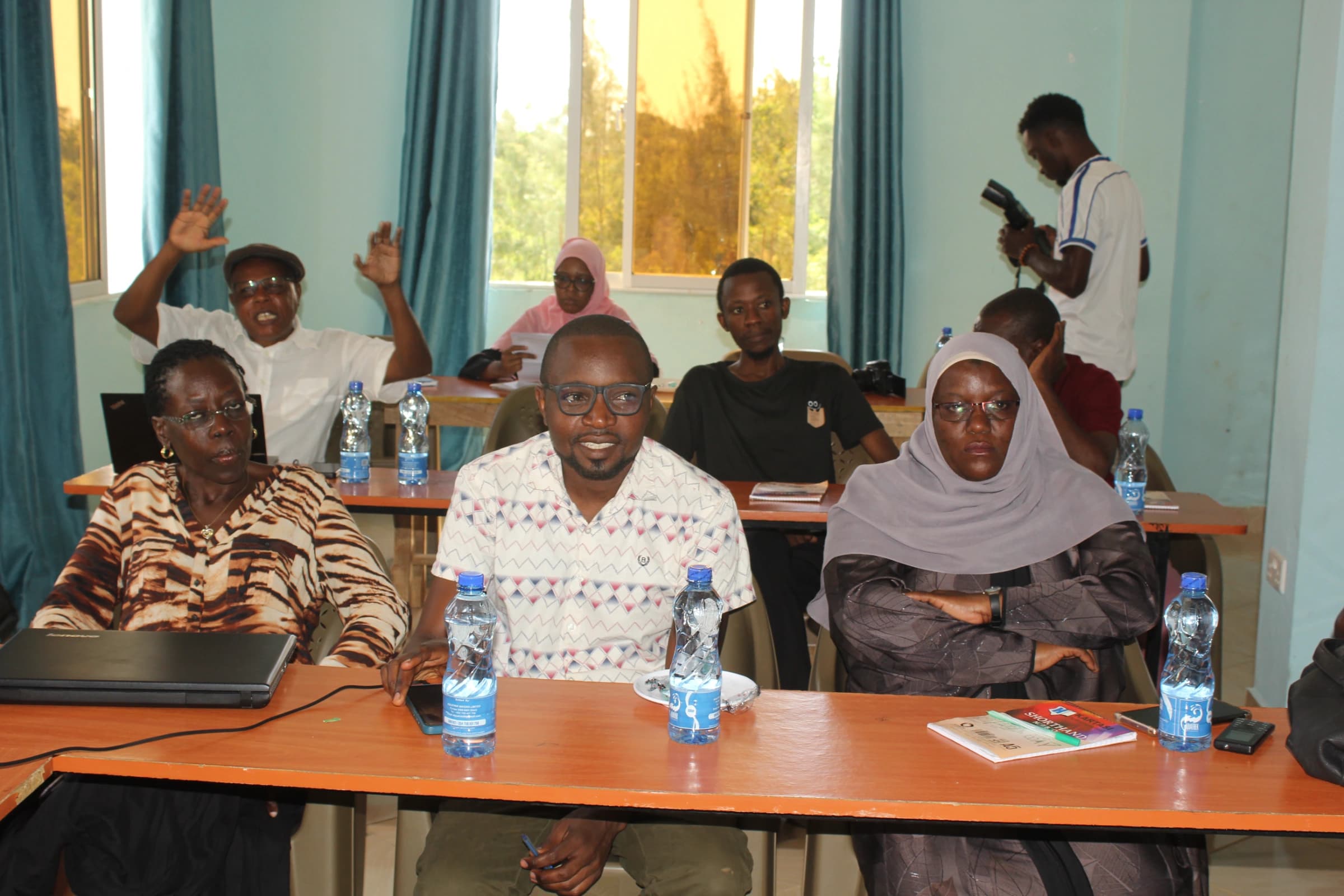
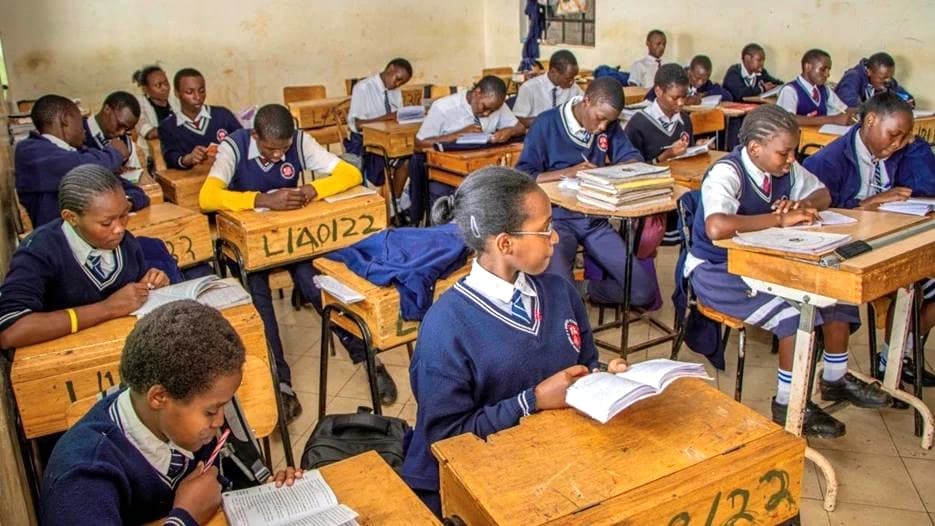
CBC learners in a classroom. Parents have called on the government to review the new system.
This is where the crisis becomes more visible. Junior Secondary School was designed to deepen competencies, nurture talents, and prepare learners for pathways in senior school. It is meant to be the bridge between foundational learning and specialisation. But a bridge can only hold when both ends are strong. If primary schools send learners with shaky literacy and numeracy skills, JSS becomes a rescue centre rather than a transition stage. Teachers spend valuable lesson time reteaching what should have been mastered years earlier. English teachers revisit sentence construction and reading comprehension. Mathematics teachers go back to multiplication tables, fractions, and basic operations. Science teachers discover that some learners cannot interpret simple experiments because their reading skills are weak. This slows the entire system and frustrates both teachers and learners.
The problem does not end there. Senior school is now beginning to feel the tremors from this broken academic bridge. As the first cohorts prepare for the upper pathways, many senior schools fear they may receive learners who are not ready for specialised subjects, career pathways, and the demands of independent learning. Senior school requires deeper reasoning, research skills, technical interpretation, and subject confidence. But how does a learner thrive in advanced sciences, humanities, or technical pathways when they still struggle with foundational comprehension and numeracy? The bridge from JSS to senior school risks becoming another promotion lane rather than a checkpoint on competence.
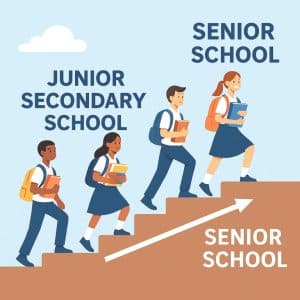
One of the most painful realities is the blame game that has begun to emerge between education levels. Primary teachers sometimes argue that overcrowded classrooms, inadequate learning materials, and social challenges make it difficult to give every learner the attention needed. JSS teachers complain that they are receiving learners who cannot meet grade-level expectations. Senior schools, in turn, worry that JSS may pass forward learners who are still academically fragile. This cycle of finger-pointing does not solve the problem. In fact, it deepens mistrust between education levels that should be working as one continuum. Education is not a relay race where one level blindly passes the baton to the next. It is a connected journey where every stage must strengthen the others.
The competency-based approach itself is not the problem. In fact, its philosophy is one of the strongest reforms Kenya has embraced. It emphasises skills, practical learning, creativity, and learner-centred growth. The real challenge lies in uneven implementation. Some schools have fully embraced the system, ensuring learners master the outcomes before transition. Others are still trapped in the old culture of syllabus coverage and exam-oriented progression. The danger is that when competency is reduced to paperwork instead of demonstrated ability, the learner becomes the casualty. A child can move from Grade Three to Grade Four, from Grade Six to JSS, and eventually to senior school while carrying invisible learning gaps that grow larger each year.

Teacher preparedness also plays a central role in this broken bridge. Transition points require teachers who understand not just content, but continuity. Primary teachers must know what JSS expects. JSS teachers must understand the foundational gaps that commonly emerge from primary school. Senior school teachers must be ready to support pathway choices while reinforcing academic readiness. Without strong collaboration, each level works in isolation, and learners suffer in the middle. Staffroom conversations, inter-level subject panels, and joint assessment reviews should become standard practice. The learner’s journey should be tracked as a continuum, not as disconnected academic islands.
Assessment is another area that needs urgent repair. If learners are progressing without demonstrating competence, then the system is measuring movement rather than mastery. Reading fluency checks, numeracy benchmarks, writing diagnostics, and transition readiness tools must be strengthened. Schools should identify struggling learners early and provide targeted interventions before they fall further behind. A learner who cannot read in upper primary is not simply “weak”; that learner is standing at the edge of a broken bridge. Waiting until JSS or senior school to notice the problem is both costly and unfair.
Parents, too, are key partners in rebuilding this bridge. Learning does not begin and end in school. Home environments that support reading, conversation, homework routines, and problem-solving strengthen classroom gains. When parents monitor reading habits, encourage curiosity, and engage schools regularly, the transition burden becomes lighter. Communities must stop measuring success only by promotion to the next class and instead ask a more powerful question: What can the learner actually do? Competence, not class level, should be the true measure of progress.
For counties with unique geographical and socio-economic challenges, including remote areas such as West Pokot, the bridge issue can be even more pronounced. Long distances to school, understaffing, limited infrastructure, and socio-economic pressures can widen the transition gap. Yet these same regions have also shown resilience and innovation in education leadership. With committed school heads, teacher mentorship, and focused remedial support, even schools in marginalised settings can produce learners who transition strongly across levels. The lesson is clear: the bridge is not repaired by policy statements alone, but by practical leadership at the school and county levels.

The way forward demands courage and honesty. Kenya must stop celebrating transition rates without interrogating the quality of transitions. It is not enough for learners to fill classrooms at JSS and senior school; they must arrive equipped to learn, contribute, and excel. Primary must reclaim the urgency of foundational literacy and numeracy. JSS must become a true consolidation stage rather than an academic repair workshop. Senior school must prepare for excellence in pathways without inheriting unresolved gaps. Most importantly, all levels must replace blame with collaboration.
READ ALSO: Bridging the gap between junior and senior school under CBE
The broken bridge between primary, JSS, and senior school is not just an education problem; it is a national development issue. Every weak transition today becomes a workforce challenge tomorrow. Every learner promoted without competence becomes a future citizen denied full potential. The bridge can still be rebuilt, but only if the system chooses mastery over movement, cooperation over blame, and readiness over routine promotion. Kenya’s learners deserve a pathway that is not cracked by assumptions, but strengthened by deliberate support at every stage.
By Hillary Muhalya
You can also follow our social media pages on Twitter: Education News KE and Facebook: Education News Newspaper for timely updates.
>>> Click here to stay up-to-date with trending regional stories
>>> Click here to read more informed opinions on the country’s education landscape



Reader Discussion (0)
Sign in to comment