







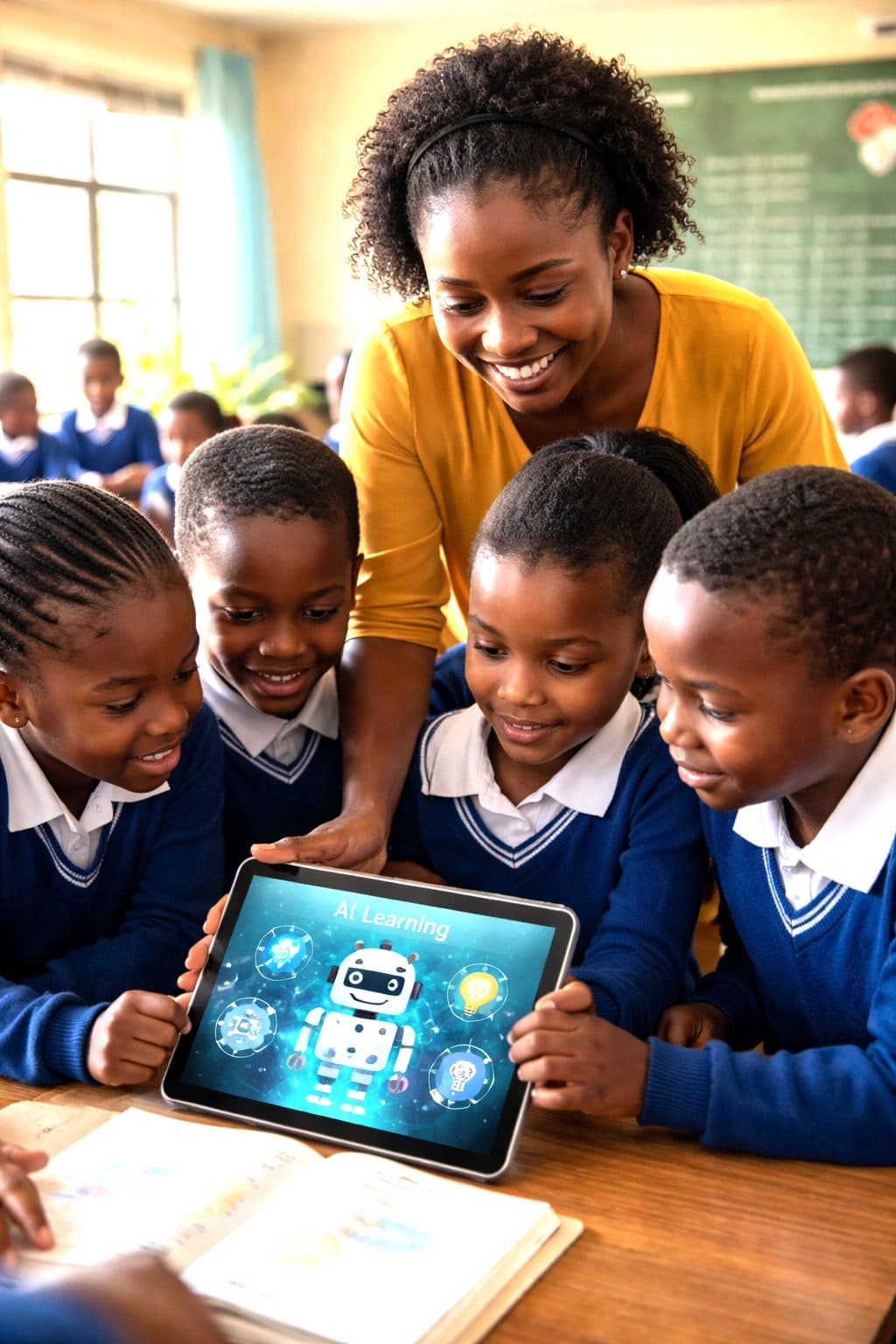
As part of a good education in Kenya’s rapidly changing world, children should learn to apply their developing intelligence to the artificial intelligence increasingly available to them through smartphones, tablets, and computers. From urban Nairobi to rural counties, students are interacting with AI-powered tools – sometimes knowingly, often unknowingly. They need to understand what AI is, recognise its limitations and learn how to evaluate the information it produces.
Kenya has made commendable strides in integrating technology into education. The Digital Literacy Programme, introduced under the Ministry of Education, sought to equip public primary schools with devices and digital content. Under the Competency-Based Curriculum (CBC), learners are encouraged to develop digital literacy, critical thinking and problem-solving skills. As the country positions itself as Africa’s “Silicon Savannah,” with innovation hubs and tech startups flourishing, it is only logical that AI literacy becomes part of what we deliberately teach.
The need for such instruction is urgent. Kenyan children spend significant time online—on social media platforms, messaging apps and educational portals. AI systems curate what they watch, recommend what they read and sometimes even complete their assignments. Without guidance, learners may accept AI-generated content as authoritative and accurate. Yet AI can produce biased, outdated or completely false information. Students must be trained to verify sources, cross-check facts, and question content that appears overly polished or overly confident.
AI is also increasingly implicated in cyberbullying. Deepfakes, AI-generated images and voice cloning tools can be misused to embarrass, harass or blackmail students. In a society where digital footprints can spread rapidly, such abuse can have severe mental and emotional consequences. Schools must therefore go beyond basic computer lessons and incorporate digital ethics, online safety and reporting mechanisms into their programmes. Learners should know how to identify manipulated content and feel safe reporting abuse to teachers or guardians.

Unforgettable teachers inspiring students in classroom
Kenya has already grappled with misinformation spread through digital platforms—particularly during election cycles and national crises. AI has the potential to supercharge this problem by generating persuasive but misleading narratives at scale. If young people are not equipped with media literacy skills, they may become both victims and unwitting amplifiers of falsehoods. Teaching children to ask: “Who created this? Why? Can I verify it?” should become as fundamental as teaching them to read and write.
At the same time, educators have legitimate concerns. Overreliance on AI tools for homework, essay writing or problem-solving could weaken learners’ creativity and intellectual discipline. The goal should not be to ban AI but to teach responsible use. Students must still learn to research independently, construct arguments, solve mathematical problems and think deeply before turning to automated assistance. AI should supplement human effort—not replace it.
AI as a Tool for Learning — Not a Replacement for Humanity
None of this suggests that AI has no place in Kenyan classrooms. On the contrary, it offers immense potential. It can support personalised learning, assist teachers with lesson planning and provide additional practice for learners in under-resourced schools. In counties facing teacher shortages, AI-powered tutoring systems could help bridge gaps. For a country striving to achieve Vision 2030 and compete globally, familiarity with AI tools is not a luxury; it is a necessity.
However, we must teach our children a crucial truth: AI is artificial. It does not possess wisdom, morality or lived experience. It has no understanding of Kenyan culture, context or values unless humans intentionally programme and guide it. It cannot replace the mentorship of a committed teacher or the moral guidance of a parent. It is only as reliable as the data it is trained on, and that data may carry biases that do not reflect our society’s realities.
Kenyan schools, therefore, should deliberately integrate AI education into digital literacy lessons, guidance and counselling programmes and teacher training colleges. The Teachers Service Commission and curriculum developers have an opportunity to provide clear guidelines on the ethical use of AI in classrooms. Policies must balance innovation with protection.
Ultimately, preparing Kenyan children for the future means equipping them not just with devices, but with discernment. AI will continue to evolve. The question is whether our learners will passively consume what it produces or actively, intelligently engage with it. If we teach them well, they will harness AI as a tool for creativity, entrepreneurship and national development—while retaining the critical thinking that makes them fully human.
By Ashford Kimani
Ashford teaches English and Literature in Gatundu North Sub-county and serves as Dean of Studies.
You can also follow our social media pages on Twitter: Education News KE and Facebook: Education News Newspaper for timely updates.
>>> Click here to stay up-to-date with trending regional stories
>>> Click here to read more informed opinions on the country’s education landscape




Reader Discussion (0)
Sign in to comment