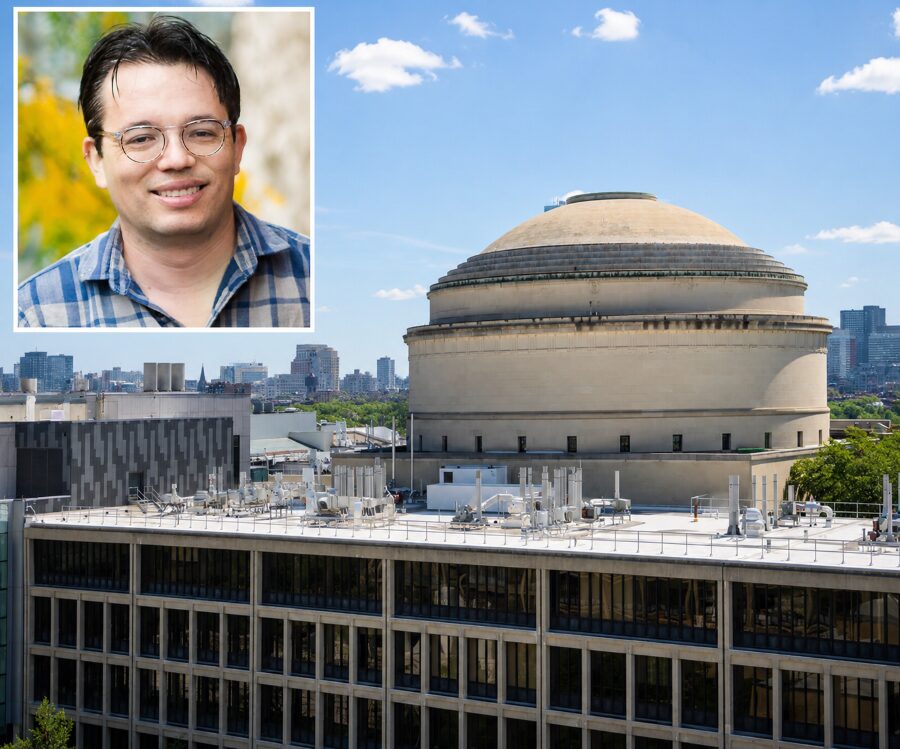
Ashford Kimani’s commentary draws lessons from MIT Associate Professor F. Daniel Hidalgo’s mentorship approach, highlighting the importance of compassion, emotional support, and learner-centred teaching in modern education.
The story of F. Daniel Hidalgo at the Massachusetts Institute of Technology (MIT) is more than a profile of an accomplished academic. It is a reminder that the greatest educators are remembered less for their publications and titles than for how they make learners feel in moments of uncertainty, fear, and intellectual struggle.
In May 2026, MIT recognised Hidalgo as part of its “Committed to Caring” cohort, an honour awarded to faculty members who demonstrate exceptional mentorship and support for graduate students. What stands out in the story is not merely his academic brilliance in political science and quantitative research, but the extraordinary humanity he brings into teaching.
One student described him by saying, “I have yet to meet a professor who cares more for their students.” That single sentence captures a truth many learners across the world long for: educators who genuinely care.
Excellence does not have to be intimidating.
Hidalgo teaches complex quantitative political science methods at MIT, an institution globally associated with intellectual rigour and pressure. Yet students describe his classroom not as intimidating, but engaging and safe. He understands that academic excellence flourishes best in environments where students are allowed to think openly, fail safely, and recover confidently.
One of his most powerful philosophies is: “Show students the mess, not just the map.” In practical terms, he exposes learners to the unfinished side of scholarship — failed drafts, abandoned models, weak ideas, and confusion. He demystifies success.
This is a profound lesson for teachers everywhere, including in Kenya.
Many classrooms unintentionally worship perfection. Learners are shown polished answers, ideal essays, completed projects, and neat calculations, but rarely see the difficult process behind achievement. As a result, students assume intelligent people never struggle. They begin to fear mistakes, hide confusion, and avoid questions.
Hidalgo’s model completely challenges this culture. He normalises intellectual struggle.
In Kenyan schools today, especially under the Competency-Based Curriculum (CBC), this lesson is urgently relevant. CBC demands creativity, exploration, collaboration, and learner-centred engagement. However, many institutions still operate under fear-driven traditions where mistakes are punished more than growth is encouraged.
The MIT story reminds educators that learning is messy before it becomes meaningful.
Another striking feature of Hidalgo’s mentorship is accessibility. Students say he supervises many learners yet still gives detailed feedback and makes time for both formal advisees and those outside his supervision. In many educational systems, learners struggle to approach teachers because hierarchy creates emotional distance. Some students fear being judged, ignored, or dismissed. Great teachers reduce that distance.
A caring educator creates emotional safety before academic transformation can occur. Learners perform better when they believe someone is genuinely invested in their success.
Education must connect with the real-life situations students face every day.
The story also highlights Hidalgo’s emphasis on context and field experience. Even within quantitative research, he pushes students to understand real human realities rather than relying only on datasets and statistics. This, too, carries important lessons for Kenya’s education sector.
Education becomes shallow when it disconnects from lived experiences. Learners understand concepts better when they relate to communities, environments, cultures, and daily realities around them. Knowledge should not float above society; it should illuminate society.
Perhaps the most touching moments involve Hidalgo’s response during difficult emotional periods. One student recalled how, after a tense American presidential election, he cancelled normal class activities and simply invited students into his office for conversation and pastries. Another student described how Hidalgo supported them through mental exhaustion, failed research, and academic uncertainty instead of abandoning them.
These gestures may appear small, but they reveal the soul of teaching.
Modern education often measures performance obsessively while neglecting emotional well-being. Yet students carry invisible burdens into classrooms every day: family instability, anxiety, financial pressure, loneliness, identity struggles, and fear of failure. Teachers may not solve all these problems, but compassion itself becomes part of education.
A student who feels seen develops resilience.
The MIT “Committed to Caring” initiative itself is significant because it recognises mentorship, not merely academic output. Universities and schools globally are beginning to realise that the future of education depends not only on curriculum and technology, but also on relationships.
In Kenya, conversations around educational quality often focus on infrastructure, grades, examinations, staffing, or policy reforms. While these are important, the Hidalgo story reminds us that the human dimension of teaching remains central.
Schools do not transform lives through buildings alone. Students’ lived realities define their character.
They transform lives through teachers who encourage struggling learners, restore confidence, provide guidance, listen patiently, and create hope.
Many successful adults remember one caring teacher more vividly than entire syllabuses.
The story also challenges teachers to rethink leadership. Hidalgo leads through humility rather than intimidation. Students describe environments where ideas are rigorously but respectfully challenged. This balance is rare but essential.
Discipline without humanity creates fear. Humanity without standards creates mediocrity. True teaching balances both.
Educational leadership in the 21st century increasingly demands emotional intelligence alongside professional competence. The best educators are not merely content deliverers. They are mentors, motivators, counsellors, facilitators, and community builders.
As artificial intelligence and digital learning tools rapidly expand, this human element may become even more valuable. Machines can deliver information, but they cannot replace authentic mentorship, empathy, moral guidance, and emotional presence.
That is why stories like Hidalgo’s matter globally.
They remind the world that education is ultimately a relational enterprise.
A caring teacher can permanently alter a learner’s confidence, ambition, and direction in life.
The lesson from MIT is simple but powerful: academic excellence and compassion are not opposites. The finest institutions and educators combine rigour with kindness, high expectations with emotional support, and intellectual challenge with genuine care for people.
READ ALSO:Why relational schools outperform transactional schools in today’s competitive education environment
As Kenyan schools continue to navigate educational reforms, mental health concerns, technological change, and shifting learner needs, perhaps one enduring principle should remain constant: students learn best when they are valued as human beings first.
By Ashfid Kimani
Ashfid teaches English and Literature in Gatundu North Sub-county and serves as Dean of Studies.
You can also follow our social media pages on Twitter: Education News KE and Facebook: Education News Newspaper for timely updates.
>>> Click here to stay up-to-date with trending regional stories
>>> Click here to read more informed opinions on the country’s education landscape