As the world grapples with the challenges of climate change, rapid technological advancement, economic pressures, and shifting global dynamics; stakeholders are increasingly calling for stronger collaboration between academia, government, and industry to drive research, innovation, and sustainable development.
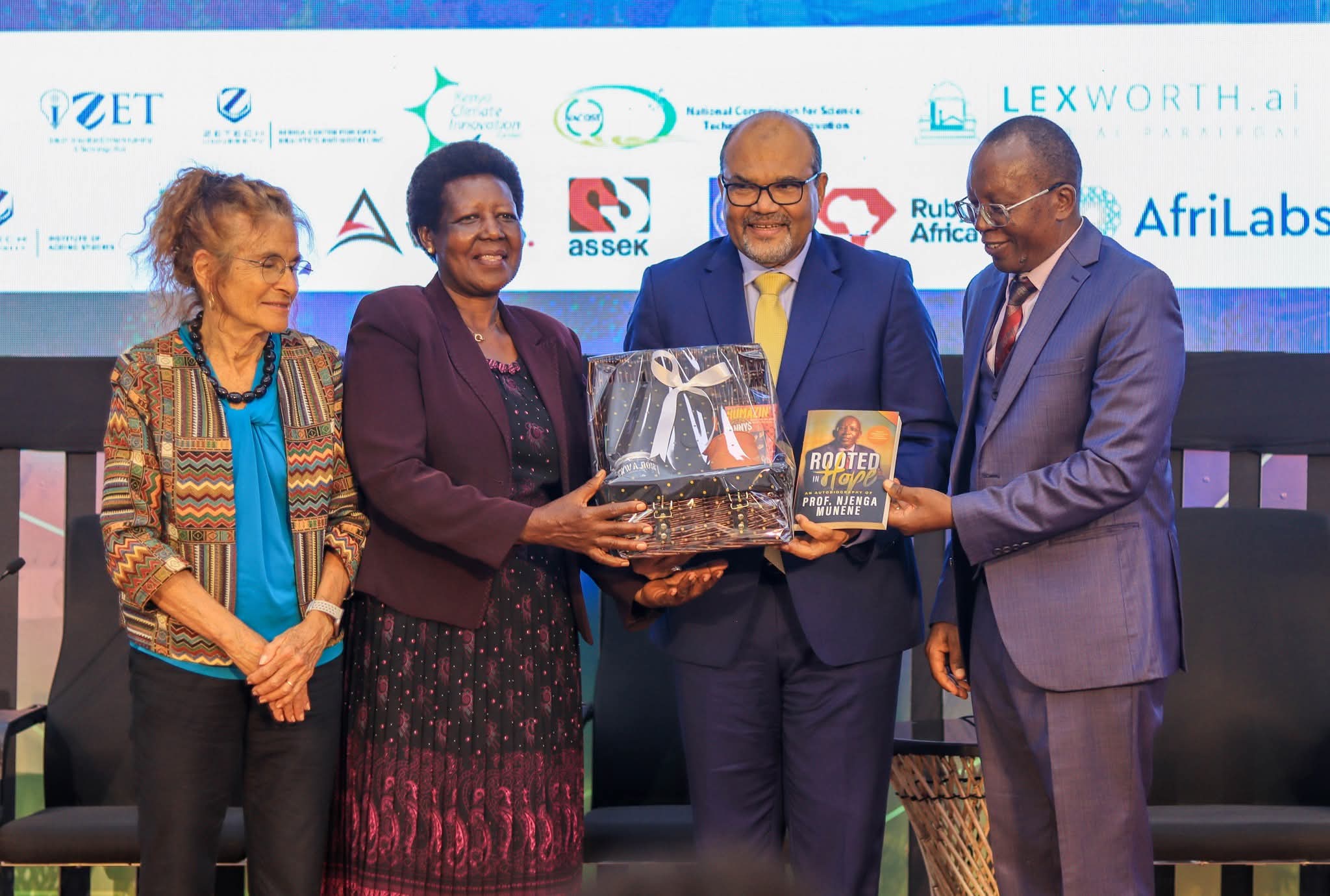
Speaking during the Eighth Research and Innovation Week at Zetech University, stakeholders emphasized that research and innovation remain critical pillars for building resilient societies and sustainable economies.
Participants noted that meaningful partnerships among key players in the research and innovation ecosystem are essential for generating solutions to pressing societal challenges, nurturing the next generation of innovators, and accelerating the country’s socio-economic transformation.
Principal Secretary in the State Department for Science, Research and Innovation, Prof. Shaukat Abdulrazak, who presided over the event, said Kenya has made notable progress over the past decade in strengthening its research and innovation ecosystem through enhanced collaboration among government agencies, universities, industry players, and development partners.
According to the PS, the country is witnessing increased investments in science, technology, research, and innovation, alongside the establishment of national research and commercialization frameworks, stronger support for innovators and startups, and better alignment of research activities with national development priorities.
ALSO READ:
Migori students march against school arson, call for dialogue and discipline
“Through institutions such as the National Research Fund (NRF), the National Commission for Science, Technology and Innovation (NACOSTI), and the Kenya National Innovation Agency (KeNIA), we continue to create an enabling environment for researchers and innovators to thrive,” said Prof. Abdulrazak.
He stressed that collaboration is crucial in ensuring that research findings are effectively disseminated and translated into practical solutions and commercial enterprises.
“How do we strengthen the link between what is being researched in our universities and what is needed in our industries, communities, and economy? That is where real transformation lies,” he posed.
Prof. Abdulrazak noted that deliberate partnerships between academia, government, and industry are necessary to accelerate innovation, scale promising ideas, and ensure research moves beyond academic publications to solve real-world problems.
“It is only through deliberate collaboration between academia, government, and industry that we can accelerate innovation, scale promising ideas, and ensure that research does not remain on paper but becomes part of everyday life—solving real problems and creating sustainable opportunities,” he said.
The PS further observed that institutions of higher learning play a vital role in generating knowledge, producing innovative solutions, and equipping young people with globally competitive skills.
“I strongly believe that universities today must go beyond teaching and become active centers of innovation, problem-solving, and commercialization of ideas. We have 86 public and private universities, alongside 22 research institutions, and all must actively participate in this conversation if we are to build a sustainable future,” he added.
Prof. Abdulrazak challenged universities to become engines of economic transformation by establishing innovation and incubation hubs capable of converting student and faculty innovations into market-ready products. He noted that 25 universities have already established incubation centers.
ALSO READ:
“It is encouraging to see universities creating platforms that empower young people to think boldly, innovate responsibly, and develop solutions that can create meaningful impact within communities and beyond,” he said.
Zetech University Vice Chancellor, Prof. Njenga Munene, echoed the call for stronger partnerships, noting that collaboration among universities, industry, government, and development partners enables research to move from laboratories to communities, from concepts to products, and from ideas to measurable impact.
He emphasized that universities must go beyond knowledge generation and position themselves as catalysts for societal transformation.
“The sustainability agenda demands that universities move beyond knowledge creation to become agents of change. Industry partnerships are no longer optional—they are essential,” said Prof. Munene.
He noted that the annual Research and Innovation Week has become one of the university’s flagship intellectual platforms, bringing together scholars, innovators, policymakers, industry leaders, and students to engage in conversations on the future of research and innovation.
“We remain committed to collaborating with all stakeholders to advance the research and innovation agenda and create lasting impact,” he added.
By John Kamau
You can also follow our social media pages on Twitter: Education News KE and Facebook: Education News Newspaper for timely updates.
>>> Click here to stay up-to-date with trending regional stories
>>> Click here to read more informed opinions on the country’s education landscape