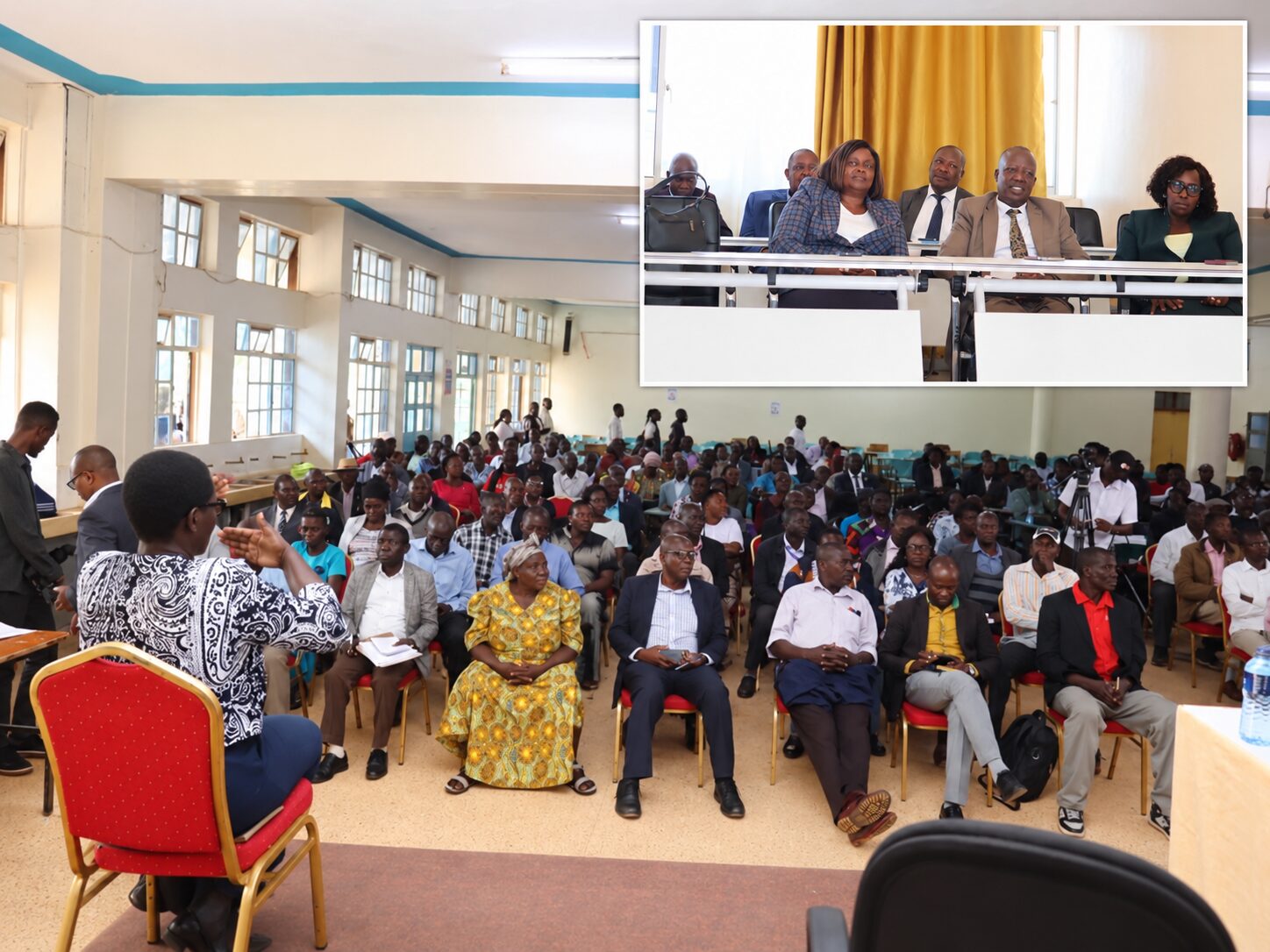
- Wesley Chelule highlights QASOs’ support for proposals strengthening school inspection and statutory enforcement powers.
- They want Parliament to preserve provisions establishing a stronger, professionally independent Inspectorate of Schools.
- The officers also seek clear regulations, career structures and stronger representation in County Education Boards.
Quality Assurance and Standards Officers (QASOs) across the country have welcomed the proposed Basic Education Bill, 2026, describing its provisions on school inspection as a significant step towards strengthening quality assurance, accountability and enforcement of education standards in Kenya.
One of the most notable proposals is the establishment and anchoring in law of the Directorate of School Inspection, headed by a Director of Schools Inspections, with the Inspectorate structured to report within the national education administration. The Bill therefore seeks to give school inspection a clearer statutory identity and reporting framework.
QASOs particularly welcome the proposed transition from the traditional terminology of Quality Assurance and Standards to the more explicit professional designation of Inspectors of Schools.
For officers who have for years carried out inspection, assessment, monitoring and advisory functions, the change is viewed as recognition of the enforcement and oversight dimensions of their work.
For many years, QASOs have sometimes been perceived as “barking without teeth” — identifying gaps, making recommendations and issuing advisory reports without sufficiently strong statutory enforcement mechanisms.
The proposed Bill has the potential to give the Inspectorate the necessary legal teeth to enforce compliance with prescribed education standards.
QASOs across the country are therefore urging Parliament to retain the provisions in clauses 64, 65 and 66 of the proposed Bill, which, in their view, provide an important statutory foundation for inspectors to discharge their functions with greater independence and authority. They argue that these provisions should not be diluted during the legislative process.
Stronger inspection and enforcement
Another significant proposal relates to institutions that persistently fail to comply with prescribed standards.
The Bill contemplates processes through which relevant education authorities can take action against institutions that violate established standards, including sanctions where legally justified.
This would represent a significant shift from a system in which the role of quality assurance has often been viewed largely as advisory and recommendation-based.
QASOs have also welcomed the proposed statutory recognition of the school inspection function, arguing that anchoring it in primary legislation will provide greater institutional stability, clarity of mandate and accountability.
QASOs are calling upon the Cabinet Secretary for Education, once the Bill is enacted, to move with speed in developing and operationalising the necessary regulations within the period prescribed by law.
Regulations will be critical in translating the broad statutory mandate into clear procedures, professional standards, inspection protocols, enforcement mechanisms and accountability structures.
The officers further propose that the regulations should expressly provide for the professionalisation of school inspectors, including clear qualifications, competency requirements, continuous professional development, ethical standards and a transparent career progression framework for QASOs and Inspectors of Schools.
QASOs also propose stronger and more structured representation of the Inspectorate in County Education Board (CEB) deliberations.
Given that inspectors are the officers who routinely assess compliance with education standards and provide technical reports on institutions, their professional input should be adequately represented in decisions affecting standards, registration, compliance and institutional improvement.
QASOs would therefore wish the Bill or subsequent regulations to provide for at least two inspectors or QASO representatives in every CEB sitting where matters relating to standards, inspection, compliance and institutional registration are under consideration.
A new era for quality assurance
The proposed reforms have generated considerable optimism among QASOs across the country.
The officers believe that a strong inspection framework should not merely seek to punish institutions; rather, it should promote compliance, accountability, learner safety, effective teaching and learning, good governance and continuous institutional improvement.
The message from QASOs is therefore clear: give inspectors the mandate, protect their professional independence, provide the necessary regulations and resources, and hold them accountable for delivering quality.
QASOs have welcomed the proposed reforms and are urging Parliament to preserve provisions that strengthen the Inspectorate of Schools while ensuring that the final law is supported by comprehensive regulations, adequate resources and a professional career structure.
READ ALSO: Could misuse of AI contribute to decline in education?
“We have been identifying the gaps. We have been making recommendations. We have been sounding the alarm. The proposed Bill now offers an opportunity to give the Inspectorate the statutory authority necessary to act.”
From barking without teeth to having the legal teeth to protect education standards.
By Wesley Chelule
Wesley Chelule writes from Kericho.
Get more stories from our website: Education News
To write to us or offer feedback, you can reach us at: editor@educationnews.co.ke
You can also follow our social media pages on Twitter: Education News KE and Facebook: Education News Newspaper for timely updates.
>> Click here to stay up-to-date with trending regional stories