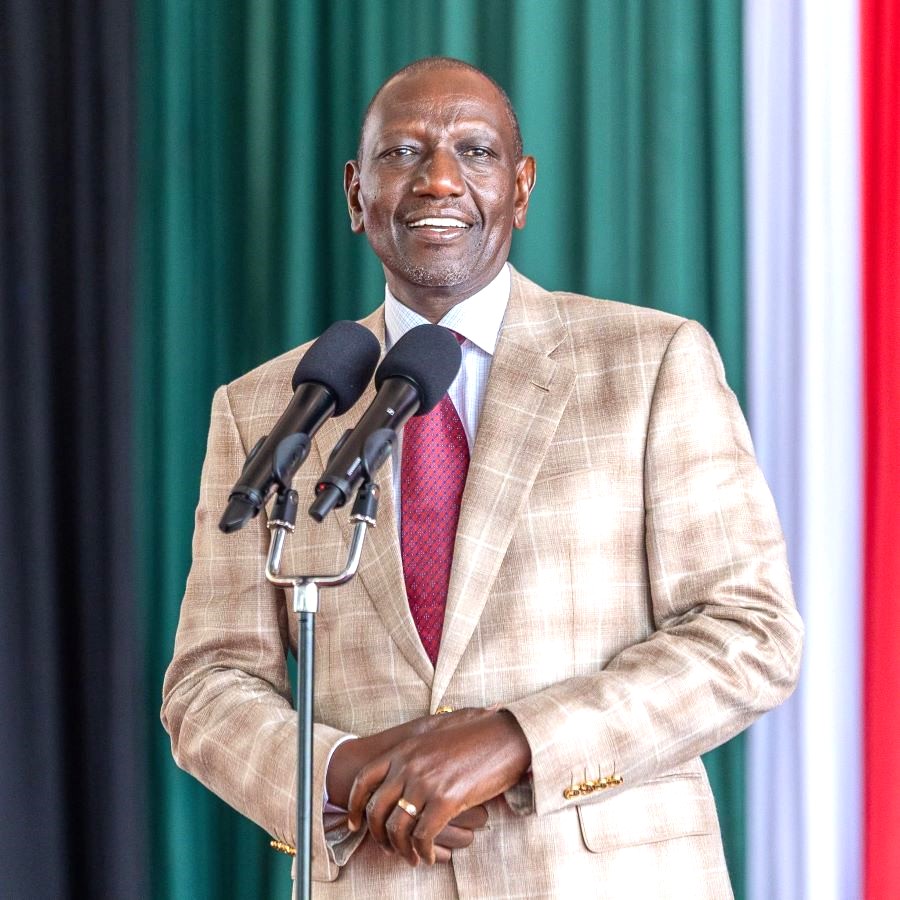
- President William Ruto has defended the government’s needs-based university funding model, saying it is designed to support financially vulnerable students.
- He said the reforms will ensure scholarships and loans are allocated according to financial need rather than a uniform funding system.
- The President acknowledged ongoing public concerns but pledged continued improvements to make higher education more accessible and equitable.
President William Ruto has renewed his pledge that no qualified Kenyan student will be denied a university education because of financial constraints, defending the government’s higher education funding model as a transformative reform aimed at making learning more equitable and accessible.
Speaking during a recent public address, the President said the needs-based funding framework was developed to ensure that government scholarships and loans are distributed according to the financial circumstances of individual students rather than through a uniform allocation system.
He said the model seeks to protect learners from poor and vulnerable households by directing greater financial support to those who require it most, thereby eliminating financial barriers that have historically prevented many bright students from completing their university education.
According to President Ruto, education remains one of the government’s most powerful tools for combating poverty, reducing inequality and unlocking Kenya’s economic potential. He stressed that every deserving student should have an equal opportunity to pursue higher education regardless of their family’s income.
“The dream of a university education should never be determined by the financial status of a student’s parents,” the President said, adding that the reforms are intended to create a fair, transparent and sustainable system that leaves no learner behind.
The President observed that the previous funding arrangement did not adequately distinguish between students from affluent families and those from economically disadvantaged backgrounds. As a result, he said, many vulnerable learners received insufficient support despite facing significant financial hardships.
Needs-based funding model
Under the new framework, students are assessed according to their level of financial need, with those classified as the most vulnerable expected to receive the highest level of government support through scholarships and subsidised loans.
The administration argues that this targeted approach allows public resources to be channelled where they are needed most while promoting greater accountability in the use of taxpayers’ money.
President Ruto reaffirmed that expanding access to higher education remains a key pillar of his administration’s development agenda, noting that universities are essential in producing the skilled workforce required to drive innovation, industrial growth, scientific research and national competitiveness.
He said Kenya cannot achieve its long-term economic ambitions without investing in young people and ensuring they acquire the knowledge and skills necessary to thrive in a rapidly changing global economy.
Public debate continues
Despite the government’s confidence in the reforms, the higher education funding model continues to generate widespread public debate.
Students, parents, university leaders, education experts and civil society organisations have expressed differing opinions on the policy since its introduction. While many have welcomed the shift towards supporting financially disadvantaged learners, others have questioned aspects of its implementation.
Among the concerns raised are the accuracy of student categorisation into funding bands, the adequacy of financial allocations, delays in the disbursement of funds and the transparency of the assessment process. Some stakeholders have also called for continuous review of the framework to ensure deserving students are not unfairly disadvantaged because of errors in classification.
The government, however, has maintained that the model is still being refined and that feedback from students, universities and other stakeholders will continue to inform improvements. Officials insist that the reforms are intended to create a more sustainable financing system capable of supporting increasing university enrolment while safeguarding the interests of learners from low-income families.
President Ruto’s latest remarks have reignited discussions across social media platforms, with Kenyans offering varied reactions to the future of university financing. Supporters say the policy has the potential to bridge educational inequalities by prioritising needy students, while critics argue that its success will ultimately depend on transparent implementation, timely funding and regular policy reviews.
The conversation comes at a time when demand for university education continues to rise, placing increasing pressure on government resources and highlighting the need for sustainable financing mechanisms that can support growing enrolment without compromising quality.
As institutions of higher learning continue admitting new students and progressing with their academic programmes, the effectiveness of the funding model will remain under close public scrutiny. Thousands of students and their families are keenly watching how the policy evolves, hoping it will provide reliable financial support and enable every qualified learner to pursue a university education without interruption.
READ ALSO: Education PS John Ololtuaa calls for integrity and learner safety as national school games kick off
President Ruto reiterated that his administration remains committed to strengthening higher education financing and ensuring that financial hardship never becomes an obstacle to academic success. He expressed confidence that, through continuous improvements and stakeholder engagement, the funding model will help create a more inclusive university system that gives every deserving Kenyan an equal chance to realise their educational and career aspirations.
By Hillary Muhalya