



The devastating storm that swept through Wiser Girls Secondary School in Muhuru Bay, Migori County, has brought into sharp focus the vulnerability of Kenya's learning institutions to natural disasters and the preparedness of education authorities to protect learners when emergencies strike.
For candidates sitting the 2026 Kenya Certificate of Secondary Education (KCSE) examinations, the destruction came at the worst possible time. Instead of concentrating exclusively on their examinations, the learners were confronted with damaged classrooms, disrupted essential services and an unsettling experience that left some of them psychologically distressed.
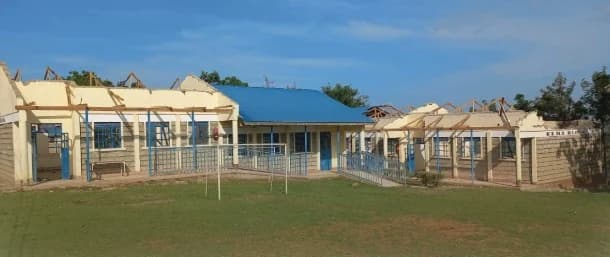
Four classrooms earmarked for examinations were reportedly destroyed after powerful winds ripped off their roofs. A dormitory was damaged when a tree fell on the building, while staff quarters, a guest facility and other structures suffered extensive damage. Nearly the entire perimeter wall was also brought down.
The school's solar panels, which support its water supply system, were blown away, further complicating the institution's ability to maintain essential services.
Principal Violet Singoei said the incident left the girls frightened, with one candidate reportedly requiring medical attention after suffering shock.
Although no fatalities or physical injuries among learners were reported, the psychological impact raises important questions about the support available to candidates exposed to traumatic experiences during national examinations.
Examination security must include candidates' safety
Kenya has traditionally placed considerable emphasis on protecting the integrity of national examinations through invigilation, supervision, examination-material security and measures against malpractice.
However, the Wiser Girls incident demonstrates that examination security must be understood more broadly.
Protecting examination papers is important, but protecting the candidates who sit those examinations is equally critical.
What happens when an examination centre becomes unusable in the middle of a national examination? How quickly can alternative facilities be organised? What arrangements exist to ensure that candidates affected by emergencies are not academically disadvantaged?
These questions require practical answers from the Ministry of Education and the Kenya National Examinations Council (KNEC).
Emergency arrangements should not be improvised after disaster strikes. Examination centres need clear contingency plans covering alternative venues, learner evacuation, communication and psychological support.
Candidates should not have to carry the additional burden of uncertainty when they are already under pressure to complete national examinations.
School infrastructure: The neglected foundation of education reforms
The estimated Sh4 million damage at Wiser Girls raises wider concerns about the condition, maintenance and resilience of school infrastructure.
Kenya is investing in curriculum reforms, expanding learning opportunities and preparing institutions for the transition to senior school under Competency-Based Education.
Yet these ambitions cannot be achieved without safe and dependable physical infrastructure.
Schools require structurally sound classrooms, secure dormitories, reliable water supplies, adequate sanitation, electricity and appropriate learning facilities.
The storm has demonstrated how quickly these essential services can be disrupted when infrastructure is exposed to extreme weather.
Although natural disasters cannot always be prevented, their impact can be reduced through proper construction standards, routine structural inspections, secure roofing, drainage systems and effective emergency planning.
The Ministry of Education should consider a comprehensive assessment of schools exposed to environmental hazards and prioritise institutions requiring urgent infrastructure improvements.
Waiting for classrooms to collapse before allocating resources is an expensive and dangerous approach to education planning.
A disaster that threatens opportunities for vulnerable girls
The destruction at Wiser Girls is particularly concerning because of the institution's contribution to educating girls from disadvantaged backgrounds.
The school has provided opportunities to learners who might otherwise struggle to access secondary education and progress to university.
Its reported 2025 KCSE results demonstrate this contribution. Out of 53 candidates, 42 qualified for university, representing a transition rate of approximately 79.2 per cent.
Over 13 academic years, the institution has reportedly enrolled 539 candidates, with 318 vulnerable girls subsequently joining universities.
These figures underline why restoring the school should be treated as more than an ordinary infrastructure exercise.
For many of its learners, Wiser Girls represents an opportunity to overcome socioeconomic barriers through education.
When such an institution loses classrooms, accommodation facilities and essential services, the consequences extend beyond the immediate cost of reconstruction.
The disruption threatens continuity of learning, mentorship and the support systems that enable vulnerable girls to pursue their academic ambitions.
The government must therefore recognise the strategic importance of protecting institutions that serve learners from disadvantaged communities.
Teachers and principals cannot carry the burden alone
School administrators are expected to maintain discipline, improve academic performance, safeguard learners and ensure the smooth implementation of education policies.
However, they often operate within limited financial and institutional capacity.
When disasters strike, principals are frequently left appealing to government agencies, communities and well-wishers to restore facilities that require substantial financial investment.
The Wiser Girls experience exposes the need for a more responsive institutional framework.
The Ministry of Education, county administrations, school boards and disaster-management agencies must establish clear responsibilities for emergency response and infrastructure restoration.
Principals should not be expected to manage major disasters through fundraising initiatives while simultaneously maintaining the normal operations of their institutions.
Government support must be predictable, coordinated and timely.
The Sh4 million reconstruction challenge
Preliminary assessments by government officials have reportedly placed the damage at approximately Sh4 million.
The figure presents an immediate challenge for the school, whose recovery depends on restoring classrooms, accommodation facilities, the perimeter wall and essential services.
The government should prioritise emergency funding to ensure that the school resumes normal operations without prolonged disruption.
There is also a case for establishing a dedicated emergency education infrastructure fund to support institutions affected by storms, floods, fires and other disasters.
Such a mechanism would reduce dependence on unpredictable fundraising and lengthy administrative processes whenever schools suffer extensive damage.
Development partners, corporate organisations and well-wishers should also consider supporting the reconstruction of Wiser Girls.
Education leadership will be judged by the response
The Wiser Girls disaster presents the Ministry of Education with an important test of its commitment to learner welfare and institutional preparedness.
Education success cannot be measured exclusively through examination results, transition rates, teacher recruitment and curriculum reforms.
It must also be measured by the ability of the system to provide safe learning environments, protect vulnerable learners and respond effectively when emergencies threaten the continuity of education.
For the KCSE candidates, the immediate priority is completing their examinations in a safe and supportive environment.
For the school, the task is rebuilding its damaged infrastructure and restoring confidence among learners, teachers and parents.
For the government, the responsibility is to ensure that the destruction does not permanently undermine the educational aspirations of the girls.
The storm may have destroyed classrooms and disrupted examinations, but the greatest failure would be allowing the institution's educational mission to collapse because of a lack of timely intervention.
Wiser Girls now needs more than expressions of sympathy. It needs a coordinated reconstruction programme, sustained government support and a long-term commitment to protecting schools against disasters.



Reader Discussion (0)
Sign in to comment