







The upcoming court proceedings in the Utumishi Girls Academy dormitory fire case will once again place High Court Judge Lady Justice Diana Rachel Kavedza-Mochache in the spotlight as she prepares to preside over a case involving eight minors accused of causing the deaths of their fellow students.
The Kibera High Court is scheduled to reconvene on Wednesday, November 11, 2026, to receive an update on plea-bargaining negotiations involving two of the eight subject minors facing 16 counts of murder.
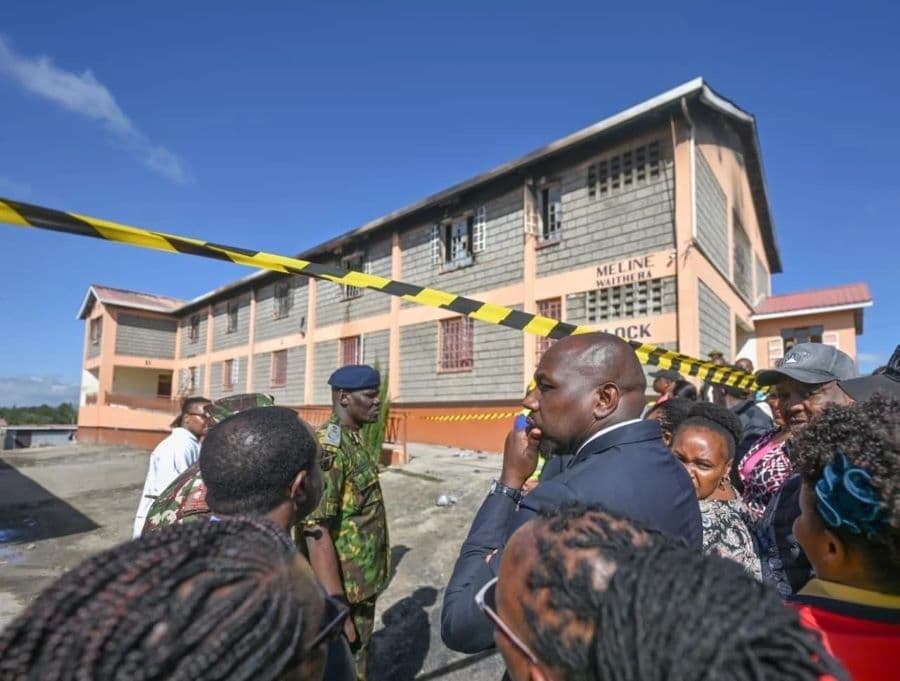
The case arises from the tragic May 28, 2026, dormitory fire at Utumishi Girls Academy in Gilgil, Nakuru County, which claimed 16 lives and left 79 other students injured.
The prosecution alleges that the teenagers deliberately started the fire inside the school dormitory, trapping their fellow learners.
The eight minors have been at the centre of a sensitive judicial process that has attracted considerable public attention, particularly because of the magnitude of the tragedy and the ages of those involved.
Justice Kavedza has already made significant procedural decisions in the case, including declining applications for the release of the eight minors on bail.
The court considered issues surrounding their safety, the protection of witnesses, public interest and the need to preserve the integrity of the proceedings.
She also directed that the minors be referred to as subject minors in media reports, rather than suspects, in order to protect their identities and uphold the provisions of the Children Act.
The restrictions reflect the special legal protections afforded to children who come into conflict with the law.
The court has also emphasised the importance of safeguarding their education and welfare while the proceedings continue.
The November 11 court session is expected to provide an update on negotiations initiated by two of the subject minors.
The remaining six have been engaged in consultations with their parents and legal representatives as the case progresses.
Any potential plea agreement will have to comply with the applicable legal procedures and receive the necessary judicial consideration.
The proceedings are particularly sensitive because, unlike adult criminal trials, cases involving children must take into account rehabilitation, protection and the best interests of the minors.
Justice Kavedza's return to the Utumishi case comes immediately after concluding one of Kenya's most consequential criminal proceedings: the Shakahola massacre trial.
On Friday, November 6, 2026, the Mombasa High Court delivered a landmark sentencing decision against controversial preacher Paul Nthenge Mackenzie and his co-accused.
Mackenzie received a consecutive 200-year prison sentence following his conviction over the deaths of 191 followers, including 190 children.
The Shakahola tragedy exposed the devastating consequences of religious extremism, manipulation and dangerous practices that resulted in mass deaths in Kilifi County.
The verdict marked a significant moment in Kenya's criminal justice system, bringing a major phase of the high-profile proceedings to a close.
Justice Kavedza's handling of the Shakahola proceedings builds on her experience in complex criminal and national security cases.
She previously served as the pioneer head of station at the Kahawa Counter-Terrorism Court, where she presided over proceedings connected to the January 2019 DusitD2 hotel complex terror attack in Nairobi.
The proceedings resulted in the sentencing of two key facilitators to 30 years in prison for their roles in aiding the terrorist assault.
Her judicial career has involved handling sensitive cases that require careful consideration of evidence, public interest, victims' rights and the constitutional protections of accused persons.
The transition from Shakahola to Utumishi presents a striking contrast.
In Shakahola, the court dealt with adult offenders convicted in connection with the deaths of hundreds of followers, most of them children.
In Utumishi, the court is handling a case in which children themselves stand accused of causing the deaths of their peers.
The distinction has significant legal implications. While adult offenders may receive lengthy custodial sentences, children in conflict with the law are subject to a separate legal framework that prioritises rehabilitation, reintegration and their best interests.
Consequently, any eventual determination in the Utumishi case must be guided by the Children Act and the applicable juvenile justice procedures.
For the families of the 16 students who lost their lives, the proceedings represent an important search for accountability and answers. For the eight subject minors, the case carries profound implications for their futures.
As the court prepares to reconvene on November 11, attention will be on the progress of plea-bargaining negotiations and the next directions from Justice Kavedza.
The proceedings will once again test the justice system's ability to balance accountability, the rights of victims and the protection of children.



Reader Discussion (0)
Sign in to comment