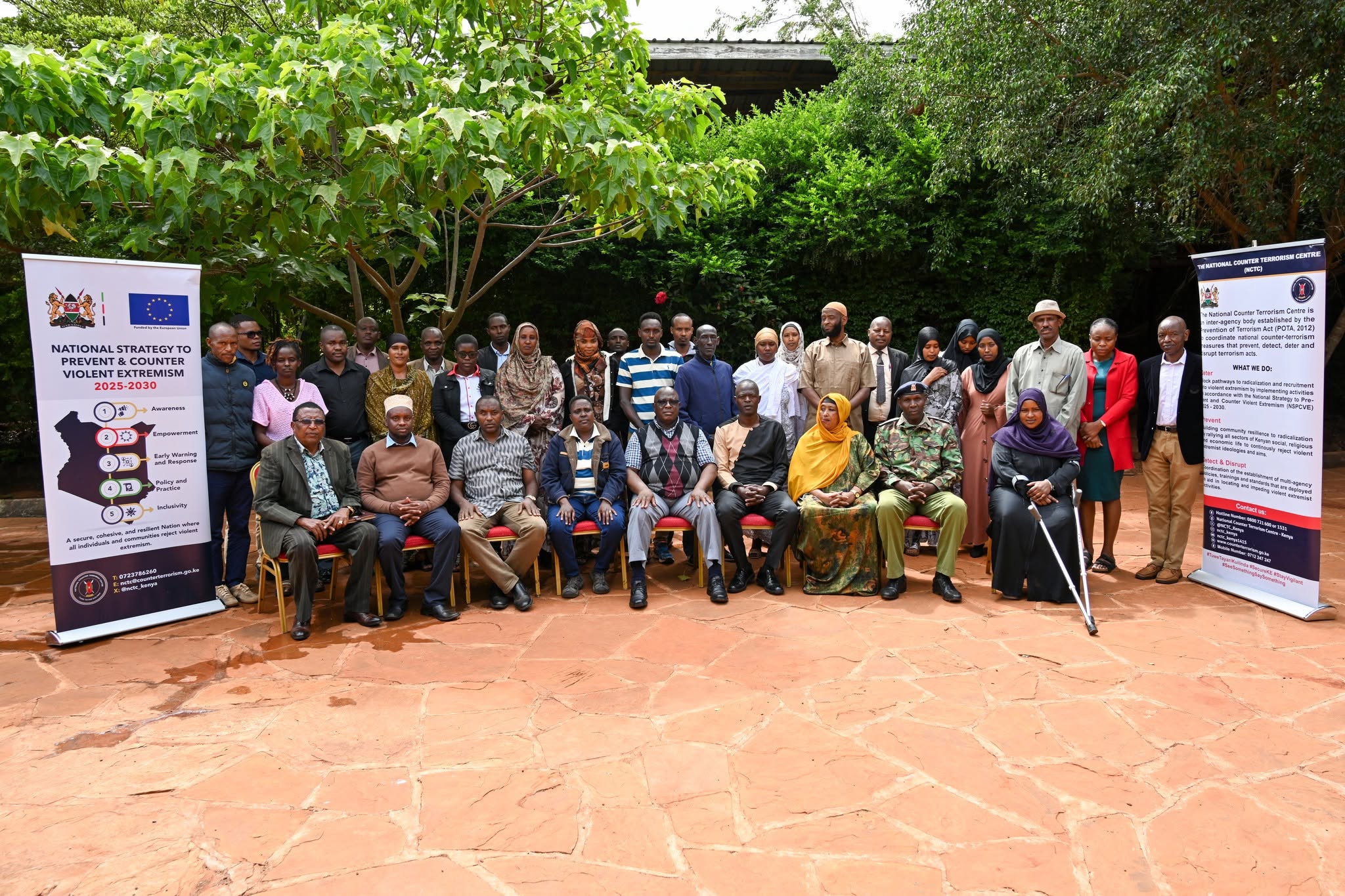
- NCTC has begun training teachers in Mombasa to identify early warning signs of radicalisation among learners, after reports of violent extremism-related activity in Mvita and Likoni sub-counties.
- The Mombasa session is part of a national pilot already running in Garissa, Baringo, Elgeyo Marakwet and Taita Taveta counties, with plans to expand to at least ten counties by the end of the year.
- According to the NCTC, extremist organisations deliberately target children and teenagers because they are still developing emotionally and intellectually, making them easier to manipulate through promises
The National Counter Terrorism Centre (NCTC) has launched specialised training for teachers in Mombasa aimed at helping them identify early warning signs of radicalisation among learners, amid growing concern that schools have become a target for extremist recruitment.
The training follows reports that children are increasingly being drawn into violent extremism through manipulated religious narratives, online platforms and organised recruitment networks, with security and education experts describing schools as a critical frontline requiring urgent intervention.
Teachers Service Commission (TSC) Mombasa Deputy County Director Patrick Mutua disclosed that authorities have received reports of violent extremism-related activities involving learners in Mvita and Likoni sub-counties. He said protecting children could not be left to security agencies alone, and called for coordinated action involving schools, parents, religious institutions, community leaders, child protection agencies and government departments to identify vulnerable learners early.
The urgency of the programme was underscored during the Mombasa workshop, where educators shared a case involving a 13-year-old learner whose personality changed dramatically within a single school term. The previously quiet boy abandoned his birth name, replacing it with another name in all his exercise books. Teachers initially dismissed the change as ordinary indiscipline and responded through punishment.
Soon afterwards, the learner’s parents reported that he had begun disappearing from home at night, and it later emerged that he had started sleeping away from home without the knowledge of his family or school, raising concerns about outside influence and possible grooming.
ALSO READ:
KITI urges TVET institutions to embrace digital skills as technology reshapes job market
Educators at the workshop admitted that before the specialised training, many of them would have overlooked such warning signs, potentially leaving vulnerable learners exposed to exploitation.
According to the NCTC, extremist organisations deliberately target children and teenagers because they are still developing emotionally and intellectually, making them easier to manipulate through promises of belonging, identity, purpose or distorted ideological teachings. The centre noted that recruitment is no longer confined to physical meetings, with social media platforms, encrypted messaging applications and digital communities increasingly used to reach young people beyond the supervision of parents and teachers.
As a result, teachers are being trained in digital literacy to help them understand online communication patterns, identify harmful content and guide learners on responsible digital citizenship.
The NCTC has developed practical guidance directing schools to respond to warning signs through counselling, parental engagement and referrals to specialised agencies, rather than relying solely on disciplinary action.
Religious leaders who took part in the programme cautioned against the continued misuse of religion by extremist recruiters, noting that authentic religious teachings promote peace, respect for life, compassion and coexistence. They urged faith communities to invest more in youth mentorship programmes to strengthen moral values and counter misinformation spread by violent groups.
Education experts at the workshop said preventing radicalisation begins with creating school environments where every learner feels safe, valued and included, citing strong guidance and counselling departments, parental involvement, mental health support and open communication between schools and families as safeguards against recruitment.
The Mombasa training forms part of a national pilot programme already rolled out in Garissa, Baringo, Elgeyo Marakwet and Taita Taveta counties, with officials indicating plans to expand the initiative to at least ten counties before the end of the year.
By Hillary Muhalya
You can also follow our social media pages on Twitter: Education News KE and Facebook: Education News Newspaper for timely updates.
>>> Click here to stay up-to-date with trending regional stories
>>> Click here to read more informed opinions on the country’s education landscape
>>> Click here to stay ahead with the latest national news.