- The story of Cain and Abel reveals how jealousy can transform brotherhood into destructive rivalry.
- It warns that resentment, comparison and wounded pride become dangerous when they are allowed to grow unchecked.
- Ashford Kimani reflects on the enduring lessons of betrayal, personal responsibility, justice, mercy and guarding the heart.
The Bible’s first murder is also its first great story of betrayal. Before there were armies, battlefields, political assassinations or criminal gangs, there was a brother who turned against his brother. Cain and Abel were not strangers. They shared the same parents, the same family history and the same fragile inheritance of a humanity that had already experienced the loss of Eden. Yet one brother would raise his hand against the other, transforming the intimacy of family into the horror of violence.
The story in Genesis 4 is therefore more than an account of the first recorded murder. It is a profound meditation on what happens when jealousy enters a relationship, when comparison becomes resentment and when wounded pride is allowed to grow beyond the reach of reason. Cain did not kill an enemy. He killed his brother. That is what makes the story so unsettling.
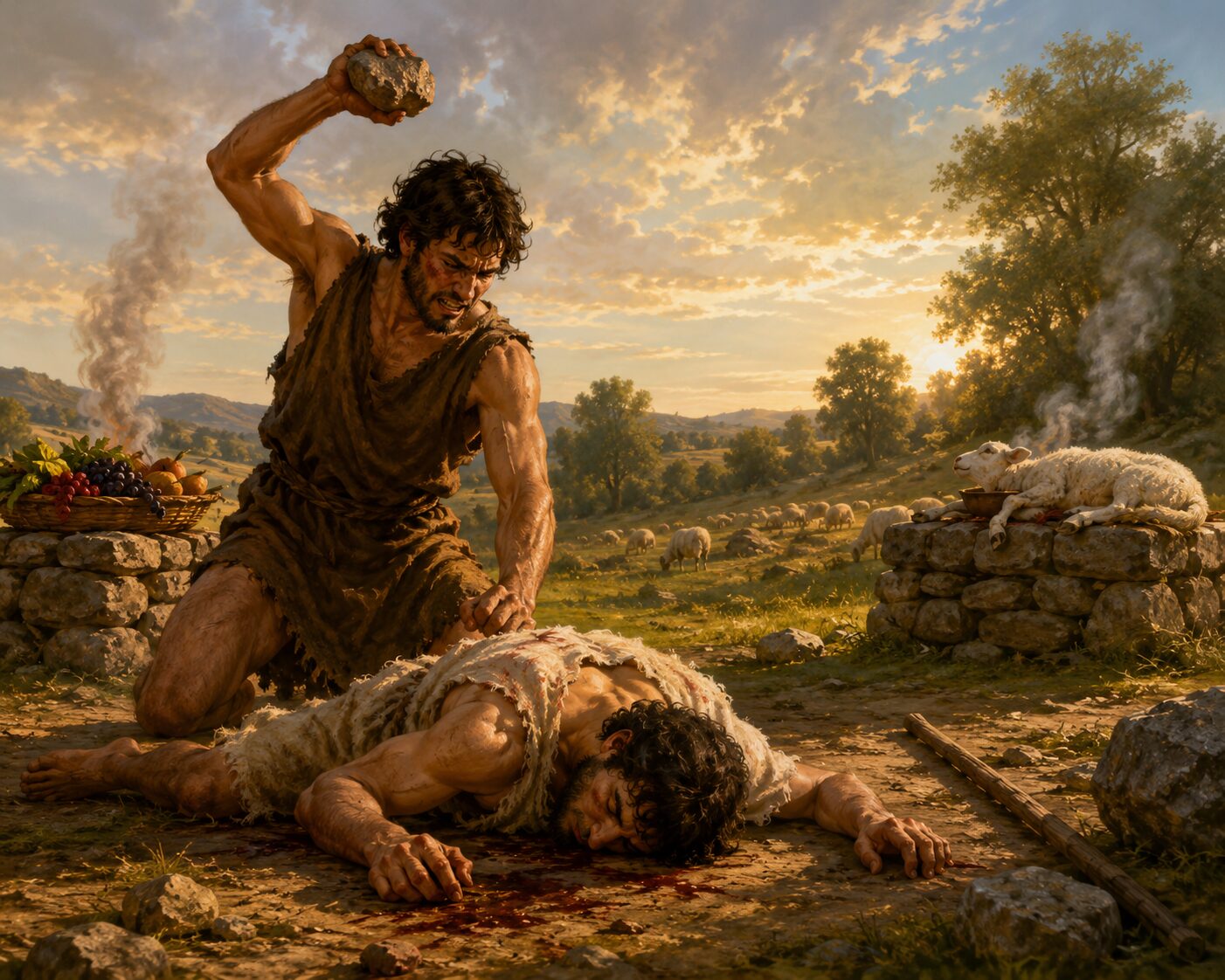
Cain was a farmer, while Abel was a keeper of sheep. Both brought offerings to God. Abel brought the firstborn of his flock and the best portions, while Cain brought an offering from the fruit of the soil. The biblical account says that God regarded Abel and his offering favourably but did not regard Cain and his offering in the same way.
The rejection wounded Cain deeply.
Instead of examining his own heart, his offering or his relationship with God, Cain looked sideways at Abel. His brother became the visible reminder of his own disappointment. Abel’s acceptance became Cain’s humiliation. His brother’s blessing felt like his own rejection.
This is where the first lesson lies: jealousy becomes dangerous when another person’s blessing is interpreted as our failure.
Human beings have always struggled with comparison. We compare careers, marriages, children, wealth, education, recognition and influence. Someone else’s promotion can make us question our own progress. Someone else’s success can expose our insecurities. Someone else’s happiness can remind us of what we believe we lack.
But Abel had not stolen anything from Cain. Abel had not rejected Cain. Abel had not declared himself superior.
The tragedy began when Cain made his brother responsible for feelings that belonged to him.
God warned Cain before the murder. This is perhaps one of the most important details in the entire story. Cain was told that sin was “crouching at the door” and that he must master it. The warning suggests that Cain still possessed moral choice. Anger had entered his heart, but anger had not yet determined his actions.
This gives us another powerful lesson: feelings may arrive uninvited, but actions remain our responsibility.
We cannot always prevent jealousy from appearing. We cannot control every emotion that passes through the mind. We may feel hurt, overlooked, envious or angry. But maturity begins when we refuse to give destructive emotions authority over our behaviour.
Cain failed at that point.
Instead of mastering his anger, he allowed anger to master him.
The betrayal that followed was particularly cruel because Cain used the trust of brotherhood as the setting for his crime. He took Abel into the field, away from the protection and visibility of the family, and killed him.
Betrayal often works this way. It is most painful when it comes from someone who has access to our trust. A stranger can hurt us, but a trusted person can wound us at a much deeper level. The closer the relationship, the greater the potential for betrayal.
That is why the story of Cain and Abel continues to resonate in families, friendships, marriages, workplaces and communities. The deepest wounds are not always inflicted by people who hate us openly. Sometimes they come from people we believed would protect us.
After Abel’s death, God asks Cain a simple question: “Where is your brother?”
Cain answers, “I do not know. Am I my brother’s keeper?”
The question is evasive, but it is also profoundly revealing. Cain wants to separate himself from responsibility. He behaves as though Abel’s life is none of his concern.
Yet the biblical answer is unmistakable: we are responsible for how our lives affect the lives of others.
Being our brother’s keeper does not mean controlling another person’s life. It means recognising the dignity, vulnerability and humanity of those around us. It means refusing to treat people as obstacles to our ambitions. It means understanding that another person’s existence is not a threat to our own.
Cain failed to see Abel as a brother before he killed him. He saw him as a rival.
When relationships become competitions
That is another lesson worth remembering: when relationships become competitions, love can slowly be replaced by hostility.
Families can become battlegrounds when siblings compete for parental approval. Churches can become divided when members compete for influence. Organisations can become toxic when colleagues regard one another as threats. Communities can fracture when people begin measuring their worth by defeating others.
Cain and Abel remind us that rivalry becomes dangerous when identity depends entirely on being better than someone else.
The story also teaches us something about consequences. God does not ignore Cain’s crime. Abel’s blood cries out from the ground. Cain’s actions have consequences, and he cannot simply walk away from them.
But there is an extraordinary dimension to the story: God also protects Cain from being killed in revenge.
This introduces the difficult but important distinction between justice and vengeance.
Cain must live with the consequences of what he has done, but humanity is not given permission to create an endless chain of bloodshed. One murder does not justify another. Violence cannot heal violence.
The story therefore contains both judgment and mercy.
Perhaps one of its most uncomfortable lessons is that Cain continues to live after Abel dies. The murderer has to carry the memory of what he has done. Sometimes punishment is not simply imprisonment or physical suffering. Sometimes it is the burden of knowing that one’s choices have permanently altered another person’s life and one’s own.
Guard the heart
The tragedy of Cain and Abel ultimately asks us to examine the small beginnings of betrayal. Before the hand strikes, the heart may already have begun to calculate. Before violence appears, there may have been resentment, comparison, humiliation and unresolved anger.
That is why the story remains relevant.
It tells us to confront jealousy before it becomes hatred, anger before it becomes cruelty, competition before it becomes betrayal and resentment before it becomes violence.
Cain had a choice. He could have celebrated his brother.
He could have examined himself. He could have listened to God’s warning. He could have walked away. Instead, he chose violence.
The first murder in the Bible therefore leaves humanity with a question that is as contemporary as it is ancient: What do we do when another person’s success exposes our own disappointment?
The answer may determine whether jealousy becomes motivation or destruction, whether rivalry becomes growth or hatred, and whether a wounded heart becomes a source of wisdom or a weapon against another human being.
Cain and Abel remind us that betrayal does not begin with the hand. It often begins in the heart — and by the time the hand acts, the heart may already have crossed several invisible boundaries.
The greatest lesson of that ancient field is therefore simple and severe: guard the heart before resentment becomes a weapon, because the person we are tempted to destroy may be the very person we were meant to love.
By Ashford Kimani
Ashford is a teacher of English and Literature and writes on education and social affairs.
You can also follow our social media pages on Twitter: Education News KE and Facebook: Education News Newspaper for timely updates.
>>> Click here to stay up-to-date with trending regional stories
>>> Click here to read more informed opinions on the country’s education landscape