- Ashford Kimani explores how Helen Keller’s remarkable educational journey demonstrates the transformative power of patient, inclusive and learner-centred teaching.
- He asks Kenyan teachers to nurture every learner’s potential regardless of their current abilities.
Helen Keller’s story is one of the most powerful testimonies to the transforming force of education. Born in 1880 in Tuscumbia, Alabama, United States, Helen was a healthy child until a severe illness at the age of nineteen months left her both blind and deaf. Cut off from sight and sound, she grew up unable to communicate through conventional language. Her world was confusing, frustrating and isolated. She could express only basic needs through signs she had developed for herself, and her inability to communicate often resulted in anger and destructive behaviour. Her family loved her, but they lacked the knowledge and skills needed to unlock her potential.
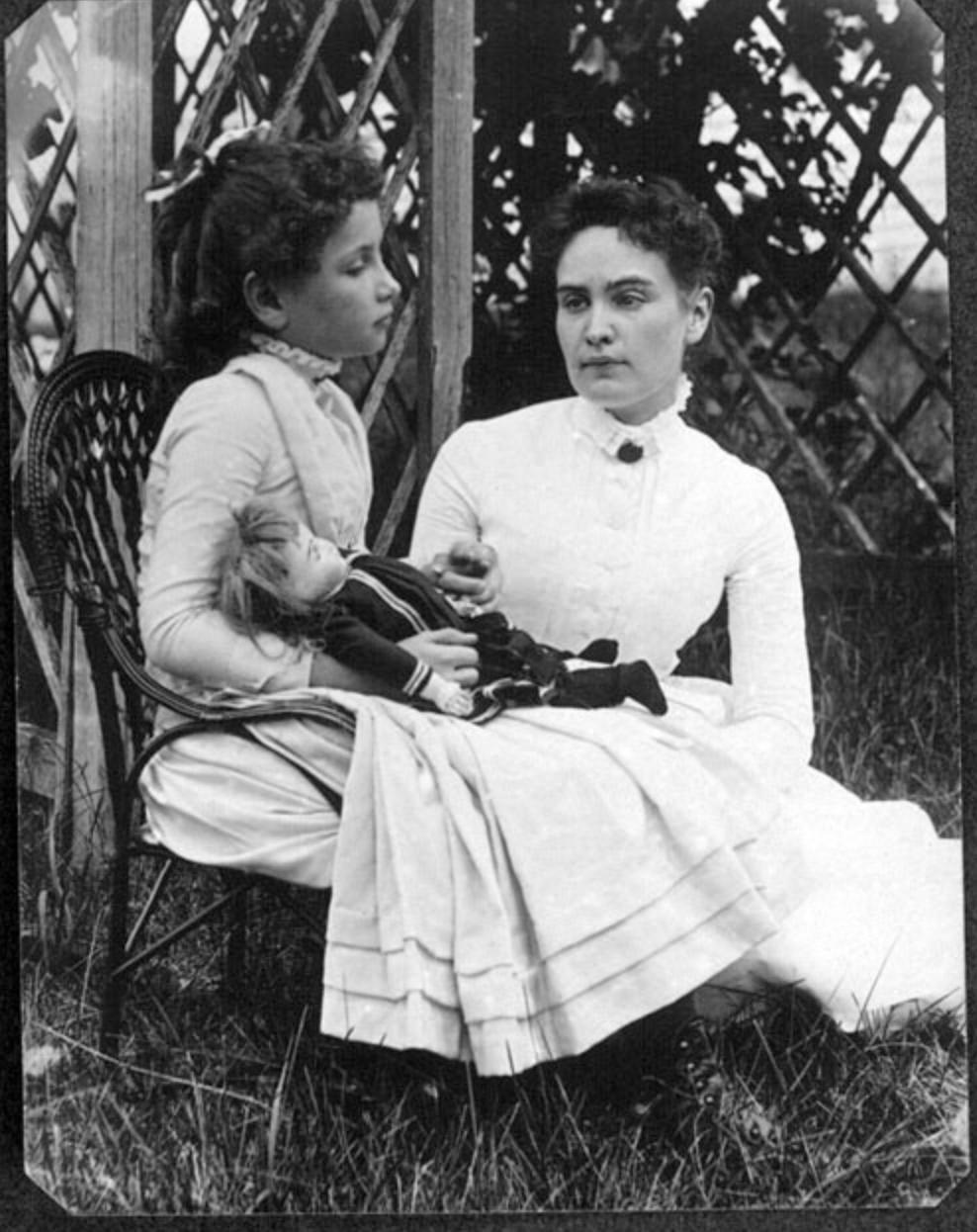
Helen’s life changed in 1887 when Anne Sullivan, a young teacher, arrived at the Keller family home. Sullivan did not see Helen as a hopeless child defined by disability. She saw a learner whose abilities had not yet been discovered. Through patience, discipline, creativity and persistence, she began teaching Helen using touch. She placed objects in Helen’s hands and spelled their names into her palm using the manual alphabet. At first, Helen copied the movements without understanding their meaning. The breakthrough came at a water pump when Anne allowed water to flow over one of Helen’s hands while spelling W-A-T-E-R into the other. Suddenly, Helen understood that the movements represented words and that words gave names to objects.
That moment opened the door to language, knowledge and human connection. Helen became eager to learn. She mastered Braille, learned to read and write, developed speech and eventually joined Radcliffe College, where she became the first deafblind person in the United States to earn a Bachelor of Arts degree. She later became a celebrated author, lecturer and advocate for people with disabilities and other marginalised groups. Her journey was extraordinary, but it was not the result of personal determination alone. It was also the result of a teacher who recognised potential where others saw limitation.
For Kenyan teachers, Helen Keller’s story carries important lessons, especially at a time when the country is implementing Competency-Based Education and seeking to make schools more inclusive, learner-centred and responsive to individual needs.
The first lesson is that no learner should be defined by present performance. Teachers often encounter learners who are weak in examinations, slow in reading, disruptive in class or unable to keep pace with their peers. Such learners may quickly acquire labels: “poor performer,” “lazy,” “weak student” or “hopeless case.” These labels can become educational verdicts. Once a teacher concludes that a learner cannot succeed, expectations fall, opportunities shrink and the learner may eventually accept the negative identity imposed upon them.
Anne Sullivan refused to judge Helen by what she could not do. She focused on what could be developed. Kenyan teachers must similarly learn to distinguish between a learner’s current achievement and long-term potential. A learner who scores an E today may not remain an E student forever. A child who struggles with reading may possess strong practical, artistic, leadership or problem-solving abilities. Assessment should identify learning gaps, not permanently classify learners.
Patience and creativity transform learning
The second lesson is that effective teaching requires patience and persistence. Anne Sullivan did not achieve success in one lesson. She repeated activities, adjusted her methods and continued teaching even when Helen resisted. Her work reminds teachers that learning is not always immediate or visible. Some learners understand a concept after one explanation, while others require several examples, demonstrations and opportunities for practice.
In Kenyan classrooms, especially those with large enrolments, teachers may feel pressure to complete the syllabus quickly. Yet syllabus coverage is not the same as learning. A teacher may finish every topic while leaving many learners behind. The real measure of teaching is not how much content has been delivered but how much understanding has been developed. Teachers must therefore use continuous assessment, remediation, peer learning and differentiated instruction to ensure learners who fall behind receive support.
The third lesson is that teachers must be creative and adaptable. Conventional methods could not reach Helen Keller because she could neither see nor hear. Anne Sullivan therefore used touch as the pathway to language. She adapted teaching to the learner rather than demanding that the learner adapt entirely to the teaching method.
This principle is central to inclusive education. Kenyan classrooms contain learners with different abilities, learning styles, languages, backgrounds and levels of readiness. A single method cannot effectively serve everyone. Teachers should use demonstrations, practical activities, visual materials, storytelling, discussion, role play, digital resources and peer support. Creativity is not an optional extra; it is part of professional competence.
Relationships and inclusion matter
The fourth lesson is that relationships are at the heart of learning. Anne Sullivan was not merely an instructor who delivered lessons and left. She built trust with Helen. She understood her frustrations, guided her behaviour and remained committed to her development.
Kenyan teachers should remember that learners often respond to teachers who believe in them. A learner facing poverty, family conflict, neglect or low self-esteem may first need encouragement and a sense of belonging before fully engaging with academic work. This does not mean lowering standards or abandoning discipline. It means combining high expectations with empathy.
The fifth lesson is that education is a collective responsibility. Helen’s success involved her family, Anne Sullivan and educational institutions. No teacher works alone. Kenyan schools need strong collaboration among teachers, parents, school leaders, counsellors and special-needs professionals. When a learner struggles, schools should identify the causes, share information and develop coordinated interventions.
The sixth lesson is that inclusion must move beyond policy into daily classroom practice. Kenya has made commitments to inclusive education, but many learners with disabilities still face inaccessible facilities, inadequate learning materials and low expectations. Helen Keller’s story challenges teachers and school leaders to ensure every learner can participate, communicate, access learning and demonstrate competence.
A teacher’s influence lasts a lifetime
Finally, Helen Keller’s story reminds teachers of the lasting power of their work. Anne Sullivan did not simply teach Helen the word “water.” She opened a pathway to language, education, independence and public service. One teacher’s patience changed one learner’s life, and that learner later influenced millions around the world.
Kenyan teachers may not always see the full results of their efforts. The learner who struggles today may become tomorrow’s teacher, engineer, artist, entrepreneur, leader or community builder. The encouragement offered in a difficult moment may remain with a learner for decades.
READ ALSO: Don’t dwell on mock results, focus on victory, Bishop tells KCSE candidates
Helen Keller’s life teaches that ability is often hidden behind barriers and that a teacher’s task is not merely to transmit knowledge but to discover pathways through those barriers. Anne Sullivan saw possibility where others saw limitation. Kenyan teachers must carry the same conviction: every learner can grow when given appropriate support, meaningful opportunity, patient instruction and someone who believes their future is still open.
By Ashford Kimani
>>> Click here to stay up-to-date with trending regional stories
>>> Click here to read more informed opinions on the country’s education landscape
>>> Click here to stay ahead with the latest national news.