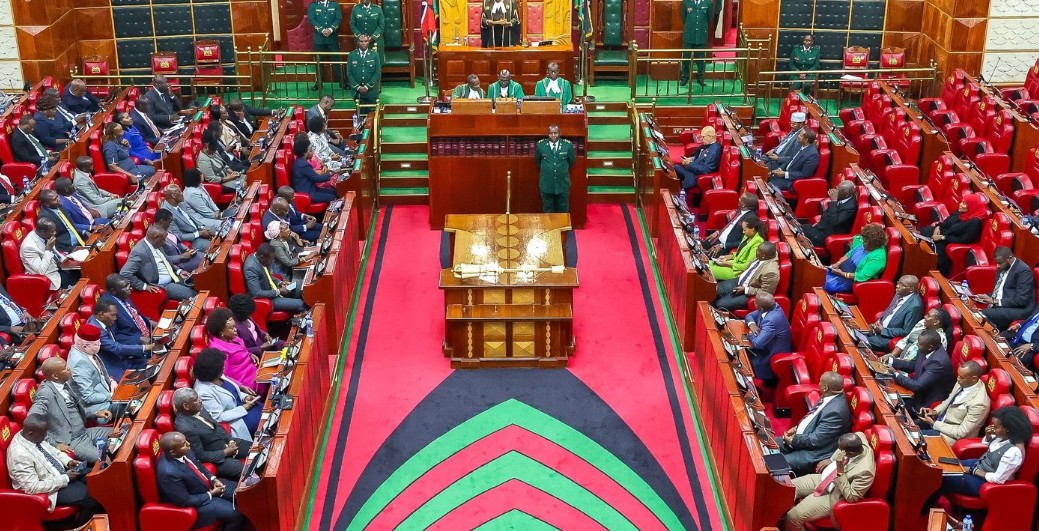
- The 2026 uniRank list ranks the University of Nairobi at the top, followed by Strathmore, Kenyatta, MKU and JKUAT, amid concerns over expansion without excellence.
- There is a need for specialisation of universities, publication of a national performance dashboard and stronger investment in labs, grants and research leadership.
Kenya has mastered the art of multiplying universities. What it has not mastered is multiplying excellence.
The 2026 uniRank table puts the University of Nairobi at the top of its Kenyan list, followed by Strathmore University, Kenyatta University, Mount Kenya University and Jomo Kenyatta University of Agriculture and Technology. At the other end are institutions including Kenya Highlands University, Islamic University of Kenya, GRETSA University and Alupe University.
Before anyone starts shouting about winners and losers, one warning is necessary: uniRank is primarily a web-based ranking, not a definitive measure of teaching, research or graduate competence. But the bigger story is impossible to ignore.
Kenya has expanded higher education faster than it has built academic excellence. And this comes as a giant CUE red flag over the crisis in postgraduate research supervision.
A country cannot claim to be a knowledge economy when master’s and doctoral students struggle to find supervisors, research stalls for months and academics are overwhelmed by teaching, administration and supervision loads.
Postgraduate research is where universities are supposed to manufacture new knowledge. If that pipeline is choking, the problem is not cosmetic. It is existential.
We have built campuses everywhere. We have created degree programmes for almost every imaginable discipline. We celebrate graduation ceremonies as though the production of certificates itself proves educational excellence. It doesn’t.
ALSO READ:
KNEC assures 303 Gatoto learners will sit national assessments despite management row
A university is not a factory for graduation photographs. It should be a factory for ideas. It should produce research governments can use, inventions industries can commercialise, discoveries that save lives and graduates capable of competing anywhere in the world.
Instead, Kenya risks creating an overcrowded higher-education market where institutions fight for students and tuition revenue while research becomes the neglected child. And students are paying the price.
A young Kenyan can spend years pursuing a master’s or PhD, paying fees and sacrificing income, only to become trapped in an academic maze because supervision is inadequate, research funding is scarce or institutional processes move at glacial speed. That is unacceptable.
CUE must treat postgraduate supervision as a national quality-control issue — not an administrative footnote. How many postgraduate students does each supervisor carry? How long do students wait for proposal approval? How long does examination take? How many students complete on time? How many doctoral graduates publish meaningful research? How much research funding reaches postgraduate scholars? Publish the numbers.
Government cannot continue pouring money into higher education while refusing to measure whether the system is actually producing knowledge. Universities need properly equipped laboratories, competitive research grants, strong doctoral programmes and international partnerships. Academics need time and resources to research, not endless battles over salaries, workloads and institutional bureaucracy.
University leadership must also be treated as an intellectual responsibility, not simply an administrative appointment. Kenya cannot build globally respected universities with timid leadership and bureaucratic thinking.
And let us stop pretending every university must offer everything. A country does not need dozens of institutions desperately trying to become identical. Let one become exceptional in engineering. Another could dominate medicine. Another could become Africa’s powerhouse for agriculture and food technology. Another could lead artificial intelligence and computing.
Specialisation could turn Kenya’s crowded university landscape into a network of centres of excellence. Instead, scarce resources are spread thinly, postgraduate supervision is strained, and research output suffers. Then we act surprised when global rankings expose the weakness.
The government should publish a brutally honest national university performance dashboard: research output, citations, patents, graduate employment, external research funding, international collaboration, completion rates, supervision loads and industry partnerships. Not propaganda. Numbers.
ALSO READ: Proposed TSC law widens offences that could cost teachers their jobs
Kenya’s young people deserve universities that prepare them for a world where they compete against talent from Kampala, Kigali, Johannesburg, London, Bangalore and Shanghai. That competition is already here.
The rankings are therefore not the disease. They are one symptom. The CUE warning on postgraduate research supervision is another. The real disease is a higher-education system that has expanded access without investing sufficiently in the machinery that produces excellence.
Kenya has the talent. It has brilliant academics. It has ambitious students. What it needs is the courage to demand results. Enough universities that merely exist. Kenya needs universities that discover, invent, publish, innovate and matter.
By Yabesh Onwonga
Get more stories from our website: Education News
To write to us or offer feedback, you can reach us at: editor@educationnews.co.ke
You can also follow our social media pages on Twitter: Education News KE and Facebook: Education News Newspaper for timely updates.
>> Click here to stay up-to-date with trending regional stories