- Egerton University academic staff are grappling with growing student numbers, strained facilities and reduced funding.
- About 50 FEDCOS lecturers used a Classroom Realities Workshop to examine teaching quality, assessment, infrastructure and efficient use of scarce resources.
- Deputy Vice Chancellor Prof Bernard Aduda urged staff to confront the challenges candidly and protect academic standards despite financial pressure.
Egerton University academic staff have been challenged to confront mounting pressures in classrooms as the institution grapples with large student numbers, stretched facilities and a sharp decline in funding.
About 50 faculty members from the Faculty of Education and Community Studies (FEDCOS) gathered at a Nakuru hotel for a Classroom Realities Workshop aimed at examining challenges affecting teaching, assessment and student learning.
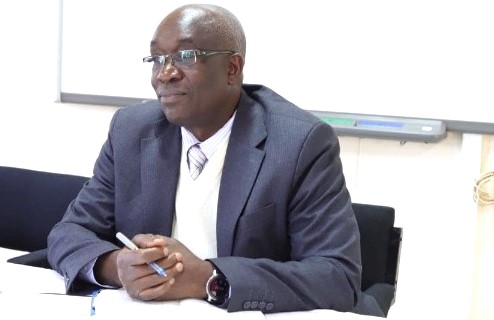
Deputy Vice Chancellor for Academics, Research and Extension Prof Bernard Aduda urged lecturers to engage honestly with the problems facing the faculty, saying candid discussions would help University Management develop practical policies and make informed decisions.
The workshop focused on three pressing areas: protecting teaching quality, making scarce resources count, and improving infrastructure and institutional efficiency.
The discussions come within Egerton University’s wider Classroom Realities initiative, which was launched in March 2026 to strengthen teacher preparation by connecting academic training more closely with the realities of contemporary classrooms.
Large classes have emerged as one of the faculty’s biggest challenges, placing pressure on lecture spaces, academic workloads and assessment.
Prof Aduda acknowledged the strain but insisted that large classes should not compromise academic timelines, particularly the submission of students’ marks.
“Time keeping is key, especially in submission of students’ marks,” he said.
Management is engaging the Director of Timetabling on ways to accommodate growing student numbers. One proposal is to remove temporary partition walls and convert existing spaces into larger lecture halls.
The approach would expand teaching capacity without immediately requiring major new construction.
Egerton has previously acknowledged wider pressure on teaching infrastructure, with university and government engagements highlighting constrained lecture halls, ageing facilities and limited operational budgets.
Funding cuts deepen the strain
The infrastructure challenge is unfolding against a difficult financial backdrop.
Prof Aduda said the University was experiencing significant resource constraints, with funding reduced by approximately 40 per cent under the new student funding model.
At FEDCOS, about 2,200 students have not paid their school fees, despite having paid accommodation charges.
Delays in funds owed to Egerton by the Higher Education Loans Board and the Universities Fund are also contributing to the pressure.
Teaching practice has been particularly affected by changes in the funding arrangements. Prof Aduda noted that students previously paid for teaching practice, students’ union activities and other administrative costs — arrangements that have since changed.
He described the situation as a “double-fold challenge” for the University.
“Let’s prepare for a bumpy ride. Let’s walk this journey together, as we improve with reduced resources,” Prof Aduda said.
The university has previously acknowledged that the new higher education funding model presents fresh financial challenges requiring careful institutional responses.
Every shilling must deliver
With funding under pressure, the DVC urged academic staff to ensure that allocated resources are used efficiently.
He asked lecturers and departments seeking equipment and other teaching assets to follow up with the Procurement Department to speed up acquisition and improve absorption of available funds.
The message was that resource constraints demand greater efficiency, not reduced accountability.
Prof Aduda also reminded staff to submit financial surrenders within prescribed timelines. Where delays are unavoidable, he advised them to seek formal extensions.
He warned that failure to surrender funds could attract surcharge under the law.
Staff were further cautioned to scrutinise receipts and other financial documents, with irregular or unauthentic documentation potentially resulting in disciplinary action.
The workshop was prepared by Director of Quality Assurance Prof Patricia Wambugu, with support from FEDCOS Dean Dr Flora Fedha and Director of Undergraduate Studies Prof Micah Chepchieng’.
Egerton University identifies Dr Fedha as the Dean of FEDCOS, while Prof Chepchieng serves within the faculty and has also been identified by the university as Director of Undergraduate Studies.
Faculty members thanked Prof Aduda and University Management for supporting faculty operations, teaching and resource allocation.
But the real test will be whether the discussions produce measurable changes.
For FEDCOS, the priorities are increasingly clear: better use of existing teaching spaces, tighter workload and assessment management, faster procurement, stronger financial discipline and timely resolution of funding challenges.
The issues are interconnected. Larger classes increase pressure on facilities and lecturers; inadequate resources make teaching more difficult; and financial delays can affect the University’s ability to respond.
READ ALSO: Kisumu gears up to host first World Talent Conference in Africa
Egerton must therefore find ways of doing more with less without allowing financial pressures to erode academic standards.
The Classroom Realities Workshop offers a starting point.
The next step is turning classroom concerns into institutional action.
By Hillary Muhalya
Get more stories from our website: Education News
To write to us or offer feedback, you can reach us at: editor@educationnews.co.ke
You can also follow our social media pages on Twitter: Education News KE and Facebook: Education News Newspaper for timely updates.
>> Click here to stay up-to-date with trending regional stories