Artificial intelligence (AI) is rapidly entering classrooms across the world, but its impact is beginning to raise difficult questions about the future of learning. A recent debate in The New York Times explored growing fears that students are increasingly allowing AI to think on their behalf.
What began as a technological innovation meant to support learning is now threatening to fundamentally alter the meaning of education itself. For Kenya, this conversation is becoming more urgent each day as students gain greater access to smartphones, internet connectivity, and AI-powered applications.
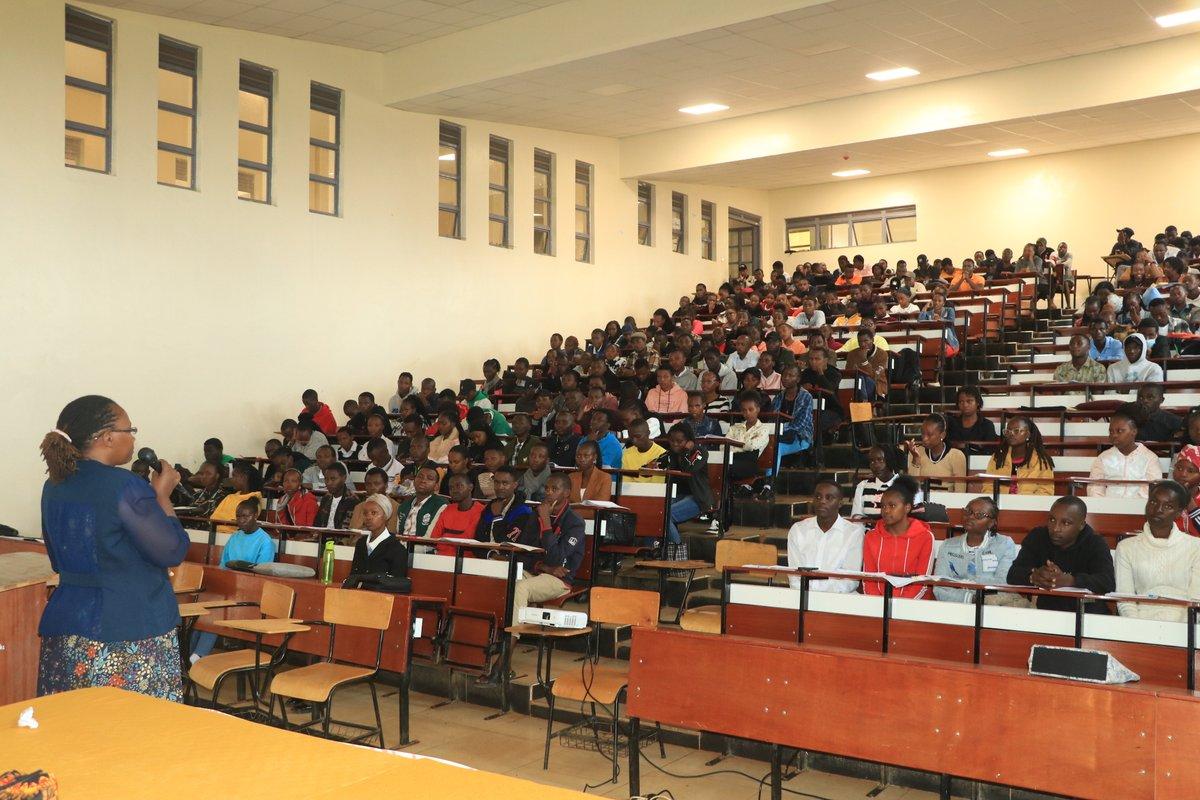
In Kenyan schools today, artificial intelligence is no longer a distant concept reserved for universities or advanced technology spaces. Secondary school students are already using AI to write compositions, answer comprehension questions, summarize set books, solve mathematics problems, and generate assignments within seconds. Some learners are even using AI to draft speeches, prepare debates, and complete holiday assignments without engaging mentally with the tasks themselves.
For many students, the attraction is obvious. AI offers speed, convenience, and instant answers. A learner who previously spent hours struggling with a composition can now generate a complete essay almost immediately.
A student who did not revise adequately for an assignment can simply type a prompt into an AI application and receive polished responses that appear intelligent and organized. In a highly competitive academic environment like Kenya’s, where performance pressure remains intense despite curriculum reforms, the temptation to depend on such technology is becoming stronger every day.
However, beneath this convenience lies a serious educational danger. Learning has always depended on mental struggle. A learner develops writing skills by drafting, making mistakes, receiving corrections, and improving gradually. Critical thinking grows through questioning, analysing, and defending ideas independently.
ALSO READ:
West Pokot ECDE teachers win first round in Court battle against County Government
Literature develops imagination through deep reading and interpretation. Mathematics sharpens reasoning through repeated practice and problem solving. When AI performs all these processes for learners, intellectual growth may quietly begin to decline.
This challenge is already becoming visible in many Kenyan classrooms. Teachers increasingly encounter assignments that sound sophisticated but feel emotionally detached and strangely artificial. Some students submit work containing vocabulary, sentence structures, and arguments far beyond their normal classroom ability.
Yet when asked simple oral questions based on the same work, the learners struggle to explain the ideas confidently. The writing appears brilliant on paper, but genuine understanding is missing.
Kenya’s education system may be particularly vulnerable because it has historically emphasized grades, completion of assignments, and examination performance. In many schools, especially those with large populations, teachers handle heavy workloads and may not always have sufficient time to verify the originality of every student’s work. Once an assignment is submitted neatly and on time, it can easily pass as authentic. AI thrives in such environments because it can produce convincing academic work within seconds.
The Competency Based Education curriculum was introduced partly to nurture creativity, critical thinking, communication, collaboration, and problem-solving skills among learners. Ironically, uncontrolled AI use may now threaten the very competencies the curriculum seeks to promote. If students rely excessively on machines to generate ideas, construct arguments, and complete projects, then authentic competency development becomes difficult.
This creates a painful contradiction. Kenya is attempting to move away from rote learning, yet AI may create a new form of intellectual dependency where students outsource thinking itself.
At the same time, rejecting artificial intelligence completely would be unrealistic and even harmful. AI also offers enormous opportunities for Kenyan education. In under-resourced schools where textbooks are limited, AI can provide access to learning materials and explanations that students may otherwise never receive. Teachers can use AI to prepare lesson plans, create revision questions, simplify difficult concepts, and support learners with different abilities. Rural learners can potentially access educational support comparable to what urban students receive. In this sense, AI could reduce educational inequality if used responsibly.
The real challenge therefore is not whether Kenya should embrace AI. That decision has already been made by technological reality. The important question is whether Kenyan schools will guide AI use wisely or allow it to erode independent thinking among learners.
ALSO READ:
Varsity staff to receive Ksh3.9Bn arrears for 2017–2021 as Govt moves to honor past obligations
Teachers must now rethink assessment methods. Traditional take-home assignments are becoming increasingly unreliable because AI can complete them easily. Schools may need to place greater emphasis on supervised writing, oral presentations, debates, practical projects, classroom discussions, and live demonstrations of understanding. Learners should increasingly be evaluated on their ability to explain ideas, defend arguments, and apply knowledge independently.
Teacher training is equally important. Many Kenyan educators are still unfamiliar with how AI operates or how students are using it. Without proper digital literacy, teachers may either panic unnecessarily or fail to recognize misuse entirely. The Ministry of Education and teacher training institutions will eventually need structured policies and professional development programs on responsible AI integration in schools.
Parents also have an important role. Many families unintentionally encourage shortcuts by placing excessive pressure on grades and ranking positions. Learners must be reminded that education is not simply about producing impressive answers but about becoming capable thinkers. A student who depends entirely on AI may perform well temporarily yet struggle later in workplaces and real-life situations that require originality, judgement, communication, and decision-making.
Ironically, the rise of artificial intelligence may end up restoring appreciation for deeply human qualities in education. Students still need mentorship, discipline, emotional support, storytelling, humour, encouragement, and moral guidance from teachers. Machines can generate information, but they cannot replace the influence of a passionate teacher standing before learners and shaping their character.
Kenya therefore stands at a critical educational crossroads. Artificial intelligence can either strengthen learning or weaken it depending on how schools respond. The future will not belong to learners who merely access technology. It will belong to learners who can think independently while using technology wisely.
Education must never become the simple production of answers by machines. It must remain the development of human beings capable of reasoning, imagining, questioning, and leading society responsibly.
By Ashford Kimani
Ashford teaches English and Literature in Gatundu North Sub-county and serves as Dean of Studies.
You can also follow our social media pages on Twitter: Education News KE and Facebook: Education News Newspaper for timely updates.
>>> Click here to stay up-to-date with trending regional stories
>>> Click here to read more informed opinions on the country’s education landscape