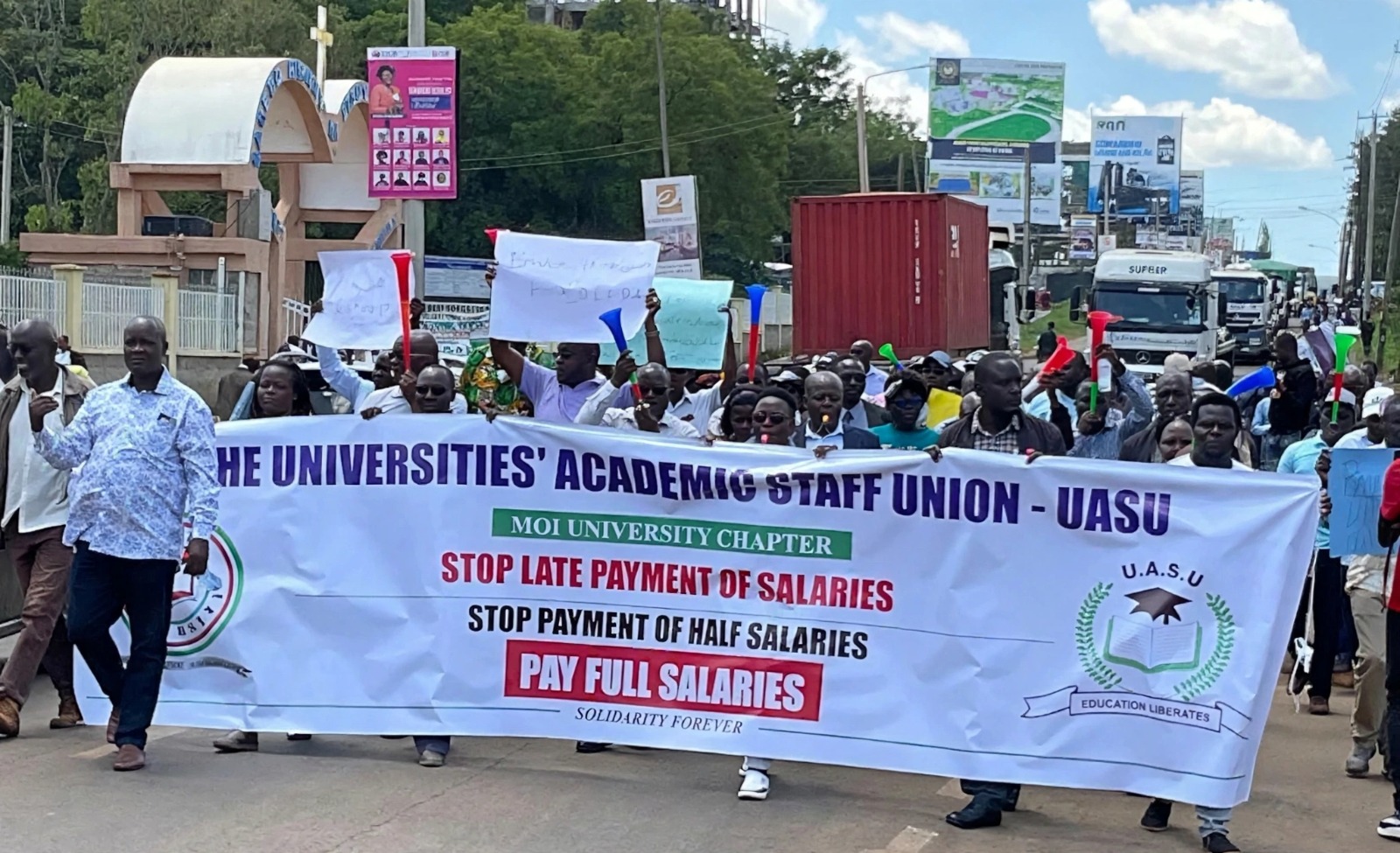
- Over 700,000 university students face uncertainty over lectures, exams, accommodation and graduation due to the latest strike.
- Students, especially first-years and finalists, bear the costs of disputes they did not create, with time as the most irreplaceable loss.
For more than 700,000 university students, the latest strike is not simply another industrial dispute. For a generation that has spent much of its school life watching teachers and lecturers negotiate, strike, return to class and sometimes threaten another walkout, it is another interruption in an educational journey already marked by industrial action.
The most troubling part may not be that students have seen strikes before. It is that many have become accustomed to them.
A university student reflecting on the journey puts it bluntly: “I sometimes ask myself whether strikes have become part of the Kenyan education system.” The student recalls moving through the education system and repeatedly encountering the same pattern. “At one point it is teachers who are on strike. At another, the government is negotiating with teachers. Then there are demonstrations, counter-demonstrations, court interventions, return-to-work agreements and, eventually, another dispute.”
By the time such a learner reaches university, industrial action can feel less like an extraordinary interruption and more like a familiar feature of education.
Kenya recorded major teachers’ industrial disputes in 2010, 2011, 2012, 2013 and 2015, while university lecturers have also staged significant strikes at different points, including major disputes in 2014, 2017, 2018 and 2024. The disputes differed in their causes, duration and participants, and not every student experienced all of them. But cumulatively, they demonstrate how frequently industrial relations have spilled into the classroom.
And now another university strike has placed more than 700,000 students in uncertainty. The immediate questions are familiar. When will lectures resume? What happens to examinations? Will the semester be extended? What happens to accommodation? Will graduation dates change? And how will students recover the academic time already lost?
For first-year students, the disruption carries an additional burden. They are entering university at the precise moment when they should be learning how to navigate a new academic environment. They have to understand course registration, timetables, academic departments, online systems, assessment requirements and the responsibilities that come with university life. Instead, some are learning how to navigate a strike.
A female first-year student might describe the frustration this way: “Starting university was supposed to be an exciting new beginning. I wanted to meet my lecturers, understand my course and settle into campus life. Instead, I am wondering when learning will actually begin.”
A male student might put the concern differently: “We understand that university workers have grievances. But students should not be left to carry the consequences of a dispute they did not create.”
These are illustrative student voices and should be replaced with verified interviews when presented as direct quotations.
ALSO READ:
Marginalised communities displaced from Rift Valley forests appeal for special education fund
The consequences extend beyond lecture theatres. Parents and guardians may already have paid fees, accommodation costs, transport expenses and money for food and other necessities. Students living away from home must decide whether to remain near campus or travel home while waiting for reliable information. For finalists, the uncertainty can be even more consequential. A delayed semester can affect examinations, graduation, internships, employment plans and other carefully timed transitions into the world of work.
For every student, however, there is one resource that cannot be replenished: time.
The student understands that the lecturers’ grievances cannot simply be dismissed. “I understand that teachers and lecturers have rights. They have families to support and legitimate concerns about their working conditions and remuneration. I also understand that the government has financial limitations.”
But there is another side to the dispute. “Students did not negotiate the salaries. Students did not sign the CBAs. Students did not create the disputes. Yet students lose the most precious resource in education time.”
That is why the current strike raises a question larger than the immediate disagreement between university employees and their employers. How much disruption can a generation absorb before disruption itself becomes normal?
The comparison with private universities makes the question even more significant. Where private universities continue teaching while public universities are affected by industrial action, their students may continue with lectures, assessments and other academic activities while their counterparts wait for negotiations to end.
That does not establish that private universities are automatically superior. Private institutions face their own challenges, particularly affordability, staffing costs and quality assurance. But the difference exposes a structural concern.
Public universities are an important route into higher education for large numbers of Kenyan students, particularly those unable to meet the cost of many private institutions. Continuity of learning should therefore not become a privilege available mainly to students whose families can afford an alternative institution.
The issue is not public versus private universities. It is whether Kenya can guarantee affordable and predictable higher education regardless of the institution a student attends.
That responsibility ultimately reaches government. The immediate task should be to facilitate meaningful negotiations and restore learning while addressing the issues behind the industrial dispute. But a return-to-work agreement should not be treated as the end of the problem.
If financing pressures are contributing to recurring disputes, they require a sustainable response. If collective bargaining agreements are signed, their implementation needs a credible framework. If disagreements repeatedly reach the point of closing classrooms, government, university managers and unions need stronger mechanisms for resolving them before students become caught in the middle.
Let KNEC set mid-term and end-term assessments to strengthen CBE
Students also deserve reliable communication. They should not have to depend on social media rumours or conflicting statements to establish whether they should remain in their hostels, travel home, report for classes or prepare for examinations.
When universities reopen, recovery must also be handled carefully. Lost teaching time cannot simply be erased by squeezing additional lectures, assignments and examinations into an already demanding calendar. First-year students may need additional orientation and academic support to compensate for a disrupted entry into university life.
The government should also examine the broader pattern across the education sector. A learner can begin primary school during one teachers’ dispute, encounter another in secondary school and eventually arrive at university only to meet another industrial action. That is how a student can describe the journey as a succession of strikes and counter-strikes.
“I sometimes joke with my friends that we are becoming immune to strikes,” the student says. “But perhaps that is not immunity. Perhaps it is simply exhaustion and familiarity.”
That distinction is crucial. Students may become accustomed to strikes without becoming unaffected by them. They may learn the routine without escaping the cost. They may know that negotiations eventually end a strike without knowing exactly how much academic time, money, and opportunity will be lost before that happens.
ALSO READ: TSC unveils new career path allowing teachers to reach Chief Principal grade
“We are the generation that will eventually run this country,” the student says. “We should not spend our formative years learning how to survive strikes and counter-strikes instead of learning how to build our future. University should prepare us for the world beyond the campus gates. It should not teach us that disruption is simply part of the curriculum.”
That is perhaps the most important message emerging from the current university crisis. The question is not simply when will the strike end? It is whether Kenya can build an education system in which legitimate disputes between workers, employers and government can be resolved without repeatedly making students pay the price.
More than 700,000 students are currently caught in that uncertainty. They do not control the negotiations. They did not create the dispute. But they control the future the education system is supposed to prepare them for.
They may have become accustomed to strikes. They should never become accustomed to losing their education to them.
By Hillary Muhalya
Get more stories from our website: Education News
To write to us or offer feedback, you can reach us at: editor@educationnews.co.ke
You can also follow our social media pages on Twitter: Education News KE and Facebook: Education News Newspaper for timely updates.
>> Click here to stay up-to-date with trending regional stories