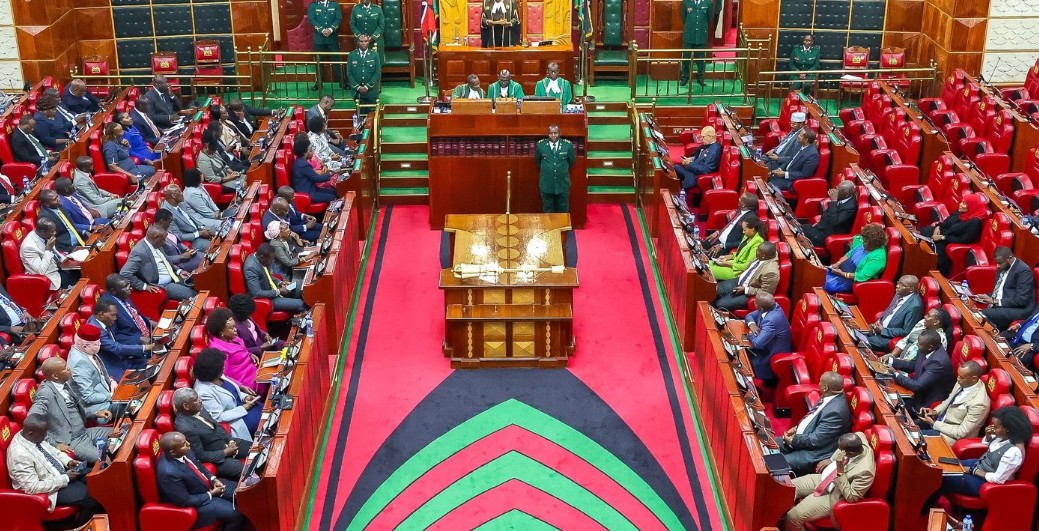
- Parliament has been urged to prioritise the welfare of JSS teachers and learners over the dispute over school capitation.
- Teacher domiciling and school financing should be separated and addressed on their own merits.
- The Education Committee should also adopt an evidence-based solution that guarantees teacher clarity, transparent capitation management and improved learning outcomes.
The ongoing debate surrounding the domiciling of Junior Secondary School (JSS) teachers under either the primary or secondary school system has increasingly become a matter of public concern. At the centre of the disagreement appears to be not merely the question of where JSS teachers should be administratively domiciled, but also the question of who controls and administers resources allocated to schools and learners.
This raises an important question for Parliament: If school capitation were removed from the equation, would the dispute over where JSS teachers are domiciled remain as intense as it is today?
This question deserves careful and independent consideration.
JSS teachers were recruited to serve learners at a critical stage of the Competency-Based Education system. Their primary responsibility is to teach, mentor and support learners. They should therefore not find themselves caught in institutional and organisational contests whose consequences may affect their professional stability, working environment and welfare.
Similarly, learners should not become collateral beneficiaries — or victims — of disagreements between institutions, professional bodies or stakeholders over administrative jurisdiction and financial resources.
The real priority should be the learner
Education policy should ultimately be judged by what it delivers to the learner.
Whether a JSS teacher is administratively domiciled in a primary school, junior school, secondary school or another appropriate institutional framework should be determined by educational logic, professional considerations, teacher welfare, accountability and the best interests of learners.
The question of capitation is important because schools require adequate resources to function. However, funding arrangements should not become the determining factor in deciding an administrative structure that affects the professional identity and welfare of thousands of teachers.
Parliament should therefore interrogate whether the current debate is sufficiently centred on the interests of teachers and learners or whether institutional and financial considerations have overshadowed those interests.
ALSO READ:
Junior Schools’ autonomy sparks row between KUPPET and KNUT in West Pokot
Teachers deserve clarity and dignity
JSS teachers require certainty regarding their career progression, deployment, reporting structures, appraisal, promotion, workload, professional development and terms of service.
They also deserve an institutional environment in which they can work without feeling that their professional identity is being used as an instrument in a wider institutional contest.
A teacher should be able to wake up every morning knowing:
Who is their employer and administrative supervisor?
Which institution are they officially attached to?
What is their career progression pathway?
How are they appraised?
Which institution is responsible for their professional development?
How are their welfare concerns addressed?
What happens to their career when they move beyond JSS?
These questions cannot be left hanging indefinitely.
ALSO READ: 71 trainees enrolled as PS Muoria commissions Kaare TVET Campus in Maara
Parliament must separate two issues
The National Assembly should consider separating teacher domiciling from school financing.
There is no reason why an administrative decision concerning teachers must necessarily determine who ultimately manages school resources. Parliament and the relevant education agencies can develop mechanisms that guarantee transparent, accountable and learner-centred management of capitation regardless of where JSS teachers are domiciled.
If financing is the genuine concern, then let Parliament address financing directly.
If teacher management is the concern, let Parliament address teacher management directly.
If the welfare of learners is the concern, let Parliament establish a structure that demonstrably improves learning outcomes.
These matters should not be bundled together in a manner that leaves teachers and learners uncertain about their future.
The Education Committee should listen beyond institutional positions
Parliament has an opportunity to hear from all affected parties — not only trade unions and government agencies, but also JSS teachers, school heads, parents, learners’ representatives, education experts and county-level education administrators.
The Committee should ask a simple question: Which arrangement provides the clearest accountability, protects teacher welfare, safeguards capitation, supports professional growth and produces the best educational environment for learners?
That question should be answered through evidence rather than institutional interests.
Teachers’ unions should remember their primary constituency
Trade unions have an important role in protecting workers’ rights. KUPPET and KNUT therefore have legitimate roles in representing teachers’ interests.
However, the current debate provides an opportunity for both organisations to demonstrate that the welfare of teachers and learners comes before institutional jurisdiction.
A disagreement over administrative domiciling should not create an impression that teachers are being treated primarily as numbers attached to funding streams.
Teachers are professionals.
Learners are the reason the education system exists.
Capitation is a means of supporting education, not the purpose of education.
A respectful appeal to Parliament
The National Assembly Departmental Committee on Education should approach this matter with the seriousness it deserves.
Rather than allowing the debate to remain a contest over institutional territory, Parliament should facilitate an evidence-based solution that answers four fundamental questions:
First, what administrative structure best serves JSS learners?
Second, what structure provides JSS teachers with clear career progression and professional identity?
Third, how can capitation be protected and administered transparently regardless of the institutional arrangement?
Fourth, what safeguards will prevent financial considerations from overriding the welfare of teachers and learners?
The country does not need a solution that simply determines who controls what. Kenya needs a solution that determines what works best for teachers, learners and the education system.
ALSO READ: Parents raise alarm as dilapidated bridge puts school children at risk
The JSS transition is too important to be reduced to an institutional contest
Thousands of teachers have committed themselves to implementing the Competency-Based Curriculum. Millions of learners depend on them. Parliament therefore has a responsibility to ensure that the final decision is guided by educational evidence, constitutional principles, teacher welfare, accountability and the best interests of the child.
Let the debate move beyond who owns the classroom and focus on who is best positioned to make the classroom work. Let capitation support education rather than determine the identity of education. And, above all, let the welfare of teachers and learners remain at the centre of the decision.
By Edwin Kundu Mutambo
Concerned Kenyan teacher and education stakeholder.
Get more stories from our website: Education News
To write to us or offer feedback, you can reach us at: editor@educationnews.co.ke
You can also follow our social media pages on Twitter: Education News KE and Facebook: Education News Newspaper for timely updates.
>> Click here to stay up-to-date with trending regional stories