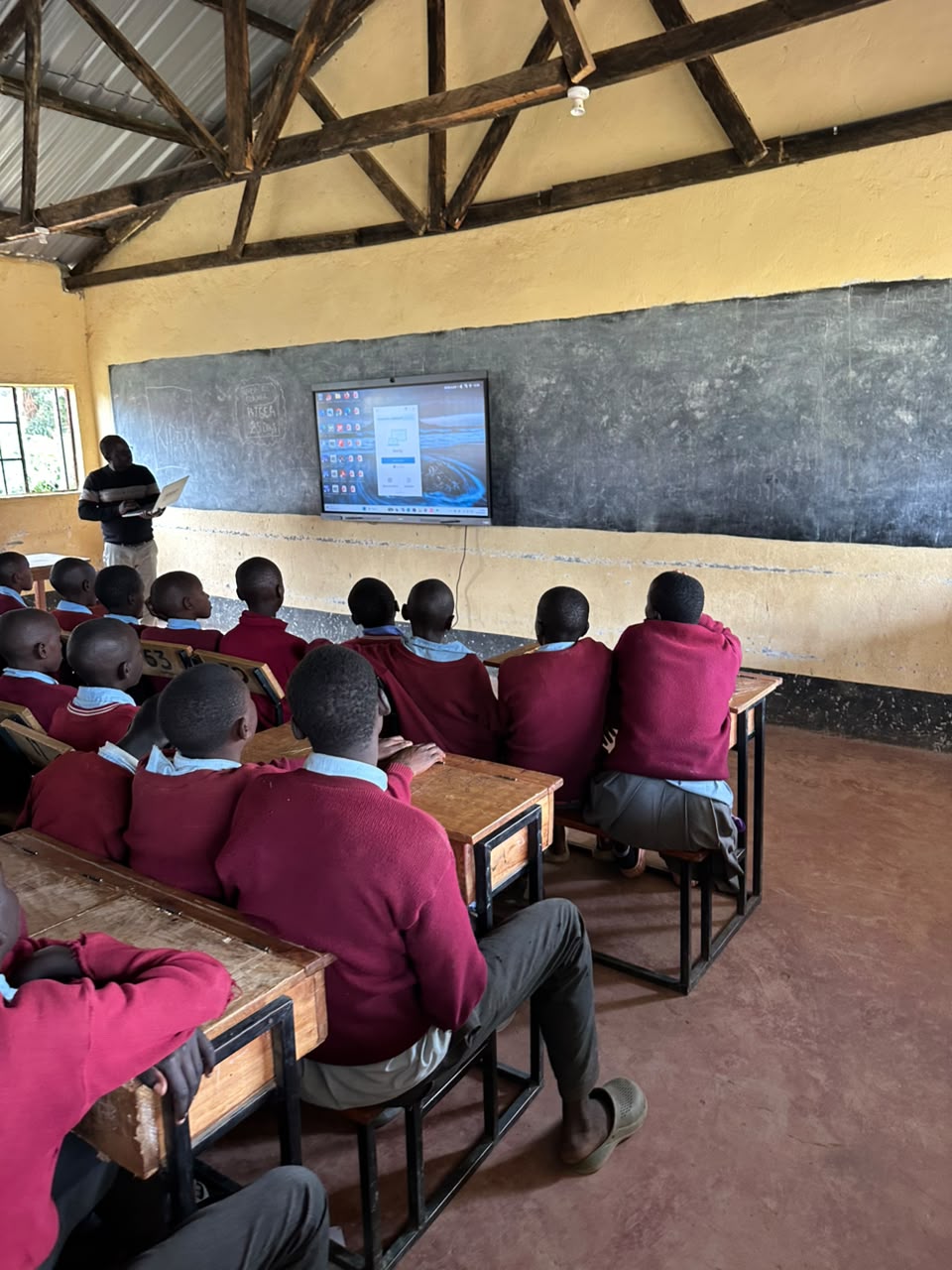
- Hillary Muhalya explores how school internet connectivity can expand learning opportunities for teachers and learners.
- Government and UNICEF partnerships support digital access, helping schools connect classrooms to wider educational resources.
- Talau’s experience highlights the importance of affordable internet, teacher support and sustainable infrastructure for learning.
When Talau Comprehensive School received an internet connection, the biggest change was not the arrival of Wi-Fi equipment—it was the opening of a new door to knowledge for teachers and learners.
The Government of Kenya and UNICEF are playing an important role in expanding digital connectivity to schools, with support from Giga, a joint initiative of UNICEF and the International Telecommunication Union (ITU), seeking to bring internet access closer to learners and communities that need it most.
It is an initiative that deserves recognition because school connectivity is no longer simply a technology project.
It is increasingly an education project, an opportunity project and an investment in Kenya’s digital future.
By working to bring connectivity to schools, the Government of Kenya and UNICEF are helping address one of the challenges that can undermine digital learning: the gap between having digital ambitions and having the infrastructure needed to achieve them.
For learners in schools that have historically had limited access to reliable internet, connectivity can open an entirely new learning environment.
At Talau Comprehensive School, the arrival of internet connectivity provides a practical illustration of what this transformation can mean at school level.
Teachers can use the internet to research topics, enrich lesson preparation, access educational resources and expose learners to information beyond the immediate classroom environment.
Learners can research assignments, discover new information and develop digital literacy under the guidance of their teachers.
The connection therefore becomes more than a Wi-Fi signal.
It becomes another teaching and learning resource.
Government and UNICEF’s bigger education opportunity
The Government of Kenya deserves credit for recognising that digital transformation requires infrastructure, while UNICEF’s contribution to school connectivity demonstrates the importance of partnerships in tackling challenges that cannot be solved by one institution alone.
The value of such collaboration lies in taking digital opportunities beyond the country’s most connected areas and bringing them closer to ordinary learners.
A child in a school outside a major urban centre should also have an opportunity to access the digital world.
A teacher should be able to search for additional teaching resources.
A school should be able to participate in an increasingly connected education system.
That is the promise behind expanding school connectivity.
And when such infrastructure reaches schools, its impact can extend beyond learners.
Teachers gain access to professional and educational resources. School administrators can benefit from digital communication and online systems. Communities can potentially gain a digital access point through the institutions serving them.
Talau Comprehensive School demonstrates why this investment matters.
Before reliable connectivity becomes available, a teacher may be limited by the resources physically available in the school.
With internet access, the teacher can broaden the range of information available for lesson preparation.
A difficult concept can be researched from several perspectives.
Additional examples can be found.
Digital learning materials can supplement textbooks.
Learners can be guided to conduct research rather than simply receive information.
This can support the development of competencies such as critical thinking, communication, creativity, collaboration and digital literacy.
The internet, however, should complement the teacher rather than replace the teacher.
Technology provides access to information.
The teacher provides context, guidance, judgement and direction.
That combination can make digital learning much more meaningful.
Connecting schools and extending learning into homes
The benefits of connectivity can continue beyond school.
Stream Networking says it has connected homes and supported more than 100 learning institutions.
For a household with school-going children, affordable internet can allow learners to continue accessing educational resources after school.
A learner working on an assignment can conduct research from home.
Parents can support their children in accessing appropriate educational material.
The classroom can therefore extend into the home.
That is particularly important as Kenya’s education system increasingly embraces digital resources.
This is where the entrepreneurial story of Kamau Mutahi, founder and CEO of Stream Networking, enters the wider picture.
Mutahi started Stream Networking after identifying what he considered a major gap in Kenya’s internet market: the need for affordable and reliable connectivity.
The company has since expanded its services to homes, schools and institutions.
According to the company, its advertised packages include 50Mbps connectivity for as little as KSh1,000, giving households another option for affordable broadband.
The importance of such affordability goes beyond the internet bill.
For a family, it can mean access to online learning.
For a learner, it can mean completing an assignment without travelling to search for connectivity.
For a teacher, it can mean accessing additional teaching resources.
For a small business, it can mean remaining connected to customers.
Stream Networking says it has been contracted to support school Wi-Fi connectivity under the wider Government and UNICEF connectivity initiative. Its reported role and the number of schools covered by its contract require confirmation.
Separately, UNICEF says the European Union-supported Last Mile Connectivity of Schools project aims to connect 1,000 public primary schools across 14 counties. In a January 2026 update, UNICEF reported that 363 schools had been connected by December 2025.
That is a substantial opportunity.
It is also a substantial responsibility.
Connecting a school is only the first step.
The bigger question is what happens afterwards.
Are teachers supported to use digital resources effectively?
Do learners have appropriate devices?
Is the network reliable?
Can schools maintain and use the infrastructure sustainably?
These are the questions that determine whether connectivity becomes meaningful educational transformation.
The connectivity revolution extends beyond education.
Homes increasingly depend on internet access for learning, work, communication and access to digital services.
Hospitals and health facilities are also increasingly dependent on digital systems and reliable communication.
For healthcare institutions, connectivity can support communication, access to information, digital systems and other technology-enabled operations.
The same infrastructure can therefore serve different purposes across society.
In a school, it supports learning.
In a home, it supports education and livelihoods.
In a hospital, it supports digital operations and communication.
In a business, it supports commerce and access to markets.
A partnership with a bigger purpose
The Government of Kenya and UNICEF’s efforts to expand school connectivity represent an important recognition that digital education cannot succeed without digital infrastructure.
The Government provides the national policy and implementation environment.
UNICEF brings its global experience and commitment to improving opportunities for children.
Technology companies such as Stream Networking can provide the connectivity infrastructure and technical expertise required to turn the ambition into practical access.
Schools and teachers then become the critical link between connectivity and actual learning.
That is why the success of the programme should ultimately be measured not by the number of Wi-Fi installations alone, but by the opportunities created for children.
If a learner discovers new knowledge because the school is connected, the investment has meaning.
If a teacher prepares a richer lesson because digital resources are available, the investment has meaning.
If a school can participate more effectively in the digital economy, the investment has meaning.
Kenya’s digital transformation will require more than smartphones and computers.
It will require infrastructure that reaches ordinary communities.
That means connecting schools, homes, hospitals, businesses and public institutions.
For Mutahi and Stream Networking, the opportunity is to participate in that transformation by providing affordable connectivity.
For the Government of Kenya and UNICEF, the challenge is to ensure that school connectivity translates into lasting educational opportunity.
And for schools such as Talau Comprehensive School, the arrival of internet connectivity represents something very tangible: a classroom that can now reach beyond its walls.
The real power of the internet is not the Wi-Fi signal itself.
It is the knowledge, opportunities, skills and connections that become possible once that signal reaches the people who need it.
From Talau to the schools targeted under Kenya’s wider connectivity initiatives, the country’s connectivity journey is therefore becoming part of a much bigger education story.
READ ALSO: Four Bomet teachers selected for national World Teachers’ Day celebrations
Connect the school. Empower the teacher. Open the world to the learner.
By Hillary Muhalya
Get more stories from our website: Education News
To write to us or offer feedback, you can reach us at: editor@educationnews.co.ke
You can also follow our social media pages on Twitter: Education News KE and Facebook: Education News Newspaper for timely updates.
>> Click here to stay up-to-date with trending regional stories