- Hillary Muhalya examines competing proposals emerging during public participation on six Education Reform Bills.
- Stakeholders remain divided over JSS governance, ECDE management and financing across Kenya’s education system.
- Parliament must reconcile the competing proposals with constitutional responsibilities and practical education delivery requirements.
Kenya’s Parliament is receiving sharply divergent proposals on how the country’s education system should be governed as the National Assembly Education Committee takes public views on six Education Reform Bills that seek to overhaul the legal framework for basic education, teacher training, assessment, qualifications and tertiary financing.
The public participation exercise has already exposed major disagreements over the proposed comprehensive-school model, the administration of Junior Secondary Schools (JSS), education financing and the management of foundational learning.
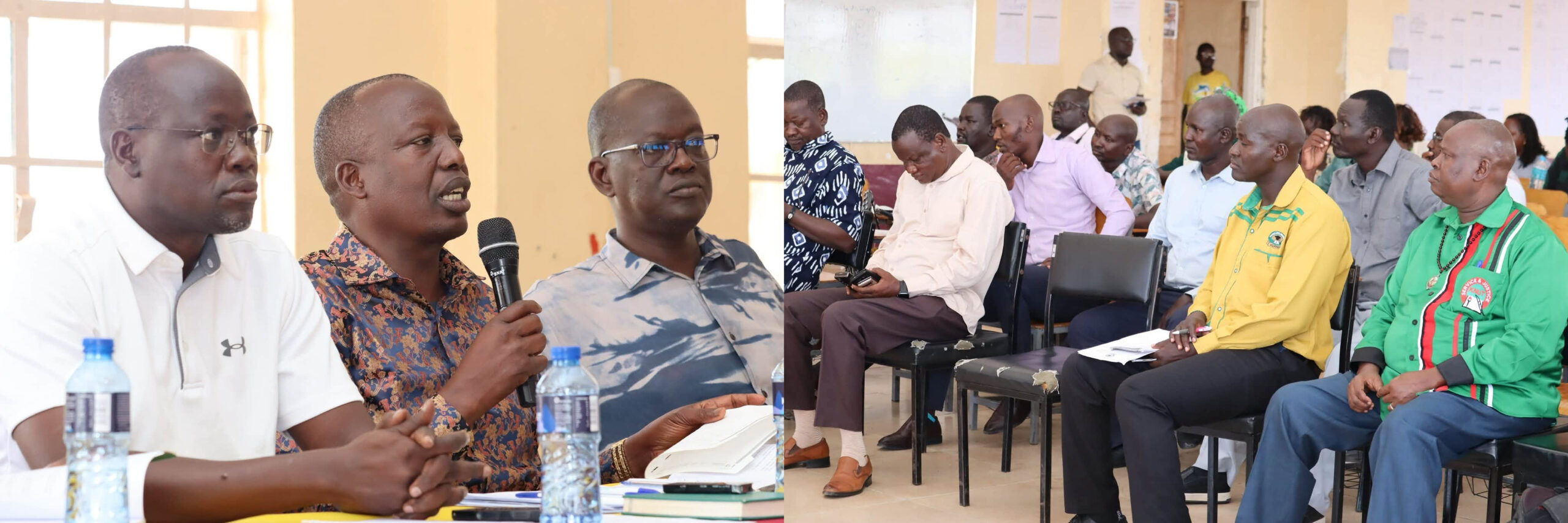
At the centre of the JSS dispute is a direct difference between the teachers’ unions. KUPPET wants JSS recognised as autonomous institutions with their own governance and Boards of Management, while KNUT supports retaining JSS within the comprehensive-school structure. KESSHA has also backed the comprehensive model, arguing that JSS should remain domiciled in primary schools.
Another major demand emerging from the consultations is for Early Childhood Development Education (ECDE) to be transferred from county governments to the national government and placed under the Teachers Service Commission (TSC). Stakeholders advancing the proposal have cited concerns over staffing, infrastructure, remuneration and the administration of ECDE teachers.
Such a change would have implications beyond education policy because pre-primary education is currently a function assigned to county governments under Kenya’s devolved system. The proposal therefore raises questions about constitutional responsibility, financing, employment and accountability for ECDE.
The disagreement over JSS is also a dispute about institutional authority.
KUPPET argues that sharing a compound should not automatically mean sharing administration and governance. It wants JSS to have separate leadership and management structures.
KNUT has taken the opposite position, maintaining that the comprehensive-school arrangement should be retained and strengthened.
The Basic Education Bill, 2026, seeks to give legislative backing to the comprehensive-school model, under which ECDE, primary and JSS levels operate within one institutional structure.
The decision Parliament eventually makes will consequently affect more than the physical location of JSS classrooms. It could determine how school leadership is organised, how Boards of Management operate, how teachers are managed and how accountability is assigned across the different levels of basic education.
Funding remains a central concern
The governance debate is unfolding alongside demands for stronger and more predictable education financing.
School heads and other stakeholders have raised concerns over capitation and the ability of institutions to meet their operational responsibilities under an expanding reform agenda.
The issue is particularly important because legislative changes cannot by themselves provide classrooms, teachers, learning materials or operational resources.
Participants have also raised concerns about tertiary financing under the proposed Tertiary Education, Placement and Funding Bill, including loan repayment terms and protection of vulnerable learners. KUPPET has separately called for a clear financial roadmap showing how the proposed system would be financed and implemented.
The National Assembly has now extended the public participation exercise to October 2, adding 16 counties that were not included in the initial phase. The additional counties include West Pokot, Nandi, Bungoma, Busia, Vihiga, Siaya, Migori, Bomet and Samburu, among others. Written memoranda can also be submitted until October 2 at 5pm.
The extension follows concerns from stakeholders, including KUPPET, that the original timetable did not provide sufficient opportunity for Kenyans to understand and debate the proposed laws.
The six Bills cover basic education; tertiary education, placement and funding; national educational assessment; pre-service and in-service teacher training; the national qualifications framework; and the Kenya Institute of Curriculum Development.
The emerging debate therefore goes beyond amendments to individual clauses. Parliament is being asked to make decisions that could reshape the distribution of authority, leadership and financing across Kenya’s education system.
READ ALSO: Nyandarua, Laikipia stakeholders push for fairer education funding, support for vulnerable learners
For ECDE, the question is whether responsibility should remain with counties or move back to the national level. For JSS, it is whether autonomy or integration provides the appropriate governance structure. For schools generally, it is whether funding arrangements will match the responsibilities created by the reforms.
The final legislation will have to reconcile these competing proposals with the constitutional framework and the practical requirements of delivering accessible and quality education.
By Hillary Muhalya
Get more stories from our website: Education News
To write to us or offer feedback, you can reach us at: editor@educationnews.co.ke
You can also follow our social media pages on Twitter: Education News KE and Facebook: Education News Newspaper for timely updates.
>> Click here to stay up-to-date with trending regional stories