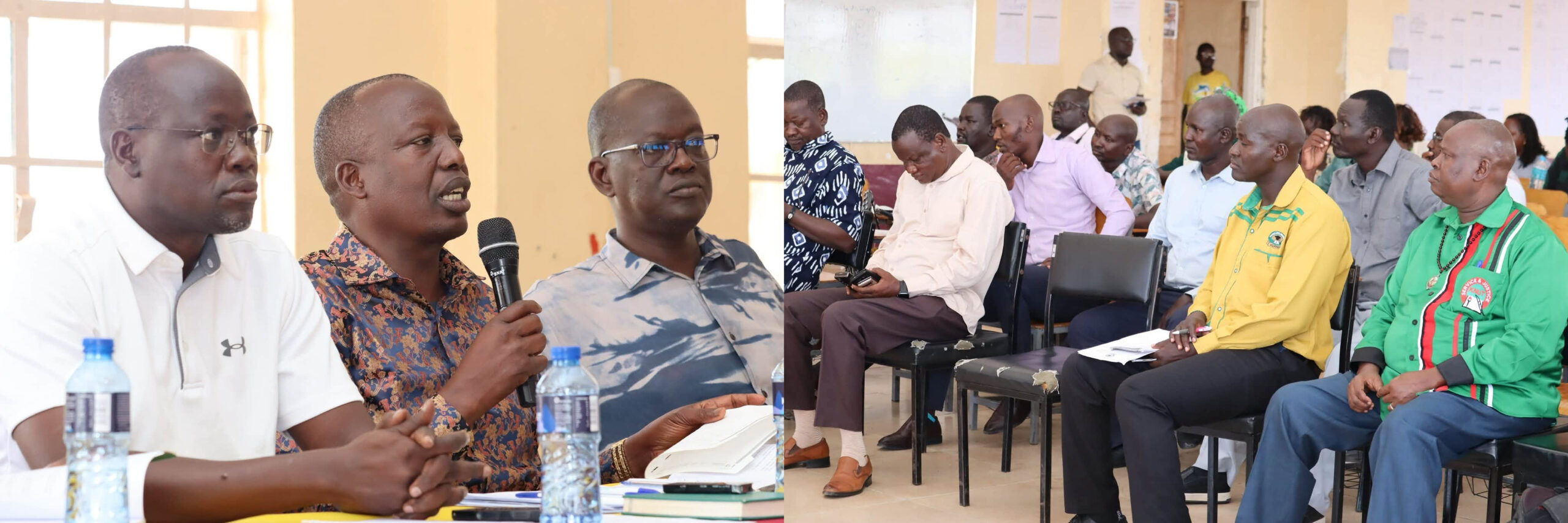
- Parliament has extended public participation on six education reform Bills to October 2.
- The additional hearings will take the consultation exercise to all 47 counties nationwide.
- KUPPET had criticised the original timetable as too short for meaningful public engagement.
Kenya’s proposed overhaul of the education sector has entered a critical phase as public participation on six reform Bills moves into its second week, with lawmakers taking the process to Wajir and Turkana before extending consultations to all 47 counties.
The exercise, which began on September 14 and was initially scheduled to run until September 25 across 31 counties, has now been extended to October 2, with an additional 16 counties included in the public participation programme.
The process is giving teachers, parents, learners, education professionals and other members of the public an opportunity to scrutinise proposed changes that could reshape how Kenya funds tertiary education, trains teachers, conducts assessments and manages the basic education system. The six Bills currently before the public cover tertiary funding and placement, basic education, national assessments, teacher training, qualifications and curriculum development.
The National Assembly Departmental Committee on Education, chaired by Tinderet MP Julius Melly, has divided into teams to cover the counties.
On Monday, the committee held forums at Turkana University College in Lodwar and Wajir Teachers’ Training College, with residents and education stakeholders invited to present their views on the proposed legislation.
The committee has urged Kenyans to use the forums to submit views, concerns and recommendations before Parliament proceeds with consideration of the proposed legislation.
The consultations come amid concerns from the Kenya Union of Post-Primary Education Teachers (KUPPET) that the public participation process was being conducted within a tight timeframe. The union had called for the hearings to be suspended, arguing that the original two-week period was insufficient for meaningful public engagement.
Six bills at the centre of education overhaul
At the heart of the consultations is the Tertiary Education, Placement and Funding Bill, 2026, which proposes the establishment of the Tertiary Education Funding Authority (TEFA).
The proposed authority would take over functions currently handled by the Higher Education Loans Board (HELB), Universities Fund and TVET Fund.
The Bill also proposes changes to the mandate of the Kenya Universities and Colleges Central Placement Service (KUCCPS) and a shift towards an all-loan funding model for tertiary education, replacing the current student-centred model that combines loans and scholarships.
The Basic Education Bill, 2026, proposes to repeal and replace the existing Basic Education law.
Among its proposed reforms is the legal recognition of the comprehensive school model, alongside penalties for unauthorised school fees. The Bill would also retain the prohibition of corporal punishment in schools.
The proposed Kenya National Educational Assessments Council Bill, 2026, seeks to establish a new body to oversee national educational assessments, replacing the Kenya National Examinations Council (KNEC).
The Pre-Service Education and In-Service Training Bill, 2026, focuses on restructuring teacher preparation and continuous professional development.
Two other Bills are also being subjected to public scrutiny.
The Kenya National Qualifications Framework (Amendment) Bill, 2026, seeks changes to the national qualifications framework, while the Kenya Institute of Curriculum Development (Amendment) Bill, 2026, proposes reforms touching on curriculum development and implementation.
The extension will see hearings conducted from September 28 to October 2 in West Pokot, Marsabit, Mandera, Nandi, Bungoma, Garissa, Busia, Lamu, Vihiga, Kitui, Siaya, Migori, Tharaka-Nithi, Nyamira, Bomet and Samburu.
The additional 16 counties bring the public participation exercise to all 47 counties, after the initial programme covered 31 counties.
Written submissions deadline extended
Kenyans who cannot attend the physical forums still have an opportunity to participate through written memoranda.
The deadline for submitting memoranda to the Clerk of the National Assembly has been extended to Friday, October 2, 2026, at 5pm.
The committee held forums in Narok, Meru, Kajiado and Kirinyaga on Friday as it continued collecting views from different regions.
The outcome of the public participation process will provide Parliament with submissions from citizens and education stakeholders as lawmakers consider the proposed changes.
With the six Bills touching virtually every major stage of Kenya’s education system—from basic education to teacher preparation, assessment, university placement, funding and qualifications—the remaining days of public participation provide stakeholders with an opportunity to place their views on record.
By Hillary Muhalya
Get more stories from our website: Education News
To write to us or offer feedback, you can reach us at: editor@educationnews.co.ke
You can also follow our social media pages on Twitter: Education News KE and Facebook: Education News Newspaper for timely updates.
>> Click here to stay up-to-date with trending regional stories