- PS Muoria has urged Kenyans with informally acquired skills to seek certification through the RPL programme.
- Muoria has highlightedRPL’s potential to help skilled workers access employment and career advancement opportunities.
Principal Secretary for Technical and Vocational Education and Training (TVET), Esther Muoria, has urged Kenyans with skills acquired outside formal classrooms to come forward and have their competencies formally recognised through Recognition of Prior Learning (RPL).
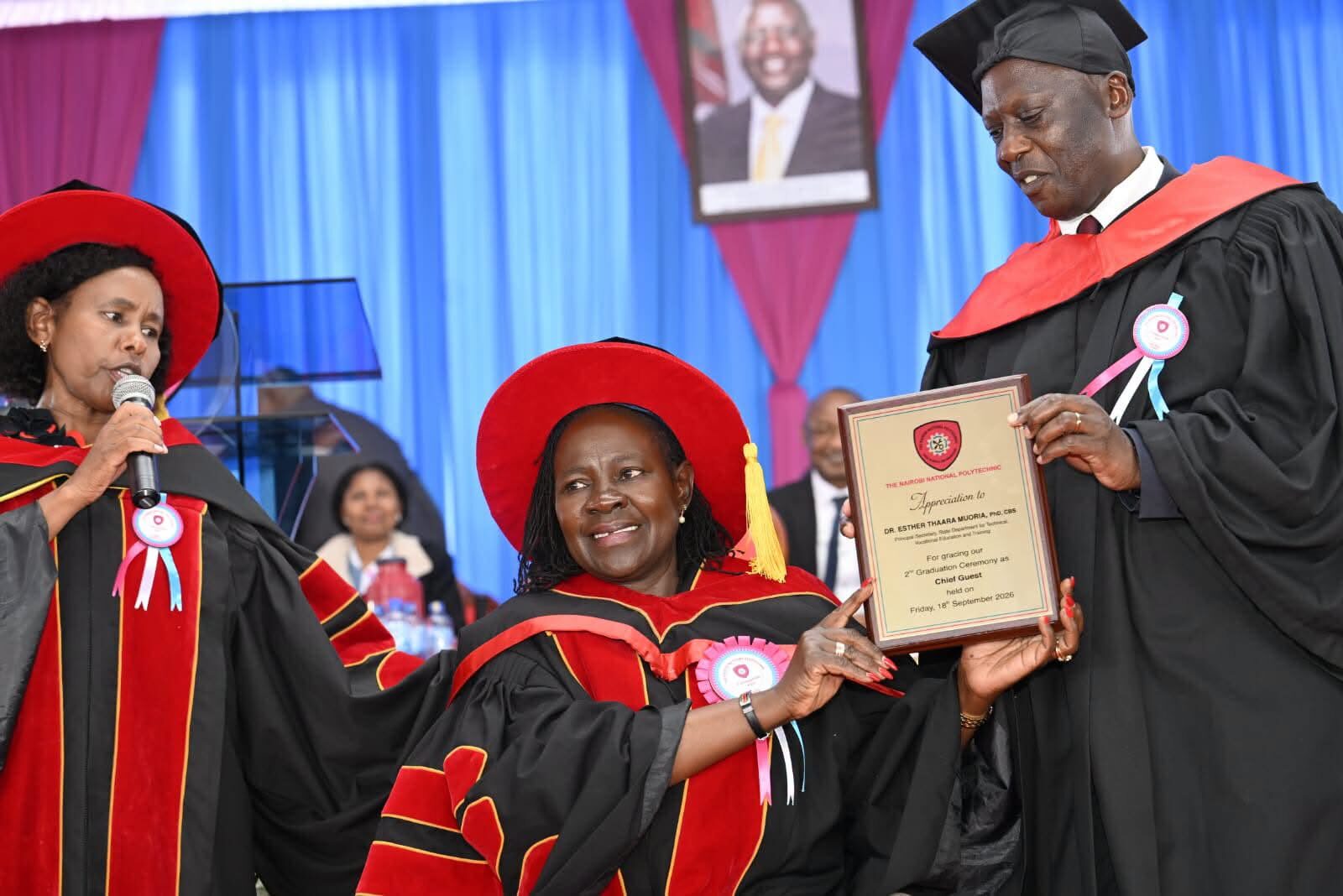
Speaking during the graduation ceremony at the Nairobi National Polytechnic on Friday, Muoria said RPL provides an opportunity for experienced workers to obtain formal certification for skills gained through work experience, informal training, self-learning and traditional apprenticeships.
She noted that the programme is open to people with practical skills across different occupations, including those working in the informal sector. Muoria cited butchery among the skills that can be assessed and certified under RPL, noting that Kenya has previously faced challenges meeting international demand for skilled butchers. “There was a time when countries outside Kenya wanted butchers from here, but we could not get enough people who had the required certification,” Muoria said.
ALSO READ:
How weak progression systems have weakened teaching’s professional standing
She encouraged skilled workers who may not have gone through conventional classroom training to take advantage of RPL and have their abilities assessed and formally certified.
A total of 3,047 trainees graduated from The Nairobi National Polytechnic, highlighting the growing role of technical and vocational education in preparing Kenyans for an evolving labour market. The ceremony also saw 355 graduands receive certification under the Recognition of Prior Learning programme.
RPL is a framework used to assess, validate and certify knowledge and competencies acquired outside formal education. It recognises skills gained through employment, informal training, community activities, self-learning and traditional apprenticeship, including experience accumulated in Kenya’s Jua Kali sector.
ALSO READ: Kwale steps up preparations for El Niño rains ahead of national exams
According to Muoria, recognising such skills can help workers access employment opportunities, advance their careers and pursue further education and training. The programme is expected to bridge the gap between practical experience and formal certification, while helping employers identify workers with demonstrated competencies.
By Obegi Malack
Get more stories from our website: Education News
To write to us or offer feedback, you can reach us at: editor@educationnews.co.ke
You can also follow our social media pages on Twitter: Education News KE and Facebook: Education News Newspaper for timely updates.
>> Click here to stay up-to-date with trending regional stories