- Benjamin Sogomo argues that the Basic Education Bill must place learner safety at the centre of reform.
- He highlights concerns over quality assurance structures and proposed parental roles in financing school development.
- Sogomo questions whether some provisions could reopen avenues for additional levies despite free education guarantees.
That six Bills in the education sector are currently being subjected to public participation to collect and collate views that could lead to their refinement is a great achievement, however belated it is. The Basic Education Bill, 2026, is attracting much more attention than the other five and will be the subject of two articles that I am writing to contribute to this discussion.
First, the recent fire tragedy at Utumishi Girls Senior School that led to the demise of 16 girls, injuries to many more and serious mental and psychological trauma is still fresh in our minds.
The demand by the public then, and even now, is that ways and means of ensuring safety and security in schools, especially boarding schools, need to be sought.
The focus was strongly on the government, through the Quality Assurance and Standards Department of the Ministry of Education, to monitor, evaluate and take action against schools that did not meet the required safety standards.
It was noted with astonishment that the provision for the establishment of the Education Standards and Quality Assurance Council, which would have overseen matters pertaining to quality assurance and standards, including the safety of students, has not been implemented despite a court order to do so.
Learner safety and quality assurance
In the Basic Education Act, 2013, one of the guiding principles is “promoting the protection of the right of the child to protection, participation, development and survival”.
To enhance this guiding principle, Quality Assurance and Standards Officers were empowered to “recommend temporary suspension of operations of institutions to the County Education Board for a specific period until the basic standards are met”. The existing Act indeed gives officers this power.
Now that we are reviewing this Act, one would have thought that the Bill before Parliament would not only provide for the Council but empower officers of this Council to close unsafe or congested schools without reference to any other body, just as public health officers close unsanitary eateries, hotels and bars on the spot.
Unfortunately, the Bill being discussed now does not provide for the Council in the form contemplated under the existing Act. Instead, the proposed framework provides for school inspection and quality assurance through a different structure, including the office of the Director of Schools Inspections.
The pain, trauma, sorrow and fear among parents, teachers and students in boarding schools is real and alive, but it looks like we do not want to legislate strongly enough against such occurrences going forward.
Did our students in successive fire tragedies die in vain?
How callous can we be to ignore the welfare of millions of learners in our schools?
At the same time, the morale of staff in quality assurance and standards could be affected since they expected to be empowered through a stronger institutional framework to perform their duties effectively through the ongoing reforms.
Our children cannot be left on their own on matters of safety and security.
Parents, school funding and extra levies
The other matter that looks baffling is the apparent contradiction between the roles of parents in school management and resource mobilisation, and the prohibition against charging parents unauthorised extra fees.
First, the Parents Association is proposed to be renamed the Parents-Teachers Association, as it was before 2013. Why it was changed to Parents Association in 2013 and why we are reverting to the PTA of old is not clear.
Secondly, the Bill provides that the PTA shall discuss, explore and advise parents on ways to raise funds for physical development and maintenance.
Furthermore, the PTA would explore ways and means of motivating teachers and learners to improve performance in academic and co-curricular activities. Reporting on the Bill confirms that the proposed PTA structure would have a role in discussing development funding and teacher and learner motivation.
On the other hand, the Bill provides for free and compulsory basic education and states that no child shall be barred from attending school because of failure to pay authorised charges.
It also proposes penalties for schools that impose unauthorised charges, while requiring Cabinet Secretary approval for additional charges in public schools.
The payment of extra levies by parents on demand by schools has been very contentious. These range from charges for development to charges for “motivation of teachers” that, in many cases, are exorbitant.
Aren’t these provisions reopening the door for extra levies?
Or could we be formalising and legalising what we have failed to eradicate?
The provisions also appear to continue distinguishing co-curricular activities even as activities such as sports, drama, music and athletics occupy an increasingly important place within Competency-Based Education.
This Bill requires a lot of editing, but that can only be achieved if well-informed educators turn up with well-thought-out and articulated proposals on how to further improve the proposed legislation before it proceeds through the National Assembly.
The ongoing public participation therefore provides an important opportunity for education stakeholders to examine not only what the Bill introduces, but also what may have been omitted and what requires greater clarity.
READ ALSO: Teacher promotions: TSC must draw the line between document verification and the interview
School safety, quality assurance, parental responsibilities and the financing of public education are too important to be left ambiguous.
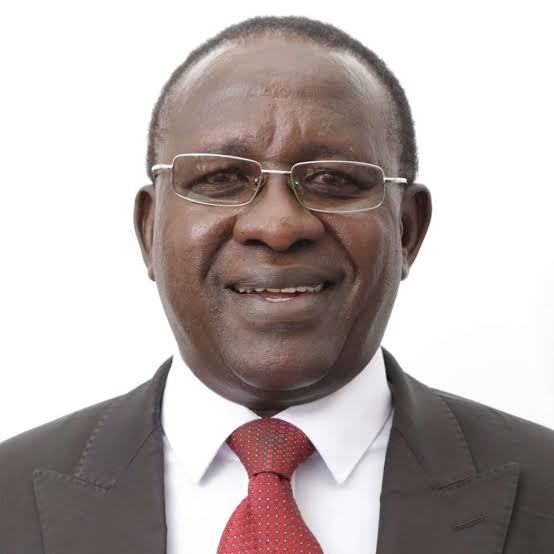
By Benjamin Sogomo
Sogomo is Education Specialist / Former Secretary TSC
Email: benjaminsogomo@gmail.com
Get more stories from our website: Education News
To write to us or offer feedback, you can reach us at: editor@educationnews.co.ke
You can also follow our social media pages on Twitter: Education News KE and Facebook: Education News Newspaper for timely updates.
>> Click here to stay up-to-date with trending regional stories