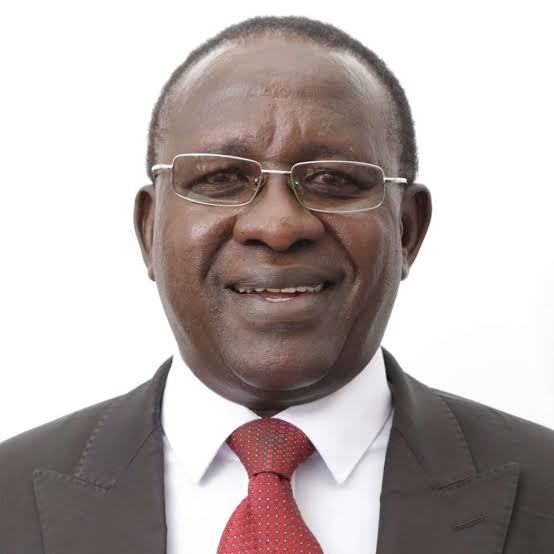
- Hillary Muhalya argues that strong school leadership determines whether resources translate into meaningful teaching and learning.
- He highlights the principal’s role in shaping professionalism, discipline, accountability and learner safety.
- Mughalya demonstrates why CBE requires principals to become instructional leaders rather than merely school administrators.
A school does not become excellent because it has a good curriculum, new classrooms or enough textbooks. It becomes excellent when its leadership turns those resources into a culture of serious teaching, disciplined learning, professional integrity and care for every child. That culture begins in the principal’s office.
Every morning, thousands of Kenyan schools open their gates. Behind those gates, however, two very different things can happen. A school can become a community where teachers teach with purpose, learners feel protected and challenged, and parents trust the institution. Or it can become a place where teachers simply complete routines, learners endure the timetable and everyone waits for the next bell.
The difference is often leadership.
The principal is therefore much more than an administrator who signs documents, attends meetings, manages resources and implements Ministry directives. The principal is the chief architect of the school’s culture—and what a principal consistently rewards, tolerates, confronts or ignores eventually becomes the school’s way of life.
This is the deeper meaning of Dr Sajeev M S’s description of the principal as the “architect of a school’s soul”.
But the Kenyan context demands an important qualification: a principal does not build a school alone. Teachers, learners, parents, boards of management and education officials are all part of the structure. The principal, however, provides much of the direction.
This responsibility has become even more consequential under Competency-Based Education (CBE). Curriculum reform cannot succeed simply because new policy documents have been printed, new terminology introduced or new assessment instruments developed. It succeeds when leadership converts policy into what actually happens in classrooms.
The real test of a principal is therefore not how efficiently the office is run, but what kind of teaching, learning, discipline, professionalism and human character the school produces.
That is where the soul of a school is built.
A principal who arrives early, understands what is happening in classrooms, listens to teachers, protects learners, confronts indiscipline fairly and insists that every child matters sends a powerful message about what the school values.
A principal who is obsessed with paperwork but rarely engages with teaching and learning sends another.
A school can therefore become administratively efficient while remaining educationally weak.
This is why the Kenyan principal must increasingly become an instructional leader.
That does not mean becoming a second classroom teacher. It means understanding the core business of the institution: teaching and learning. The principal should know whether lessons are taking place effectively, whether learners are participating, whether assessment is informing instruction and whether children who are struggling are receiving appropriate support.
Classroom observation should consequently not be reduced to surveillance or fault-finding. Properly used, it can become one of the most important instruments for professional development.
Teachers need support to improve. They also need accountability.
These two responsibilities should not be treated as opposites.
A strong principal can demand punctuality, lesson preparation, professional conduct and protection of learners while simultaneously listening to teachers, supporting their development and recognising the pressures under which they work.
Leadership becomes destructive when accountability is replaced by intimidation.
But leadership also becomes ineffective when compassion is used to excuse persistent negligence.
The challenge is to create a professional culture in which people understand both their rights and their responsibilities.
Leadership, discipline and integrity
The principal’s influence is equally visible in discipline.
Learners watch how adults respond to mistakes. Teachers watch how colleagues are treated. Parents watch whether complaints are handled fairly. Staff members quickly learn whether rules apply equally to everyone or selectively to the powerless.
The principal therefore teaches even when not standing in front of a classroom.
A leader who demands honesty but manipulates records teaches one lesson. A leader who speaks about respect while humiliating teachers teaches another. A leader who protects children even when doing so is inconvenient communicates something powerful about the value the institution places on learners.
This is why school culture cannot be manufactured through motivational speeches.
It is built through repeated behaviour.
The same principle applies to financial management and the use of school resources. A principal who treats public resources as a trust creates a different institutional culture from one who treats school finances as an area of personal influence.
Transparency, proper procurement, prudent expenditure and accountability are not merely administrative matters. They are part of the moral education of a school because learners and staff observe how those entrusted with authority behave.
Kenya’s education reforms therefore require more than additional teachers, classrooms, laboratories or learning materials.
They require serious attention to the quality of school leadership.
Resources matter. But leadership determines whether resources are converted into educational opportunity.
A new classroom cannot teach a child.
A textbook cannot create a school culture.
A curriculum document cannot inspire a teacher.
People do that—and leadership determines the environment in which those people work.
The principal as a team builder
Yet principals should not be expected to solve every problem alone. Strong schools distribute leadership.
Deputy principals, heads of department, senior teachers, class teachers and other members of staff should have defined responsibilities and the authority to perform them.
The principal should therefore be an architect, not a dictator.
The strongest school leaders build teams rather than dependants. They develop other leaders rather than centralise every decision. They establish systems that continue functioning even when they are away.
Their success is not measured by how many decisions pass through their desks, but by how effectively the school operates without unnecessary dependence on one individual.
This becomes particularly important as Kenya continues to implement CBE.
CBE places greater emphasis on competencies, values, creativity, critical thinking, problem-solving and practical abilities. Such outcomes cannot be produced through examination preparation alone.
They require teachers who understand the curriculum, learners who participate actively and school leaders who create the conditions for experimentation, collaboration and meaningful assessment.
A principal who reduces CBE to paperwork and compliance risks turning a transformative curriculum into another bureaucratic exercise.
A principal who understands its deeper purpose can help teachers move from simply covering content to developing learners.
That requires courage because educational leadership is ultimately about making choices.
The principal must decide whether professional development is meaningful or merely a ritual. Whether staff meetings are platforms for problem-solving or ceremonies for issuing instructions. Whether learner discipline is corrective or humiliating. Whether parents are treated as partners or inconveniences. Whether teachers are encouraged to innovate or punished for trying something different.
Every such decision adds another layer to the school’s culture.
The principal’s greatest influence may therefore be invisible.
It is found in the teacher who begins preparing better because leadership has restored professional pride.
It is found in the learner who reports abuse because the school has created a culture of safety.
It is found in the struggling child who receives attention rather than being written off.
It is found in the teacher who accepts responsibility because accountability is fair and predictable.
It is found in parents who trust the school because leadership communicates honestly.
These are the foundations of a successful school.
The principal may occupy an office for only a few years. But the culture created during that period can influence thousands of lives long after the principal has left.
That is why Kenya must stop viewing school leadership as merely an administrative appointment.
The principal is a custodian of the school’s direction, culture, professional standards, learning environment and moral climate.
The principal does not build the school alone. But through daily example and institutional decisions, the principal helps determine what kind of school everyone else is building together.
The ultimate legacy of a principal may not be a new classroom block, a trophy cabinet or even an impressive examination ranking.
It may be a school where teachers became better professionals, learners became more confident and responsible, parents regained trust, and a culture of learning survived beyond one person’s tenure.
A principal’s office may be one room in a school, but the decisions made inside it can shape an entire generation.
The question, therefore, is not simply whether a school has a principal.
READ ALSO: Teacher promotions: TSC must draw the line between document verification and the interview
The real question is: What kind of school is that principal building?
By Hillary Muhalya
Get more stories from our website: Education News
To write to us or offer feedback, you can reach us at: editor@educationnews.co.ke
You can also follow our social media pages on Twitter: Education News KE and Facebook: Education News Newspaper for timely updates.
>> Click here to stay up-to-date with trending regional stories