- MPs question extra charges imposed on parents by national schools
- Committee scrutinises levies linked to enhanced meals and other needs
- Schools face questions over approvals required for additional charges
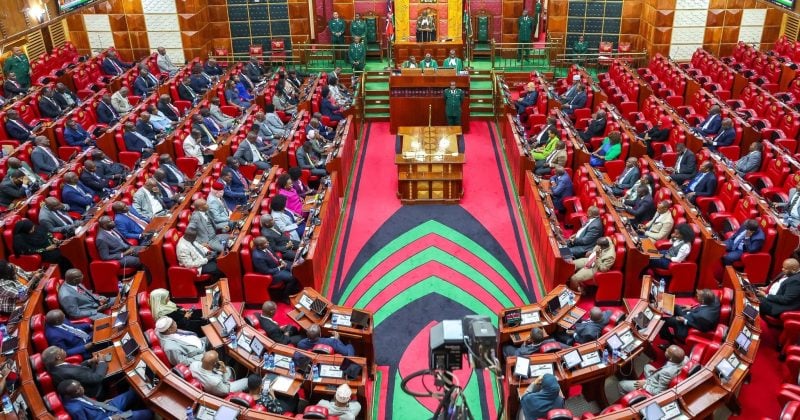
MPs on the Public Investments Committee have criticised national schools for imposing extra levies on parents to fund enhanced meals.
Members of the National Assembly Public Investments Committee on Governance and Education said such charges must receive approval from the Ministry of Education.
According to the committee, parents should not be compelled to pay fees outside the approved school charges, even where the additional funds are intended to improve learners’ nutrition or meet other institutional needs.
MPs raised the concerns during scrutiny of Auditor-General reports covering various national schools for the financial years 2020/2021 to 2024/2025.
Chaired by Luanda MP Dick Maungu, the committee questioned administrators from schools including Alliance High School, Alliance Girls’ High School, Mang’u High School, Limuru Girls’ School, Kiambu High School, Kenya High School, Pangani Girls Senior School, Lenana School, Starehe Boys’ Centre and School, Starehe Girls’ Centre and Nairobi School.
At the centre of the discussions were additional charges collected through Parents Association support programmes and other arrangements that, according to the Auditor-General, lacked the required approval from the Ministry of Education through the County Education Board.
Alliance High School was found to have charged Ksh68,554 against an approved fee of Ksh53,554 in 2020/2021, resulting in an additional Ksh15,000 per student.
In 2021/2022, the school charged Ksh68,554 against the approved Ksh45,000, creating a variance of Ksh23,554 per student.
Meanwhile, the Auditor-General flagged Ksh42.25 million collected under the school’s Parents Association support programme in 2024/2025.
Alliance principal David Kamau said rising costs of goods and services, alongside parents’ desire to maintain the school’s established standards, had contributed to the additional contributions.
READ ALSO:
TSC takes teacher promotion verification to grassroots as WTD awards process gathers pace
At Limuru Girls’ School, the Auditor-General reported that students were charged Ksh73,580 against an approved fee of Ksh53,580.
Chief Principal Susan Kariuki said the additional funds had been approved at an Annual General Meeting by the Parents Teachers Association and endorsed by the Board of Management to address rising food, electricity and water costs.
She, however, acknowledged that the school had not obtained written authorisation from the Cabinet Secretary before implementing the additional levy.
Mang’u High School came under particular scrutiny over a Ksh46,082 per-student charge collected under its Parents Association Support Programme in 2024/2025.
According to the Auditor-General, the charge had not been approved by the Ministry of Education through the County Education Board and was contrary to Government guidelines on fees payable by parents.
Mang’u principal Dr Bernard Mwangi King’ah defended the levy, saying it supported an enriched diet as well as security, technical workshops, co-curricular activities and laboratory requirements.
He said the school’s enhanced menu was part of a programme supported by parents and the Board of Management.
“The school offers an enriched diet over the year and changing may not go well with the student,” Dr King’ah said.
Still, the Auditor-General maintained that approval by parents or the Board of Management did not constitute the statutory approval required from the Ministry.
Audit reports indicate that Mang’u had collected similar contributions over several years, with the amount rising from Ksh18,452 per student in 2021 to Ksh27,006 for Form Ones and Ksh27,054 for students in Forms Two to Four in 2022, before increasing to Ksh33,452 per student in 2023.
The committee questioned why schools continued collecting such charges without demonstrating that the required government approvals had been obtained.
Mr Maungu said schools could not introduce additional financial obligations on parents without following established procedures.
“Schools cannot wake up and introduce additional charges and expect parents to simply comply. There are established procedures that must be followed before any new programme involving parents’ money is introduced,” he said.
He added that improving learners’ diets was a legitimate objective, but insisted that such programmes must operate within the law.
Narok Women Representative Rebecca Tonkei said improved nutrition should not create disparities among learners in public schools.
She questioned why parents in some schools should pay extra for additional servings of eggs, bread, sausages, chapati and mandazi when such meals were not part of the ordinary menu in other public schools.
“If there is a need to introduce more eggs, bread, sausages, chapati or mandazi, then the Ministry should determine how such a programme will be funded and implemented,” Ms Tonkei said.
Lungalunga MP Chiforomondo Mangale said the committee was concerned about the emergence of different feeding standards within the public education system.
He questioned whether parents should be required to finance an enhanced menu simply because a particular school had opted for more elaborate meals.
Kiminini MP Maurice Kakai Bissau said MPs supported efforts to improve learners’ nutrition but insisted that schools must comply with government regulations and ensure accountability in the use of parents’ money.
“No one is opposed to giving our children better nutrition. In fact, we all want our learners to eat healthy and balanced meals. The concern is how these programmes are introduced and financed,” Mr Bissau said.
Going forward, the committee is expected to use the findings from the Auditor-General’s reports to scrutinise financial management and compliance with government regulations in the affected institutions.
By Jeff Kirui
Get more stories from our website: Education News
To write to us or offer feedback, you can reach us at: editor@educationnews.co.ke
You can also follow our social media pages on Twitter: Education News KE and Facebook: Education News Newspaper for timely updates.
>> Click here to stay up-to-date with trending regional stories