- Hillary Muhalya argues that delayed school funding can turn principals into unwilling financiers of public education.
- He says South Africa’s experience offers Kenya a warning about late capitation and inadequate school allocations.
- Muhlaya calls for predictable funding, transparent disbursement and emergency mechanisms that protect school leaders from personal debt.
South African school principals are being pushed into an uncomfortable role: using personal savings, credit cards and borrowed money to keep schools running when government funding is delayed.
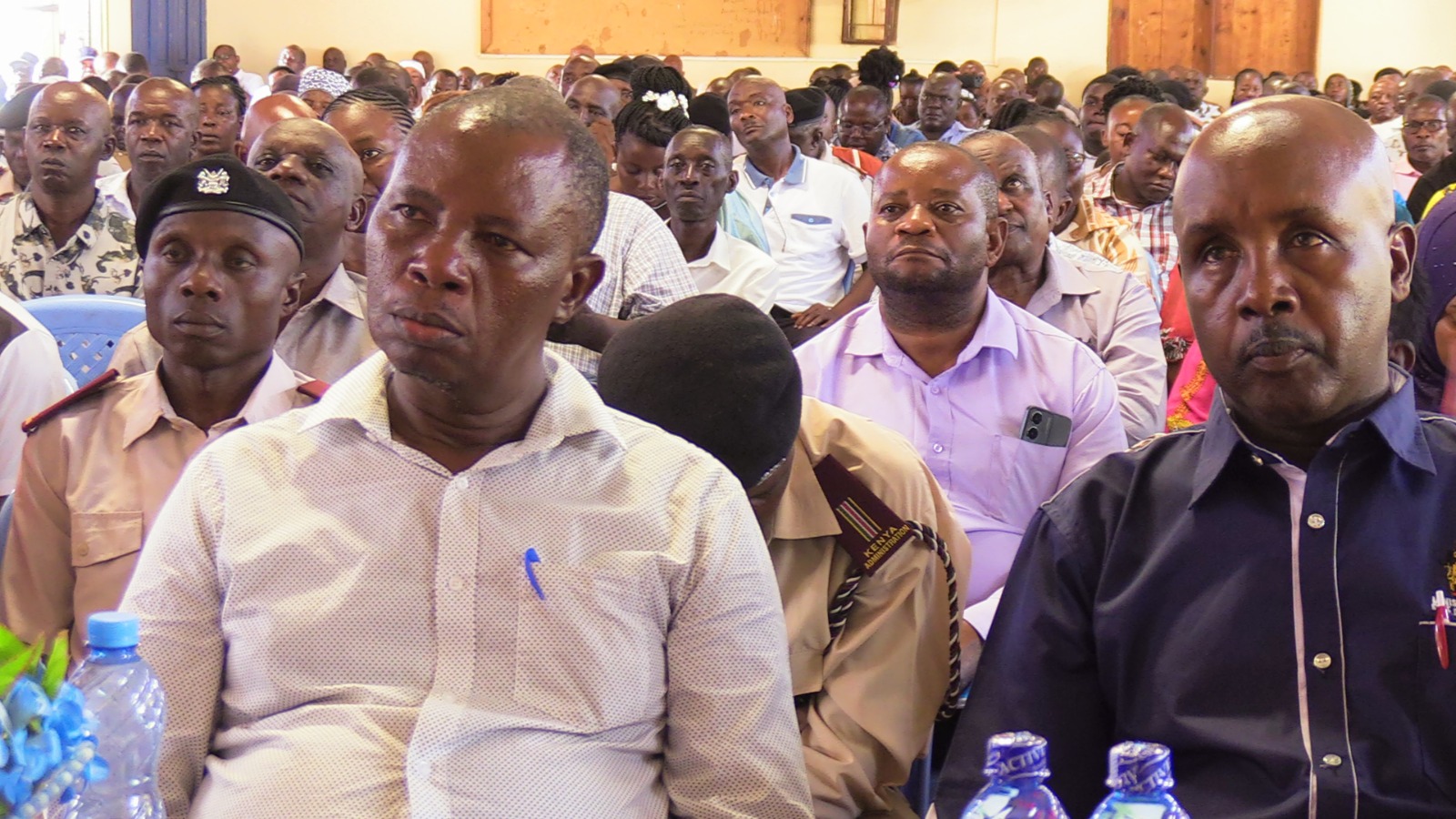
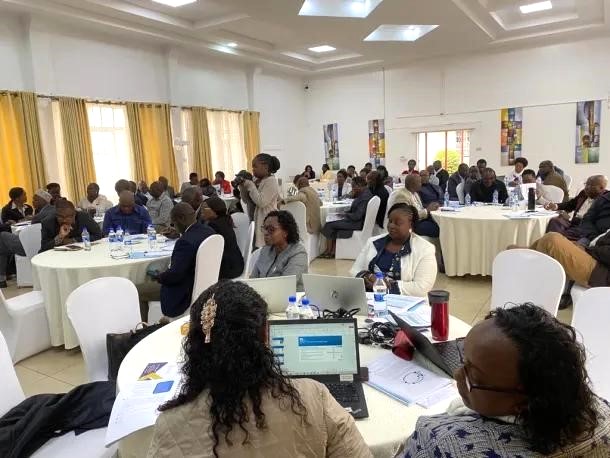
More than 850 principals attending the South African Principals’ Association national conference in Limpopo heard reports of school leaders personally purchasing stationery and other essential supplies while waiting for government money. Three principals interviewed after the conference said their personal debts had exceeded R10,000.
The reported problem is not that South Africa lacks a school-funding framework.
Under the National Norms and Standards for School Funding, public schools receive allocations based on learner numbers and the socio-economic classification of schools. The money supports operational expenses such as stationery, learning materials, utilities and examinations.
For 2026, the national target allocation for no-fee schools in Quintiles 1 to 3 is R1,835 per learner annually. Quintile 4 schools have a target allocation of R919, while Quintile 5 schools have a target of R315 per learner.
Early childhood development is financed through a different arrangement, with qualifying centre-based programmes receiving a subsidy of R24 per child per day.
Primary and secondary education fall under the school-funding framework. In South Africa, high school forms part of secondary education and should therefore not be treated as a separate funding category.
University education is financed differently through institutional funding and student financial aid and does not have one universal per-student capitation figure comparable to basic-school funding.
The immediate South African controversy is therefore about delayed access to money schools are supposed to receive, rather than the absence of a funding formula.
In Gauteng, financial pressures have contributed to delays in school-funding payments. Basic Education Minister Siviwe Gwarube has warned against shifting provincial financial pressures onto schools and urged principals not to use personal credit cards to meet institutional expenses.
That is where the South African story becomes relevant to Kenya.
Kenya’s school funding question
Kenya is facing its own debate over whether public schools are receiving adequate and timely resources to meet their obligations.
Secondary-school heads have raised concerns over delayed and inadequate capitation, school debts and growing operational pressures.
KESSHA National Chairman Willie Kuria recently said public secondary schools had received about Sh14,000 per learner this year against the approved annual allocation of Sh22,244, with part of the allocation retained centrally for items such as textbooks, co-curricular activities and SMASSE.
These are Kenyan facts, not an extension of the South African case.
The policy question arising from them is whether Kenya’s school-financing model is keeping pace with the demands now placed on schools.
A school continues to incur expenses whether or not capitation has arrived.
Stationery is required. Learning materials have to be prepared. Utilities have to be paid. Assessments have to be conducted. Buildings require maintenance. Suppliers expect payment.
And this is where commentary begins.
A principal should not become the unofficial banker of a public school.
There is an important difference between a school leader voluntarily helping during an isolated emergency and a system that routinely depends on principals to bridge funding gaps from their personal finances.
Personal sacrifice may keep a school functioning temporarily, but it does not solve the underlying financing problem.
If a principal uses a credit card to buy school supplies and waits months for reimbursement, the financial burden has simply shifted from the institution to an individual.
That is not a sustainable model of public education.
Funding must be predictable
Kenya should therefore ask four straightforward questions.
How much money is allocated per learner?
When is it released to schools?
How much actually reaches each school?
Is the allocation sufficient to meet the real cost of providing education?
The questions are particularly important under Competency-Based Education (CBE), which requires schools to manage assessment, practical learning, learner support and other resource-intensive activities.
The solution is not necessarily to increase funding blindly.
The first requirement is to establish whether existing allocations are adequate, whether disbursements are predictable and whether schools can access the money when they need it.
The government should also consider a transparent school-financing mechanism through which school leaders can see their approved allocation, amount released, outstanding balance and expected next disbursement.
Where government funding is delayed, there should be a formal emergency mechanism rather than an expectation that principals will use personal money or negotiate informal credit with suppliers.
The South African experience offers Kenya a useful warning: having a funding formula is not enough if money arrives late.
Kenya’s own debate adds another dimension: even timely funding may not be enough if the amount allocated per learner no longer reflects the cost of running a modern school.
Ultimately, the test of education financing is not the size of the national budget announced in Nairobi or Pretoria.
It is whether a school principal can open the school gates, support teachers, provide learning materials and keep learning going without having to reach into a personal wallet to make the system work.
A principal should lead the school.
READ ALSO: Why lifelong learning matters in a changing world
Government should finance it.
By Hillary Muhalya
Get more stories from our website: Education News
To write to us or offer feedback, you can reach us at: editor@educationnews.co.ke
You can also follow our social media pages on Twitter: Education News KE and Facebook: Education News Newspaper for timely updates.
>> Click here to stay up-to-date with trending regional stories