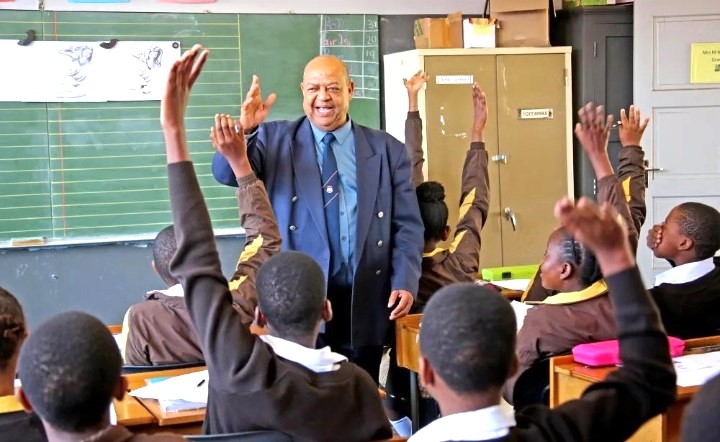
- Hillary Muhalya argues that constant parental intervention can weaken children’s independence and problem-solving abilities.
- He says parents should guide learners through challenges instead of automatically solving every difficulty for them.
- Muhlaya urges families and schools to promote responsibility, resilience and age-appropriate independence from an early age.
In many Kenyan homes, a child forgets a book at school and a parent immediately rushes to deliver it. A learner leaves an assignment unfinished and the parent calls the teacher to explain. A teenager loses something through carelessness and an adult quickly replaces it. A child struggles with homework and the parent takes over.
The intention is usually love.
But love can become counterproductive when parents begin removing every difficulty from a child’s path.
Children do not become responsible because adults constantly protect them from the consequences of their decisions. They become responsible when they are trusted with age-appropriate responsibilities and given opportunities to make decisions, make mistakes, correct them and try again.
That distinction is becoming increasingly important in Kenyan homes.
The country expects schools to develop learners who can think critically, solve problems, communicate, collaborate, create and become self-directed. Kenya’s competency-based curriculum specifically identifies critical thinking and problem-solving, self-efficacy, learning to learn and other competencies as essential areas of development.
Yet those competencies cannot be manufactured in classrooms alone.
A child cannot be taught independence at school while being denied every opportunity to practise it at home.
A learner cannot become a problem-solver if every problem is solved by a parent.
A teenager cannot develop sound judgement if every poor decision is immediately reversed by an adult.
This does not mean parents should abandon their children to struggle.
Help is necessary. Rescue is not.
The difference matters.
A parent who sits beside a child struggling with mathematics, asks questions and guides the learner towards the answer is helping.
A parent who takes the book and completes the question is rescuing.
A parent who teaches a child how to organise schoolwork is helping.
A parent who repeatedly calls teachers to find out what the child was supposed to do is rescuing.
A parent who teaches a teenager how to manage money is helping.
A parent who repeatedly pays for the consequences of reckless spending without allowing the young person to understand the mistake is rescuing.
A parent who listens when a child is bullied, investigates and seeks appropriate protection is helping.
A parent who intervenes in every ordinary disagreement with classmates, teachers or friends is taking away an opportunity to develop judgement.
The difference is simple: help builds capacity; rescue creates dependence.
Know when intervention is necessary
There are, of course, situations where parents must intervene.
Children must be protected from abuse, exploitation, serious bullying, dangerous environments and situations beyond their age or ability to manage. The law itself places the child’s best interests at the centre of decisions affecting children and recognises the importance of appropriate guidance and welfare.
The argument is not for careless parenting.
It is against unnecessary intervention.
A child who forgets homework should not automatically be treated like a child facing danger.
A teenager who makes a poor but manageable decision should not automatically be shielded from every consequence.
Parents must learn to distinguish danger from discomfort, vulnerability from inconvenience, and genuine need from ordinary childhood mistakes.
That distinction is particularly important in Kenyan families where academic success can carry enormous pressure.
Some parents become so invested in their children’s grades that they begin managing the entire educational experience. They monitor every assignment, negotiate every disagreement, supervise every project and sometimes do work that was supposed to demonstrate the learner’s own ability.
The child may receive a good mark.
But what exactly has the child learned?
If the project was completed by the parent, the grade may measure parental effort rather than the learner’s competence.
If the parent always negotiates with teachers, the learner may never develop the confidence to communicate appropriately.
If every academic setback is immediately blamed on a teacher, school or examination, the child may never learn to examine their own contribution to the problem.
Responsibility begins at home
This is where parenting and education must meet.
The home should be an extension of learning, not a place where every difficulty is removed before the learner encounters it.
Children can be given responsibilities according to their age.
They can pack their own school bags, keep track of personal belongings, help with household chores, organise their study materials and learn to plan their time.
Older children can manage small budgets, make appropriate purchases, communicate directly with teachers about academic matters and take increasing responsibility for their assignments.
They should not be expected to do everything alone.
They should be expected to do what they are capable of doing.
That is the crucial balance.
A child who needs assistance should receive it. A child who can reasonably handle a task should be allowed to handle it.
Parents should also stop treating boredom as an emergency.
A child does not need a smartphone every time they say they are bored. A teenager does not need constant entertainment.
Unstructured time can give children opportunities to read, play, create, talk, explore and learn how to occupy themselves without depending on a screen.
Technology presents another challenge.
With smartphones and artificial intelligence, children can obtain information and answers almost instantly. But access to an answer is not the same as developing the ability to reason.
If a learner uses technology to understand a difficult concept, technology can support learning.
If the learner uses it to avoid thinking, it can weaken the very skill education is supposed to develop.
Parents therefore need to ask a harder question before reaching for the phone, making the call or providing the answer:
Does my child actually need me to solve this, or does my child need me to give them the confidence to solve it?
That question could transform parenting.
Schools should ask the same question.
Teachers should not simply rescue learners from every academic difficulty. They should create room for questioning, experimentation, mistakes, correction and persistence.
Parents and teachers should therefore stop competing to make children’s lives frictionless.
Children need safe environments, clear boundaries, affection and guidance.
But they also need responsibility.
They need to discover that forgetting something has consequences.
They need to learn that poor planning creates problems.
They need to understand that mistakes can be corrected.
They need to experience disappointment without concluding that life is over.
They need to discover that asking for help is not weakness.
And they need to learn that help should enable them to stand, not permanently carry them.
The real measure of successful parenting is not how many problems a parent solves for a child.
It is how many problems that child eventually learns to solve without the parent.
Kenyan parents should therefore begin at home.
Before answering a child’s question, ask what they think.
Before making a phone call to school, ask whether the child can handle the matter.
Before replacing something lost through carelessness, ask what lesson the child can learn.
Before doing the assignment, step back.
Before removing every consequence, consider whether the consequence is safe, reasonable and educational.
And when intervention is genuinely necessary, intervene firmly and protectively.
The goal is neither harshness nor neglect.
It is guided independence.
Parents must protect children from dangers they cannot manage, guide them through challenges they are learning to manage and step aside when the challenge is within their capacity.
The world beyond the family home will not constantly rescue them.
Universities will demand independence. Workplaces will demand judgement. Relationships will demand emotional maturity. Life will present problems that no parent can solve with a phone call.
The preparation must begin now.
So let children carry their own responsibilities.
Let them ask questions.
Let them make safe mistakes.
Let them experience reasonable consequences.
Let them become bored.
Let them try again after failure.
Let them learn to ask for help when they genuinely need it.
And above all, let parents remember this uncomfortable truth:
A child who is constantly rescued may grow up believing that every problem requires someone else to solve it. A child who is guided, trusted and gradually given responsibility can grow into an adult capable of standing, thinking and acting independently.
The task of parenting is not to clear every obstacle from a child’s road.
It is to prepare the child to walk that road when the parent is no longer there.
READ ALSO: University of Kabianga students gear up for semester-opening bash with music, dance and talent showcases
Kenyan parents must therefore stop asking, “How can I fix this for my child?” and start asking, “How can I teach my child to handle this?”
That change may be one of the most important lessons we can give the next generation.
By Hillary Muhalya
Get more stories from our website: Education News
To write to us or offer feedback, you can reach us at: editor@educationnews.co.ke
You can also follow our social media pages on Twitter: Education News KE and Facebook: Education News Newspaper for timely updates.
>> Click here to stay up-to-date with trending regional stories