- Public hearings begin on September 14 and will run in selected counties until September 25.
- The proposed laws cover university funding, basic education, examinations, teacher training and curriculum development.
- Members of the public may present views orally or submit written memoranda before September 24.
Parliament has opened nationwide public hearings on six education-related bills that could significantly reshape funding, placement, examinations, teacher training and the administration of basic and tertiary education in Kenya.
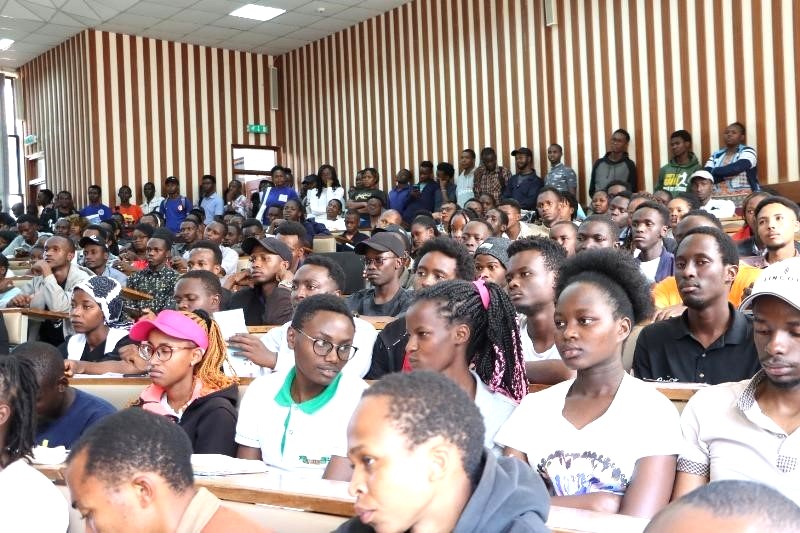
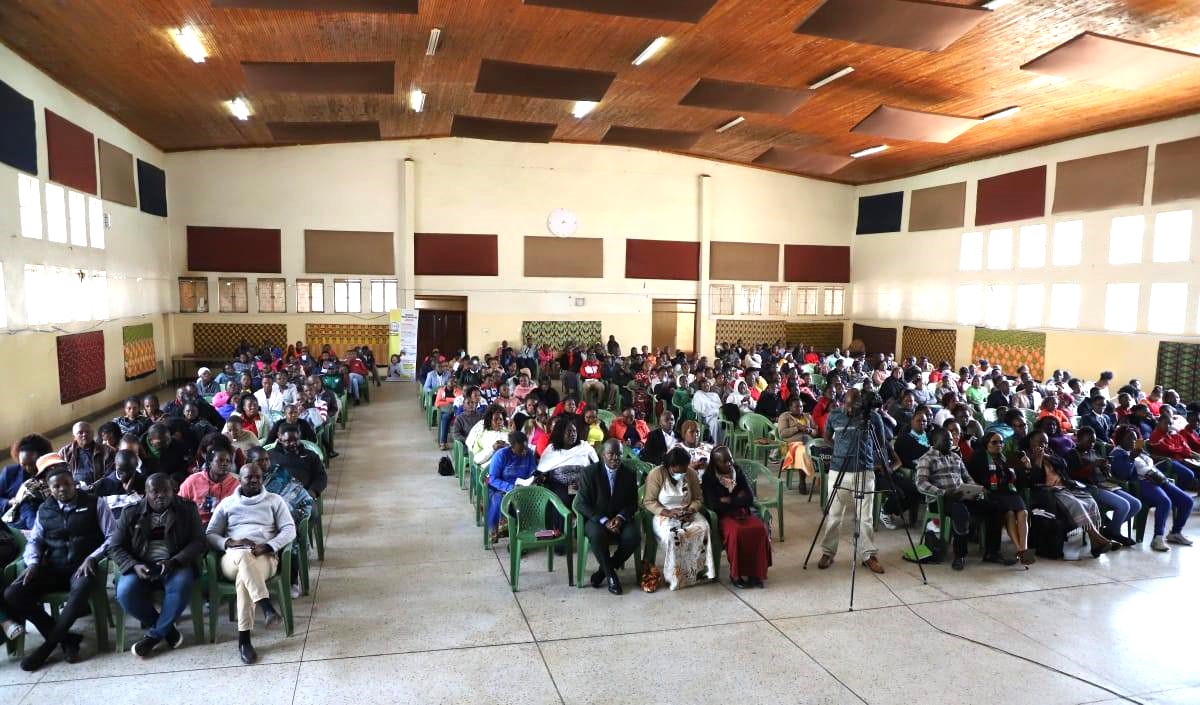
The National Assembly’s Departmental Committee on Education will conduct the hearings in 31 counties between September 14 and September 25, 2026, as part of the constitutional requirement for public participation in law-making.
The hearings concern the Tertiary Education, Placement and Funding Bill, 2026; the Basic Education Bill, 2026; the Kenya National Educational Assessments Council Bill, 2026; the Pre-Service Education and In-Service Training Bill, 2026; the Kenya National Qualifications Framework (Amendment) Bill, 2026; and the Kenya Institute of Curriculum Development (Amendment) Bill, 2026.
The notice says Parliament is undertaking the process because Article 118(1)(b) of the Constitution requires it to facilitate public participation in its legislative business.
“Parliament [is required] to facilitate public participation and involvement in the legislative and other business of Parliament,” the notice states.
Major changes proposed in tertiary education funding
Among the most consequential proposals is the Tertiary Education, Placement and Funding Bill, which seeks to reorganise student placement and financing.
According to the National Assembly notice, the Bill “seeks to provide for the placement of students and trainees to tertiary institutions and the funding of the students.”
It proposes to re-establish the Kenya Universities and Colleges Central Placement Service and create the Tertiary Education Funding Authority.
The proposed authority would administer loans and scholarships through a dedicated Loans and Scholarships Fund.
The Bill would also repeal the Higher Education Loans Board Act and amend sections of the Universities Act and the Technical and Vocational Education and Training Act relating to student financing.
On student placement, the notice states that the proposed law “requires the Service to prioritize the placement of students in public tertiary institutions.”
Students would only be placed in private tertiary institutions upon request and where vacancies are unavailable in public institutions.
Loans for students studying outside Kenya would also be restricted to circumstances where comparable courses are not available locally.
Basic Education Bill targets bursaries, quality assurance
The Basic Education Bill seeks to repeal and replace the current Basic Education Act and give effect to the constitutional right to free and compulsory basic education.
It proposes clearer roles for national and county governments, a framework for primary and secondary education administration, and provisions on quality assurance.
One of its major provisions concerns scholarships and bursaries funded from public resources.
The National Assembly says the Bill provides for coordinated administration of education support, with the Cabinet Secretary given responsibility for coordinating scholarships and bursaries for eligible learners.
“Scholarships and bursaries derived from public funds are reserved for learners in public schools,” the notice states.
The Bill would also establish a fund for administering scholarships and bursaries and introduce monitoring and reporting requirements for institutions awarding the support.
It further proposes the establishment of the Kenya Education Management Information System, the Kenya Institute of Special Education and the National Council for Education in Marginalized Communities.
KNEC successor proposed
The Kenya National Educational Assessments Council Bill proposes replacing the Kenya National Examinations Council with a new body known as the Kenya National Education Assessment Council.
The proposed council would take over responsibility for assessments, certification and verification of certificates.
The notice says the new council would be responsible for “awarding certificates or diplomas to candidates who have undergone an assessment under the Act.”
It would also confirm the authenticity of certificates at the request of government agencies and institutions and oversee offences relating to examination malpractice.
The Bill additionally proposes amendments to the Universities Act to regulate certificate and diploma programmes, strengthen penalties for unapproved academic programmes and require the Commission for University Education to consult relevant statutory bodies before approving programmes.
The Pre-Service Education and In-Service Training Bill proposes a new framework governing teacher preparation and professional development.
It would establish the Kenya Teachers Training College to oversee pre-service education and the Kenya School of Education to conduct in-service education.
The notice says the proposed law “provides for requirements for registration of teachers’ colleges” and identifies existing institutions that would transition into campuses and branches of the two new institutions.
Another proposal, the Kenya National Qualifications Framework (Amendment) Bill, seeks to strengthen the national qualifications framework, registration of qualifications-awarding institutions and the national qualifications database.
The Kenya Institute of Curriculum Development (Amendment) Bill, meanwhile, proposes changes to KICD’s governance structure, including reconstitution of its council and replacing references to the Director of the Institute with Chief Executive Officer.
It would also require the Education Cabinet Secretary to consult the KICD Council when making regulations under the Act.
Hearings start in Tana River and Uasin Gishu
The public hearings begin on September 14 in Tana River and Uasin Gishu counties, with sessions scheduled at Garsen Training and Vocational College and Eldoret National Polytechnic respectively.
Later the same day, hearings will be held at Ngala Memorial Girls Secondary School in Kilifi and the Elgeyo-Marakwet County Headquarters in Iten.
Other counties scheduled during the exercise include Mombasa, Trans Nzoia, Kwale, Kakamega, Taita Taveta, Kisumu, Makueni, Homa Bay, Machakos, Kisii, Embu, Kericho, Meru, Narok, Kirinyaga, Kajiado, Wajir, Turkana, Kiambu, Nakuru, Murang’a, Baringo, Nyeri, Nyandarua, Isiolo and Laikipia.
The final public hearing will be held at Parliament Buildings in Nairobi on September 25 from 10am to 5.30pm.
Members of the public have been encouraged to attend the sessions and make oral or written submissions.
“Members of the public and stakeholders are hereby invited to attend, make oral representations or submit written memoranda,” the National Assembly says.
READ ALSO: What my mother taught me about parenting through hardship
Written representations may be delivered to the Clerk of the National Assembly or sent by email to cna@parliament.go.ke by 5pm on September 24, 2026.
By Joseph Mambili
Get more stories from our website: Education News
To write to us or offer feedback, you can reach us at: editor@educationnews.co.ke
You can also follow our social media pages on Twitter: Education News KE and Facebook: Education News Newspaper for timely updates.
>> Click here to stay up-to-date with trending regional stories