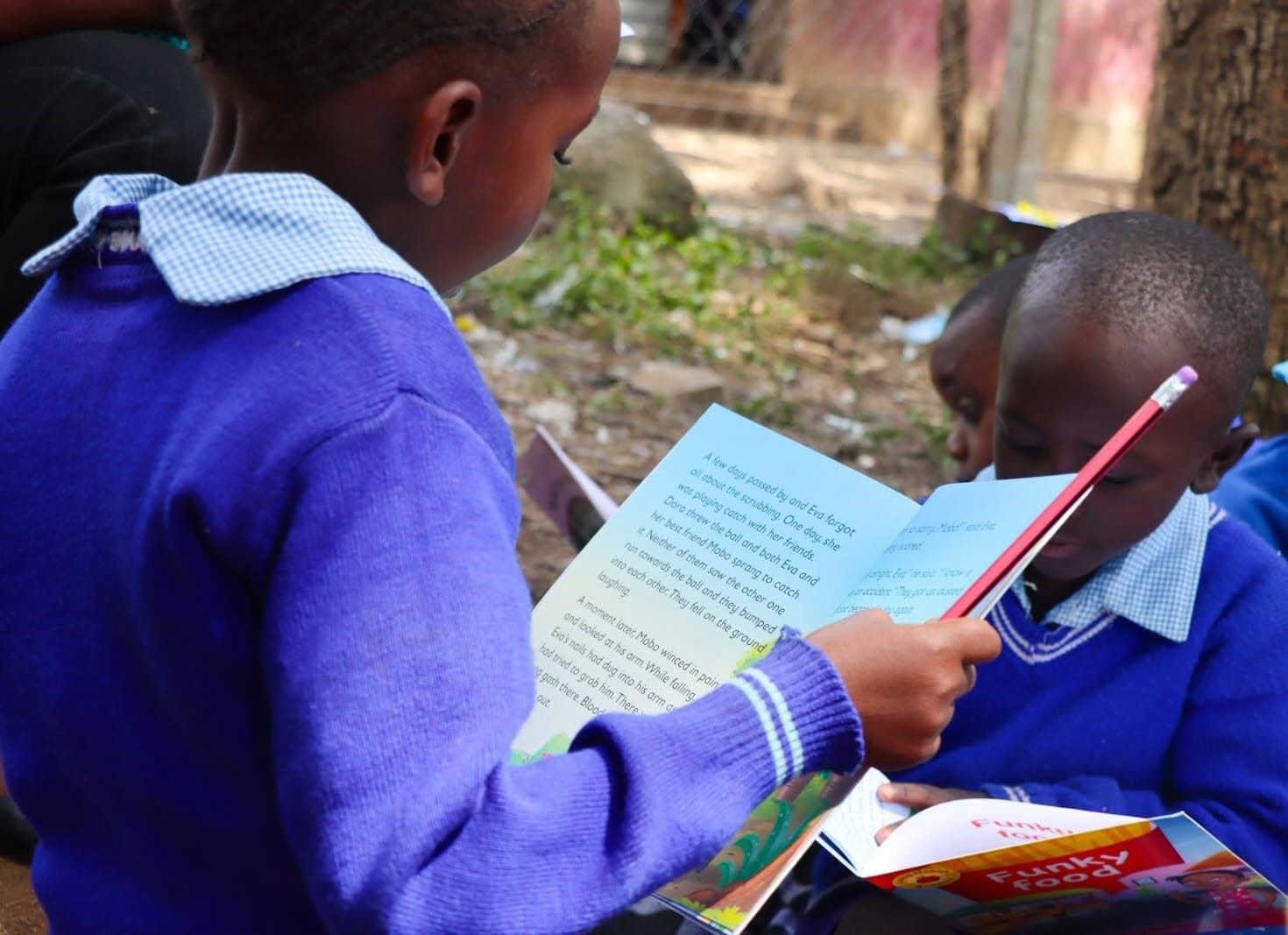
- Enock Okong’o argues that sustained reading builds depth, judgment and competence in ways quick digital content cannot.
- He draws lessons from leaders such as Abraham Lincoln, Julius Nyerere and Jomo Kenyatta, whose intellectual development was shaped by extensive reading.
- Okong’o says young people should treat books as tools for thinking, leadership and lifelong self-improvement.
When I was young, I could hear the preacher say it from the pulpit: Soma vitabu, update maarifa. Read books, update your knowledge.
At the time it sounded like a Saturday lecture, but the truth in it has stayed with me.
A binge of reading is good.
Not the casual skim, not the one-chapter-a-month habit, but the kind of reading where you lock yourself in for hours, one book after another, until your mind feels stretched and your perspective shifts.
We live in a time that glorifies quick hits.
Short videos, 30-second tips, AI summaries.
Those have their place, but they do not build depth.
Depth comes from sitting with a book long enough to wrestle with it, to disagree with it, to let it argue back.
That is what I mean by a binge of reading.
It is intentional overconsumption of ideas, the way an athlete overloads muscle to grow stronger.
You come out tired, but competent.
Reading builds depth
History is full of people who became wise and competent because they immersed themselves in books while others were chasing distraction.
Abraham Lincoln is one of the clearest examples.
Lincoln himself estimated that his total formal schooling amounted to less than a year, yet he became an avid reader and largely educated himself outside formal schooling. The US National Park Service records that he later studied English grammar and nearly mastered the six books of Euclid.
He read widely, including the Bible and Shakespeare, and his lifelong reading helped shape his language and reasoning.
His reading gave him the language and logic that would later serve him in law and national leadership.
In Africa, several independence-era leaders were also serious readers.
Julius Nyerere of Tanzania translated Shakespeare into Kiswahili, including Julius Caesar and The Merchant of Venice.
Jomo Kenyatta studied history, anthropology and related subjects while in Britain, and his Facing Mount Kenya reflected years of engagement with questions of culture, identity and colonialism.
Kenneth Kaunda of Zambia was strongly influenced by Christianity and later by political and philosophical ideas, including the writings of Mahatma Gandhi.
What links these figures is habit.
They treated reading like a tool for work, not entertainment.
They read to fill gaps in their education, prepare for problems they had not yet faced and sharpen judgment before they had power.
One book gives an angle, many books give a map
The reason a binge works is simple.
One book gives you one angle.
Ten books on the same subject give you a map.
When you binge, you start seeing contradictions, patterns and principles that cut across time and culture.
You stop repeating what you heard yesterday and start generating ideas that are yours.
That is how skill is built.
You cannot become a writer by reading one chapter on writing.
You cannot understand leadership by watching one three-minute clip.
You need volume, repetition and immersion.
For young people today, the excuse is always: “I don’t have time.”
The truth is, you have time for what you value.
If you can binge a television series for eight hours, you can binge a biography, a history book or a technical manual for eight hours.
The return is different.
One fades when the credits roll.
The other stays and compounds.
Soma vitabu, update maarifa.
When you binge on reading, you update more than knowledge.
You update how you think, how you speak and how you solve problems.
That is why the preachers, founders and self-made leaders all said the same thing in different ways: if you want to be wise and competent, make books your habit, and when you do it, do it in bulk.
READ ALSO: Reviving EARCs could transform assessment, placement for learners with special needs
The world rewards people who can think deeper than the crowd.
A binge of reading is how you get there.
By Enock Okong’o
Get more stories from our website: Education News
To write to us or offer feedback, you can reach us at: editor@educationnews.co.ke
You can also follow our social media pages on Twitter: Education News KE and Facebook: Education News Newspaper for timely updates.
>> Click here to stay up-to-date with trending regional stories