- Hillary Muhalya argues that banning corporal punishment should not mean abandoning firm and predictable discipline in schools.
- He examines evidence showing that physical punishment can harm learning, behaviour and mental well-being while failing to build genuine self-control.
- Hillary maintains that Kenya must equip teachers with practical, non-violent disciplinary tools if the ban on corporal punishment is to work effectively.
The cane is gone from Kenya’s schools. But the argument it left behind refuses to die.
For generations, the sound of a cane striking a pupil’s hand was treated as a symbol of authority. Misbehaviour attracted punishment, punishment was expected to produce obedience, and obedience was often mistaken for discipline.
Today, Kenya has taken a different legal path.
The Basic Education Act expressly prohibits pupils from being subjected to cruel, inhuman or degrading treatment or punishment, whether physical or psychological. A person convicted of violating the provision faces a fine of up to Sh100,000, imprisonment for up to six months, or both.
But the disappearance of the cane has created a bigger question than whether teachers should be allowed to beat children.
If the cane is gone, what replaces it?
That is where Kenya’s education debate should now move.
Because banning corporal punishment is only half the job. The harder task is building schools where discipline remains firm, predictable and effective without violence.
The countries where the cane has not disappeared
Kenya is not alone in wrestling with this question.
Around the world, corporal punishment remains legally permitted in some education systems, although the rules vary considerably by country and jurisdiction.
In Malaysia, for example, school disciplinary regulations prohibit corporal punishment of girls but permit specified forms of caning for boys, subject to restrictions on who may administer it and how.
Tanzania’s regulations similarly permit corporal punishment for serious breaches of school discipline, subject to restrictions including a maximum of four strokes on any occasion and controls over who may administer it.
These examples are important — but not because Kenya should copy them.
They demonstrate that the global debate is far from settled in law, even as scientific evidence against physical punishment has become increasingly difficult to ignore.
The crucial distinction is this: a country may legally permit corporal punishment without every school routinely using it, just as a country may legally prohibit it while illegal use continues.
The real question is therefore not simply what the law says.
It is what happens to children.
The World Health Organization’s latest evidence is stark.
WHO estimates that between a quarter and half of children experience corporal punishment in schools globally. It also reports that lifetime exposure to school corporal punishment exceeds 70 per cent in Africa and Central America.
And the consequences go far beyond a painful hand or a moment of humiliation.
Children subjected to corporal punishment can experience fear, sadness, anger, shame and psychological distress. WHO links the practice to impaired cognitive and socio-emotional development, increased aggression, mental-health problems, poorer educational outcomes and a greater likelihood of perpetrating violence later in life.
That changes the argument completely.
The question is no longer simply whether a child behaves after being caned.
The bigger question is what kind of learner — and eventually what kind of adult — is being produced by fear?
A child may become silent after punishment.
But silence is not necessarily discipline.
A child may obey because he or she is frightened.
But fear is not necessarily respect.
And a child may avoid repeating an offence because of the pain attached to it.
But that does not necessarily mean the child has learnt self-control.
Perhaps the most disturbing finding is the possibility of a cycle.
When adults use physical force to teach children that violence is unacceptable, the message can become contradictory: violence is wrong, except when someone with authority uses it.
WHO reports that corporal punishment is associated with increased aggression and greater acceptance and perpetration of violence later in life.
That does not mean every child who is caned will become violent.
It means the practice can reinforce attitudes and behavioural patterns that education is supposed to overcome.
Schools are expected to teach children how to solve disagreements, control emotions, respect other people and resolve conflict without violence.
The method of discipline should therefore not undermine the very values the school is trying to teach.
Banning the cane must not mean abandoning discipline
This is where Kenya’s conversation often becomes unnecessarily polarised.
Opponents of corporal punishment sometimes sound as though removing the cane means children should be allowed to do whatever they want.
That is wrong.
A school without corporal punishment should not be a school without consequences.
In fact, the opposite should be true.
Children need boundaries.
They need rules.
They need predictable consequences.
They need adults who can say no — and mean it.
They need schools where persistent indiscipline is confronted early rather than ignored until it becomes a crisis.
What must disappear is not discipline.
It is violence masquerading as discipline.
A strong alternative system can include clear codes of conduct, progressive sanctions, withdrawal of privileges, supervised reflection, counselling, behaviour agreements, restorative conversations, parental involvement and structured intervention for persistent behavioural problems.
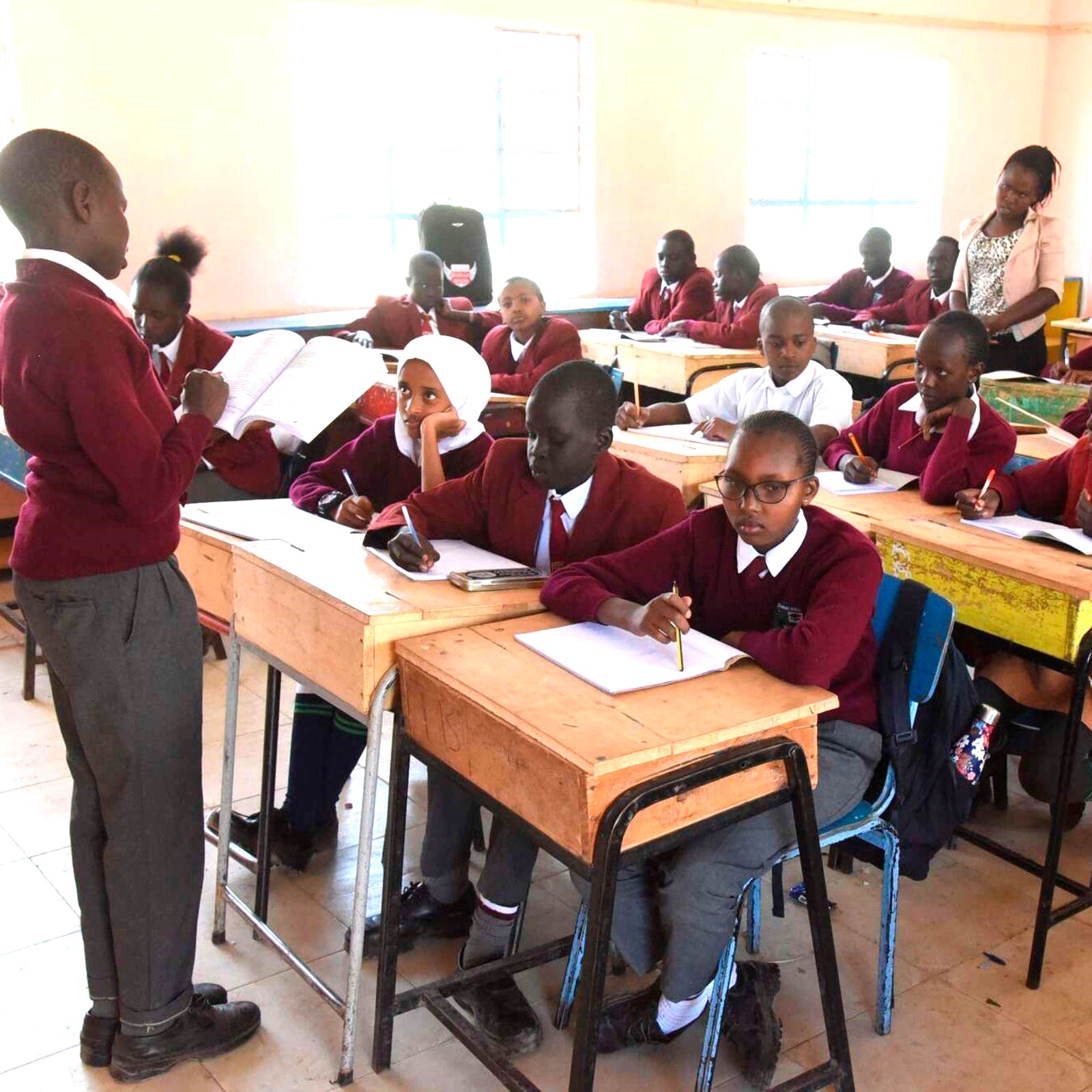
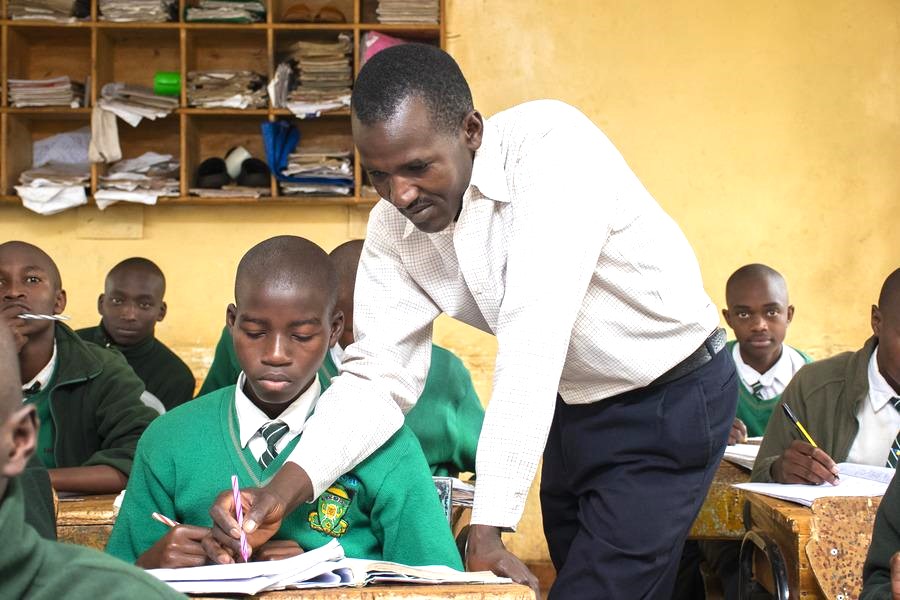
Teachers should be equipped to manage difficult classrooms without having to reach for physical punishment.
That requires training in classroom management, child psychology, conflict resolution and positive discipline.
WHO itself stresses that laws banning corporal punishment are necessary but insufficient and should be accompanied by support for parents and teachers to use positive, non-violent approaches to discipline.
Teachers cannot simply be told: “Do not cane.”
This may be Kenya’s biggest policy mistake if it fails to address the other side of the equation.
A teacher standing before a crowded classroom, dealing with persistent disruption, defiance or aggression, cannot be given only one instruction — do not use corporal punishment — and then be left without practical alternatives.
The state has a responsibility to provide teachers with workable disciplinary tools.
Headteachers and principals must also have clear authority to deal with serious misconduct.
Parents must be brought into the process.
Counselling and behavioural support must be available.
And schools must distinguish between ordinary childish misbehaviour, persistent indiscipline and behaviour arising from deeper emotional, social or developmental problems.
The answer cannot always be punishment.
Sometimes the answer is intervention.
There is a temptation to point to countries that still permit corporal punishment and argue that their education systems demonstrate that the cane works.
That would be a dangerous conclusion.
A country’s educational performance is shaped by dozens of factors — teacher quality, school leadership, parental involvement, curriculum, funding, learning time, accountability, infrastructure, social conditions and expectations.
The cane cannot explain an education system’s success.
Nor should Kenya blame the abolition of corporal punishment for every problem confronting its schools.
WHO’s evidence points in the opposite direction: corporal punishment carries multiple risks of harm and has no demonstrated positive outcomes for children.
The lesson from countries that continue to permit it should therefore not be, “Bring back the cane.”
The lesson should be: Kenya must build something better.
Kenya has already made the legal decision.
The Basic Education Act has drawn the line.
The cane cannot be the foundation of school discipline.
Now the country must prove that a modern education system can produce disciplined, respectful and responsible young people without physical violence.
That means moving from punishment to accountability.
From fear to responsibility.
From immediate compliance to self-control.
From the question, “How do we make this child obey?”
To the more important question:
“How do we teach this child to make the right decision even when nobody is watching?”
That is the difference between punishment and education.
The cane may force a child to behave for five minutes.
Education should teach the child why responsible behaviour matters for a lifetime.
And that is where Kenya’s real test lies.
READ ALSO: TSC promotion interviews: How teachers will score in the 100-mark assessment
The challenge is no longer whether Kenyan schools can discipline children without the cane. The challenge is whether they can build a generation that no longer needs the cane — because discipline has become part of who they are.
By Hillary Muhalya
Get more stories from our website: Education News
To write to us or offer feedback, you can reach us at: editor@educationnews.co.ke
You can also follow our social media pages on Twitter: Education News KE and Facebook: Education News Newspaper for timely updates.
>> Click here to stay up-to-date with trending regional stories