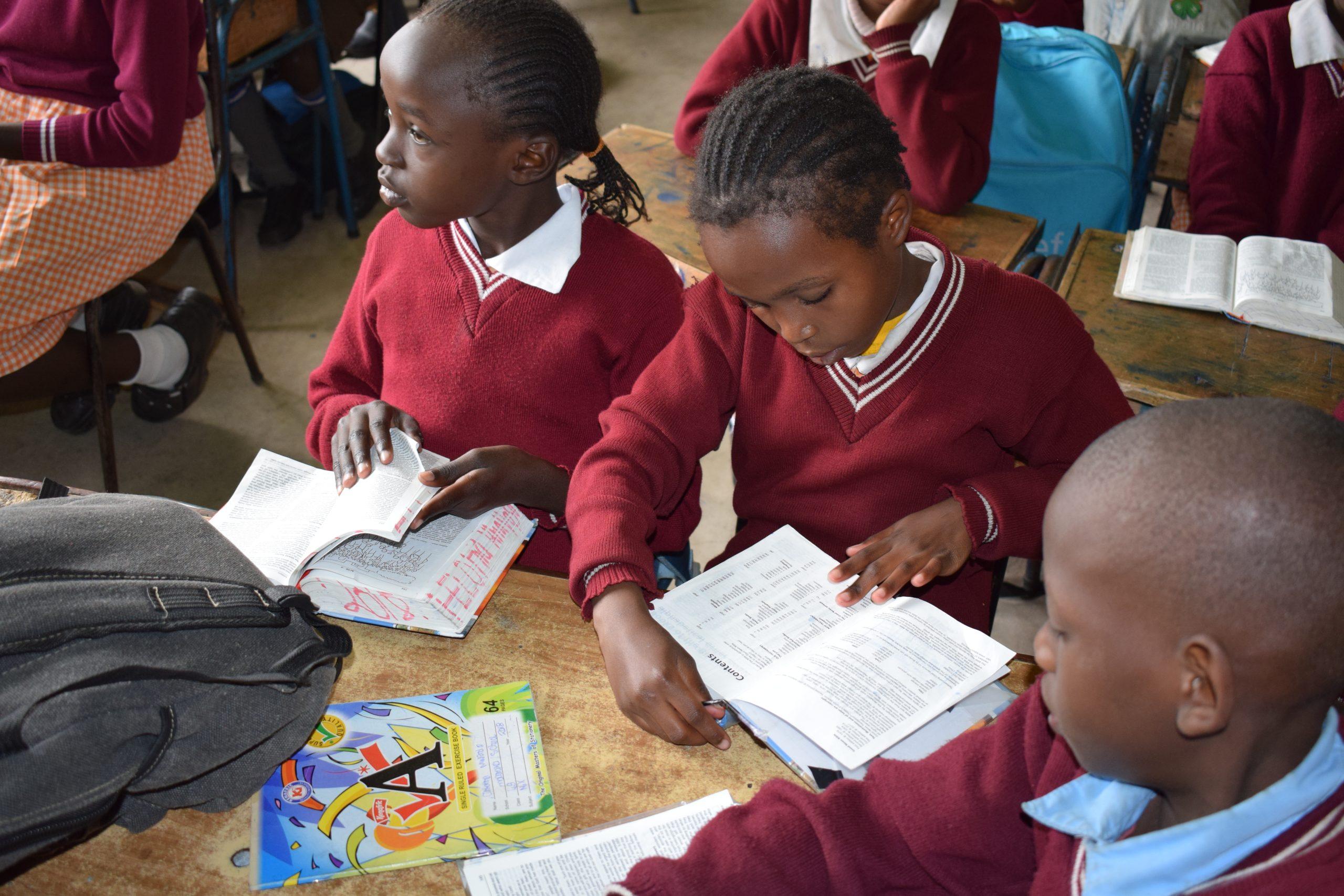
- Hillary Muhalya examines how Nashville Classical East improved Grade 3 reading proficiency from 40 per cent to 81 per cent in four years.
- He argues that Kenya’s literacy challenge requires sustained teacher coaching, strong instructional materials, timely assessment and greater attention to reading across subjects.
- Hillary maintains that Kenya should build on lessons from programmes such as PRIMR and Tusome rather than constantly starting new literacy initiatives.
Four years ago, only 40 per cent of third graders at Nashville Classical East in Tennessee were proficient in reading.
Today, the figure stands at 81 per cent.
The 41-percentage-point improvement has turned the Tennessee charter school into a striking example of what can happen when a school makes literacy a sustained, carefully coordinated priority.
The achievement is significant not simply because the number almost doubled.
It is because the school did not discover a magic formula.
Instead, it confronted weaknesses in classroom practice, strengthened teacher coaching, aligned instruction with evidence from the Science of Reading and Science of Learning, built pupils’ background knowledge, increased attention to fluency and writing, and placed books and knowledge-building at the centre of learning.
For Kenya, the Tennessee experience raises a much bigger question:
If one school can move reading proficiency from 40 per cent to 81 per cent in four years, what would it take for Kenya to achieve a comparable literacy transformation at national scale?
The answer begins with recognising that Kenya’s problem is not a shortage of ambition.
It is a problem of scale, consistency, resources, implementation and ensuring that good education policy translates into effective classroom practice.
Kenya’s uncomfortable literacy challenge
Kenya has expanded access to education, invested in classrooms and teachers and embarked on a major curriculum transformation through Competency-Based Education (CBE).
But access to school does not automatically translate into learning.
The World Bank’s April 2024 Kenya Learning Poverty Brief estimated that 79 per cent of children in Kenya at late-primary age were not proficient in reading, adjusted for children who are out of school.
That figure should force the country to look beyond enrolment figures, examination results and the number of classrooms constructed.
The fundamental question is simpler:
Are children actually learning to read with understanding?
Reading is not merely another school subject.
It is the gateway through which children access mathematics, science, history, technology and virtually every other area of learning.
A child who cannot read confidently is effectively locked out of much of the curriculum.
Nashville Classical East’s transformation is particularly instructive because its leaders did not simply blame teachers for poor results.
They recognised that teachers were working hard.
But classroom observation revealed that hard work alone was not necessarily producing effective literacy instruction.
The school identified practices that were ineffective, particularly in the early grades, and then set about changing them.
That distinction is important for Kenya.
The country’s literacy challenge should not be framed as a failure by teachers.
Teachers operate within a system shaped by curriculum demands, class sizes, availability of books, assessment requirements, professional development, staffing, infrastructure and the support they receive from school leadership and education authorities.
If the system wants different results, it must create the conditions that allow teachers to produce different results.
Coaching, consistency and knowledge matter
One of the clearest advantages in the Nashville experience was sustained focus.
The school did not attempt to solve the literacy problem through a short campaign.
It worked over several years.
Teachers were supported as instructional practices changed. The school refined its approach and continued to build a coherent literacy programme.
This is an important lesson for Kenya, where education has undergone several major transitions.
CBE has brought a different philosophy of learning, assessment and teaching.
At the same time, schools are dealing with new curriculum expectations, changing assessment arrangements, teacher deployment issues and pressure to demonstrate immediate results.
Reform is necessary.
But reform without continuity can leave teachers constantly adjusting to new expectations instead of becoming exceptionally good at implementing the ones already in place.
Kenya needs fewer disconnected literacy initiatives and more sustained implementation of approaches that are demonstrably working.
Nashville Classical East also placed considerable emphasis on coaching teachers and strengthening their understanding of how children learn to read.
That is fundamentally different from simply sending teachers for occasional workshops.
A workshop can introduce an idea.
Coaching helps a teacher use it.
For Kenya, this distinction is critical.
A teacher struggling with phonics, vocabulary, fluency or comprehension needs practical support in the classroom.
Professional development should therefore move closer to the point where learning actually happens.
The headteacher, principal, instructional leaders and teachers should be able to examine learner performance, observe teaching, identify weaknesses and agree on specific improvements.
Teacher development should become an ongoing professional process rather than an occasional event.
The Nashville school also recognised that reading comprehension depends on knowledge.
A child can pronounce words without necessarily understanding them.
A learner can know how to identify a main idea yet still struggle with a passage because the learner lacks the vocabulary or background knowledge needed to make sense of it.
The Tennessee approach therefore placed greater emphasis on building knowledge alongside reading skills.
This has powerful implications for Kenya.
Reading should not be confined to the language lesson.
A science teacher can develop reading.
A history lesson can build vocabulary.
Agriculture can introduce new concepts and terminology.
Social studies can expose learners to new places, people and ideas.
Mathematics itself requires learners to read and understand instructions and problems.
Every subject should help build the knowledge base that makes comprehension possible.
Reading and writing must work together
Another important element was the school’s emphasis on writing.
Writing forces learners to organise thoughts, retrieve information, explain ideas and use evidence.
For Kenya’s CBE system, this is particularly relevant.
If learners are expected to communicate effectively, think critically, solve problems and demonstrate competencies, they must be able to express what they know.
Reading and writing should therefore be treated as partners.
A child who reads a science passage should be able to explain it.
A learner who studies a historical event should be able to write about it.
A pupil who reads a story should be able to describe its meaning and characters.
Literacy becomes stronger when it is practised throughout the school day.
Another lesson is the importance of knowing why a child is struggling.
It is not enough to label a learner a weak reader.
The teacher must determine whether the difficulty is with sound recognition, decoding, vocabulary, fluency, comprehension or writing.
That makes intervention more targeted.
Kenya has national and school-level assessment systems, but the challenge is turning assessment information into timely classroom action.
Assessment should not merely tell the Ministry, county or school how learners performed.
It should tell the teacher:
Which child needs help, with what skill, and what should happen next?
That is where assessment becomes a teaching tool rather than merely a measurement tool.
Kenya should build on what has already worked
It would be unfair to compare Nashville Classical East with Kenya and conclude that American teachers have discovered something Kenyan teachers do not know.
The contexts are fundamentally different.
Nashville Classical East is one school operating within Tennessee’s education system.
Kenya is attempting to improve literacy across thousands of schools, millions of learners and vastly different geographical, social and economic circumstances.
Some Kenyan schools have libraries, adequate classrooms, trained teachers and access to learning materials.
Others operate under far more difficult conditions.
The country also has significant disparities between regions and schools.
A successful intervention that can be implemented consistently in one charter school must be adapted before it can work across a national system of such complexity.
Kenya also has strengths.
The comparison should not become a story of Tennessee succeeding and Kenya failing.
Kenya has already demonstrated that large-scale literacy interventions can produce results.
Programmes such as PRIMR and Tusome showed the value of structured teaching materials, teacher support, coaching and attention to foundational literacy. The World Bank has described Tusome as a scalable structured-literacy intervention built on PRIMR, combining teacher professional development, coaching, structured guides and pupil textbooks.
Kenya therefore does not need to start from zero.
It needs to learn from what has worked, preserve what works and scale it intelligently.
The question is not whether Kenya should copy an American charter school.
It should not.
The question is whether Kenya can create the same conditions that made sustained improvement possible: clear literacy priorities, effective instructional materials, trained and coached teachers, continuous assessment, targeted intervention and sufficient time for reforms to mature.
CBE has deliberately expanded the purpose of education beyond memorisation.
Learners are expected to develop competencies, values, creativity, problem-solving abilities and practical skills.
These are worthwhile objectives.
But foundational literacy cannot become lost among competing priorities.
A child must first be able to read with sufficient fluency and understanding to benefit fully from increasingly complex learning.
The country therefore needs a literacy strategy that is ambitious without becoming complicated.
Teach children to read. Teach them to understand what they read. Give them knowledge. Make them write. Give them books. Identify those falling behind. Intervene early. Support the teachers. Measure progress. Repeat.
The fundamentals are not glamorous.
But they are powerful.
From Tennessee to Kenya, the lesson is discipline
The greatest lesson from Nashville Classical East may not be a particular reading programme.
It is discipline.
The discipline to identify what is not working.
The discipline to observe classrooms.
The discipline to support teachers.
The discipline to use evidence.
The discipline to build knowledge.
The discipline to intervene when children fall behind.
And perhaps most importantly, the discipline to stay the course long enough to determine whether the reforms are working.
The school’s progress from 40 per cent to 81 per cent is not proof that Kenya can simply reproduce the same result.
But it is proof of something important:
Literacy outcomes can change dramatically when a school makes reading a central institutional priority and aligns its people, curriculum, teaching methods and resources around that objective.
For Kenya, the challenge is much larger.
It is to take that lesson from one Tennessee school and ask how it can be adapted to a national system where the needs of an urban school in Nairobi may be very different from those of a rural school in West Pokot, Turkana or Tana River.
The solution will not be one more slogan.
It will not be technology alone.
It will not be another curriculum document.
And it certainly will not be blaming teachers for problems created by weaknesses elsewhere in the system.
The answer lies in building a coherent national literacy effort around the people closest to the learner.
Teachers must be equipped. Headteachers and principals must be supported. Reading materials must reach classrooms. Assessment must inform intervention. Parents must be brought into the reading culture. And successful approaches must be sustained rather than abandoned prematurely.
Tennessee’s Nashville Classical East has provided a striking proof of concept.
Kenya now has a different challenge: turning the lesson into a national literacy movement without losing sight of its own realities.
READ ALSO:
If 81 per cent can become possible in one school after four years of determined work, Kenya should ask a much bigger question:
What would happen if the entire education system became this deliberate about teaching children to read?
By Hillary Muhalya
Get more stories from our website: Education News
To write to us or offer feedback, you can reach us at: editor@educationnews.co.ke
You can also follow our social media pages on Twitter: Education News KE and Facebook: Education News Newspaper for timely updates.
>> Click here to stay up-to-date with trending regional stories