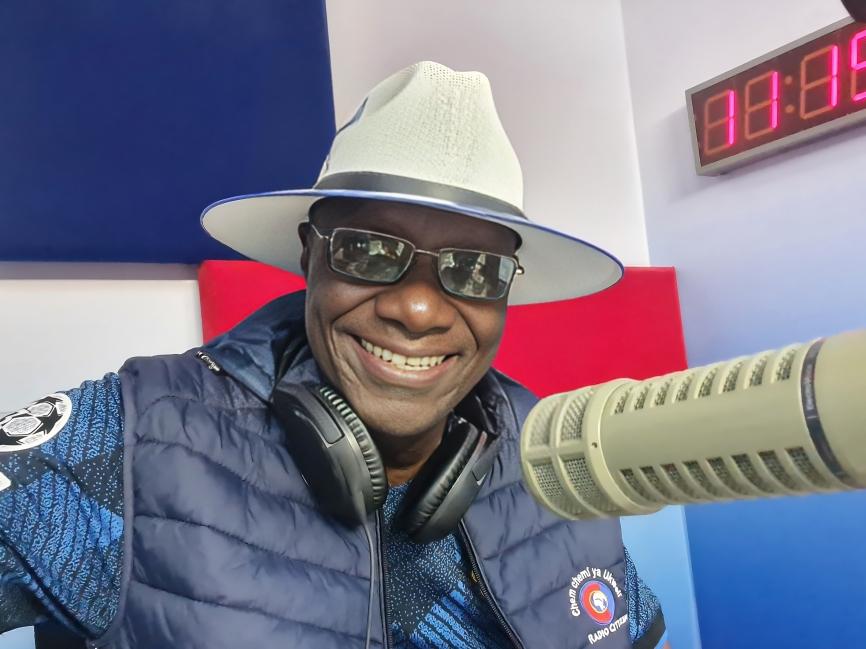
- Veteran broadcaster Fred Obachi Machoka’s five decades in media offer lessons for younger journalists entering the profession.
- Mentorship can help emerging journalists develop integrity, accuracy, ethical judgement and commitment to public service.
- As Machoka marks 50 years in broadcasting, his career demonstrates the value of learning directly from experienced professionals.
Dedicated to veteran radio and TV presenter Fred Obachi Machoka as he celebrates 50 years of continuous service behind the journalism microphone in 2026.
The other day, I watched a mason constructing a brick house. What struck me was not just his speed, but his accuracy. After laying every two courses, he would pause and check with a plumb line. That simple string with a small weight ensured his wall remained vertical, true and strong. Without that reference line, even a beautiful wall would eventually lean and collapse.
That moment reminded me of our career journeys. In life, just like in building, we need a plumb line. We need a blueprint model.
In education, we always tell students to pick role models in their career choices and refer to them. A young person who wants to be a doctor must have a doctor he admires, follows and learns from. The same applies to journalism.
Today, many young journalists are entering the field without a plumb line. They have certificates, they have passion, but they have no model to keep them vertical. Journalism is not just about holding a microphone. It is about integrity, courage, accuracy, language, ethics and service to the public. These virtues are not taught fully in class; they are caught through mentorship.
Our young journalists need to pick benchmarks and role models among veteran journalists. Kenya is blessed with great models.
They can look at Jeff Koinange, veteran journalist at Citizen TV, a master of talk shows, confidence and connection with the masses. They can study Lee Njiru, the veteran pressman who demonstrated loyalty, discipline and professionalism in State House communication for decades. And locally, we have our own icons like Jacob William Maunda, who pioneered community-focused communication, and Mwalimu James Onyango Joel, whose clarity, moral courage and commitment to truth have mentored generations in the country.
And above all, we have Fred Obachi Machoka — a living plumb line for Kenyan journalism. For 50 years, he has remained true, vertical and steady behind the mic.
From his legendary Roga Roga show to his polished TV presentation, Machoka has demonstrated that journalism can be decent, respectful, culturally rooted and professional without being abusive or sensational. He is proof that longevity in this career is not achieved by shouting the loudest, but by serving the listener faithfully.
If you are a young journalist looking for a blueprint, here is one: Fred Obachi Machoka.
Picking such models gives a young journalist a standard to check himself against, just like the mason’s plumb line. Am I accurate? Am I ethical? Am I respectful? Am I serving the public?
This principle is not new. Even in spiritual growth, Jesus used it. His disciples did not just listen to his teachings; they depended on Jesus as the living model. They walked with him, ate with him and watched how he handled criticism, crowds and conflict. Through apprenticeship, they grew.
Mentorship deeply rooted in African tradition
Our African tradition understood this well. Wise African fathers walked with their teenage sons for mentorship. A father would take his son to the farm, to the council of elders and to negotiations and show him how a man speaks, listens and decides. It was a deliberate walk.
In Ngũgĩ wa Thiong’o’s novel, The River Between, Chege is a model to his son Waiyaki in the African tradition of mentorship. Chege does not just tell Waiyaki what to do; he grooms him, instils in him the history of his people, the responsibility of leadership and the need to bridge tradition and modernity. Waiyaki becomes who he is because he had Chege as his blueprint.
That is what we have lost.
If we want an effective and competent workforce in Kenya, apprentice mentorship is the way to go. We cannot achieve a knowledge-based economy with graduates who have papers but no character, no depth and no plumb line.
For journalists, this means deliberate attachment. Let young reporters walk with veterans in the field. Let them sit in the newsroom as stories are edited. Let them learn how to verify a fact, how to respect a source, how to write a clean intro and how to remain neutral even when they have an opinion.
Let the veteran correct the young one just as the plumb line corrects the mason.
We need to revive the culture of blueprint models. Every young journalist should be able to say, “My model is this person, and this is what I have learned from him.”
As we salute Fred Obachi Machoka for 50 years of continuous service, I salute, salute and shout: Bravo! You have been our plumb line. You have shown us that a wall can remain vertical for half a century.
Without models, we shall continue to have walls that lean, journalism that sensationalises, distorts and collapses under pressure.
READ ALSO: Why teachers must go beyond ‘Well done’ when marking learners’ work
With models like Machoka, we shall build a profession that is vertical, true and able to stand the test of time.
By Enock Okongó
Get more stories from our website: Education News
To write to us or offer feedback, you can reach us at: editor@educationnews.co.ke
You can also follow our social media pages on Twitter: Education News KE and Facebook: Education News Newspaper for timely updates.
>> Click here to stay up-to-date with trending regional stories