- President William Ruto has postponed the rollout of the new universal tertiary education funding framework.
- September entrants will continue receiving support under the existing Student-Centred Funding Model for now.
- The transition will depend on Parliament passing legislation establishing the proposed new financing system.
President William Ruto has pushed back the planned rollout of the Government’s universal tertiary education funding programme, leaving thousands of students and parents facing the existing financing system for the September 2026 intake.
Ruto has postponed the introduction of the proposed new university and college funding programme from September 2026 to the next academic semester.
The President made the announcement on Thursday, September 3, during his development tour of Kajiado County, saying the new tertiary education funding arrangement would be operational from the next semester.
The delay comes at a critical moment for thousands of students preparing to join universities, technical and vocational education and training (TVET) institutions, colleges and the Kenya Medical Training College (KMTC).
Ruto’s proposed financing model promises to fundamentally change how families meet the cost of higher education.
Under the planned arrangement, qualifying students admitted to covered tertiary institutions are expected to receive full Government financial support, reducing the burden of education costs on households.
But that promise will not apply immediately to students entering institutions in September.
Education Cabinet Secretary Julius Migos Ogamba has urged first-year students to continue applying for financial assistance under the existing funding system.
The Ministry of Education has directed the Universities Fund and the Higher Education Loans Board (HELB) to continue receiving applications from eligible first-time students and TVET trainees.
New students will therefore continue to be processed under the existing Student-Centred Funding Model as Parliament considers legislation underpinning the proposed universal funding system.
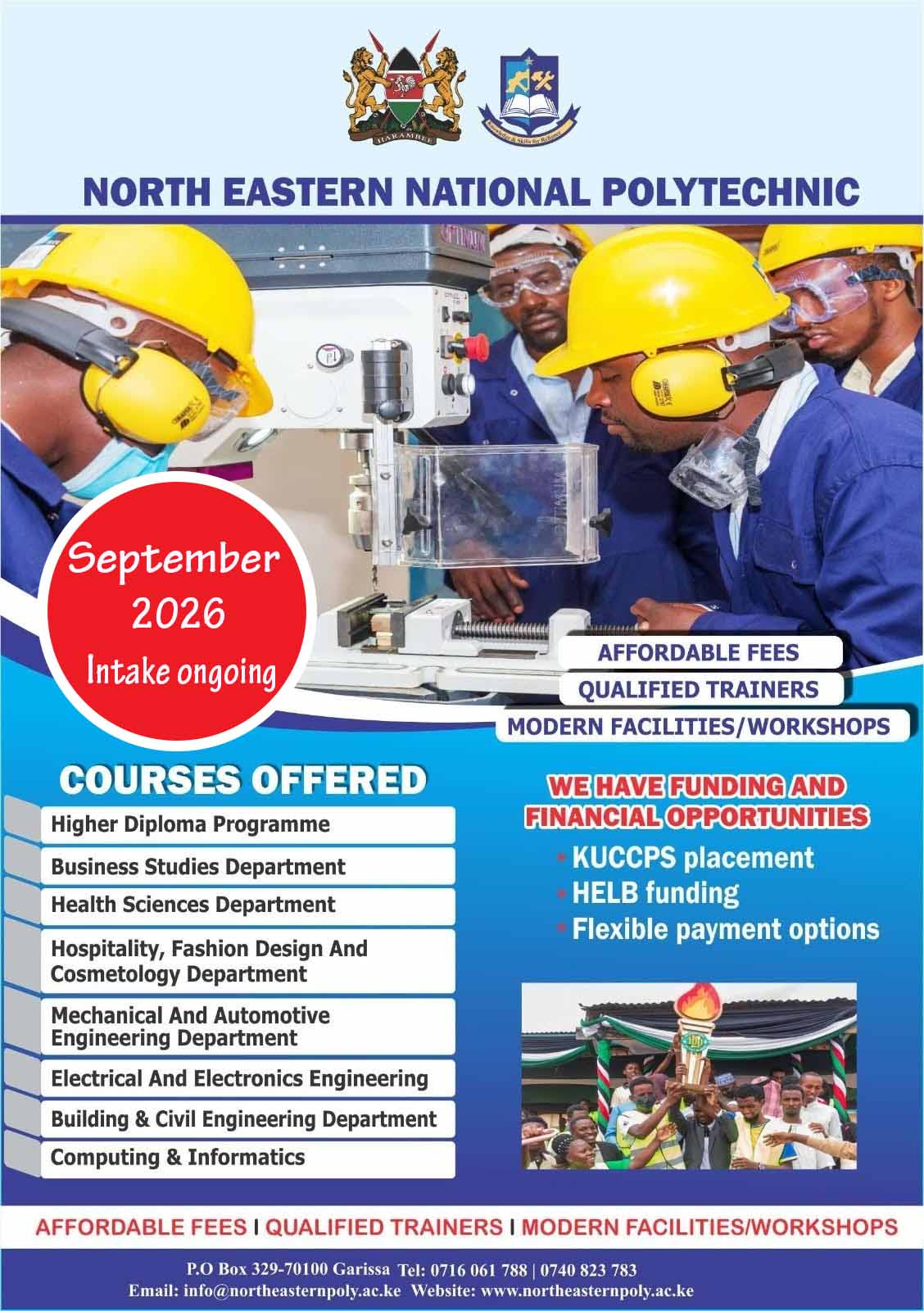
The Government has extended the funding application deadline for eligible first-time university students and TVET trainees to September 21, 2026.
Ogamba said applications submitted during the extended period would be processed under the current funding model.
Parents who had expected the Government’s earlier announcement to immediately translate into fully funded tertiary education will consequently have to continue making financial arrangements under the existing system.
The Government has said appropriate transitional measures will be introduced once the proposed legislation is passed.
Parliament holds the key
The transition is linked to the Tertiary Education, Placement and Funding Bill, 2026, which is expected to provide the legal foundation for the new funding framework.
The Bill must complete the parliamentary process before the new system can take effect.
This makes parliamentary approval a critical step in determining when the universal funding framework will become operational.
The legislation will also have to address fundamental questions about how the programme will be financed, administered and sustained.
Under the current Student-Centred Funding Model, Government financial support is provided through scholarships and loans, with the level of support determined under the prevailing funding framework.
The proposed Universal Access and Funding Framework is expected to change that arrangement once it receives the necessary legal backing.
The proposed universal funding programme is among the most consequential higher education reforms being pursued by the Ruto administration.
If implemented successfully, it could substantially reduce the financial pressure faced by families sending children to universities and other tertiary institutions.
However, the programme will require substantial and predictable Government financing.
Universities, TVET institutions, colleges and KMTC will require timely funding, while students will need clear and reliable procedures for accessing support.
Strong accountability mechanisms will also be necessary to ensure that public funds are properly utilised and eligible students are not excluded.
For September 2026 entrants, however, the immediate reality remains unchanged.
They must continue applying for funding under the current system while waiting for Parliament to determine the future of tertiary education financing.
Next semester becomes new target
The postponement gives Parliament and the Ministry of Education additional time to refine the proposed framework before its rollout.
But it also places pressure on the Government to ensure that the new timeline does not suffer another delay.
Students and parents will now be watching closely to see whether Parliament approves the legislation and whether the Government can mobilise the resources required to make universal tertiary funding a reality.
For now, students joining universities and TVET institutions in September 2026 will continue to be funded under the existing Student-Centred Funding Model.
READ ALSO: Narok: Nkareta Secondary School to reopen Monday after week-long closure over water crisis
The next academic semester is now the Government’s stated target for transitioning to the new universal funding framework.
By Hillary Muhalya